Molecular Genetics and Microbiology Department, University of Florida, Gainesville, FL 32610, USA.
Expert Rev Mol Med. 2011 May 18;13:e18. doi: 10.1017/S1462399411001876.
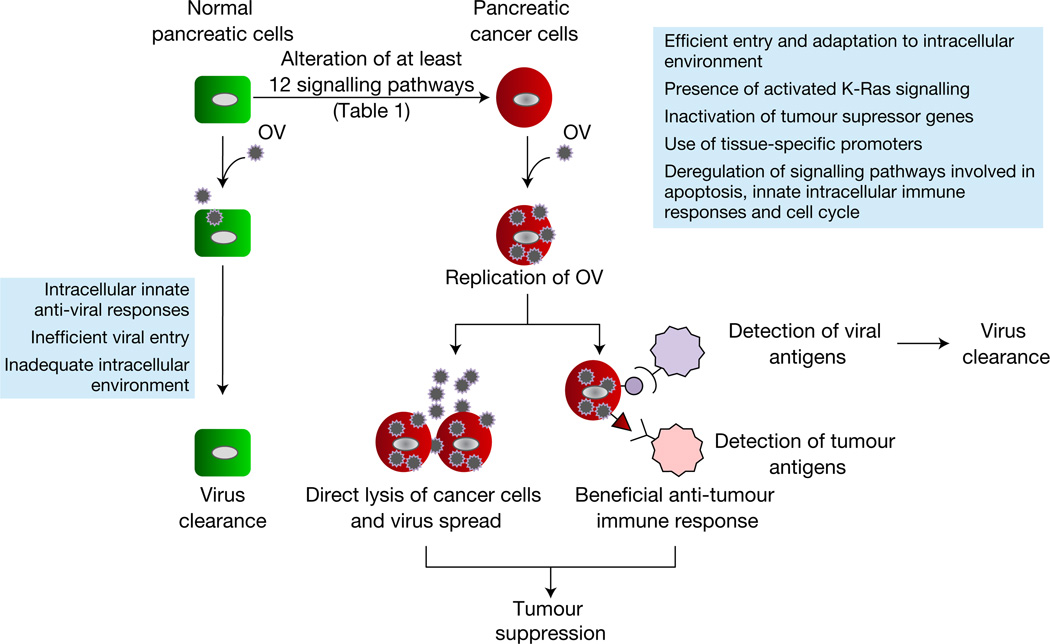
Within the past decade, many oncolytic viruses (OVs) have been studied as potential treatments for pancreatic cancer and some of these are currently under clinical trials. The applicability of certain OVs, such as adenoviruses, herpesviruses and reoviruses, for the treatment of pancreatic cancer has been intensively studied for several years, whereas the applicability of other more recently investigated OVs, such as poxviruses and parvoviruses, is only starting to be determined. At the same time, studies have identified key characteristics of pancreatic cancer biology that provide a better understanding of the important factors or pathways involved in this disease. This review aims to summarise the different replication-competent OVs proposed as therapeutics for pancreatic cancer. It also focuses on the unique biology of these viruses that makes them exciting candidate virotherapies for pancreatic cancer and discusses how they could be genetically manipulated or combined with other drugs to improve their efficacy based on what is currently known about the molecular biology of pancreatic cancer.
在过去的十年中,许多溶瘤病毒(OVs)已被研究作为治疗胰腺癌的潜在手段,其中一些正在进行临床试验。某些 OVs(如腺病毒、疱疹病毒和呼肠孤病毒)在治疗胰腺癌方面的适用性已经被深入研究了多年,而其他最近研究的 OVs(如痘病毒和细小病毒)的适用性才刚刚开始确定。与此同时,研究已经确定了胰腺癌生物学的关键特征,这为更好地理解涉及这种疾病的重要因素或途径提供了依据。 本文综述了作为胰腺癌治疗药物提出的不同复制型溶瘤病毒。它还重点介绍了这些病毒的独特生物学特性,这些特性使它们成为治疗胰腺癌的令人兴奋的候选病毒疗法,并讨论了如何根据目前对胰腺癌分子生物学的了解,通过遗传操作或与其他药物联合使用来提高它们的疗效。