International Rice Research Institute, DAPO Box 7777, Metro Manila, Philippines.
BMC Genomics. 2011 Jun 16;12:319. doi: 10.1186/1471-2164-12-319.
In the last few years, efforts have been made to identify large effect QTL for grain yield under drought in rice. However, identification of most precise and consistent QTL across the environments and genetics backgrounds is essential for their successful use in Marker-assisted Selection. In this study, an attempt was made to locate consistent QTL regions associated with yield increase under drought by applying a genome-wide QTL meta-analysis approach.
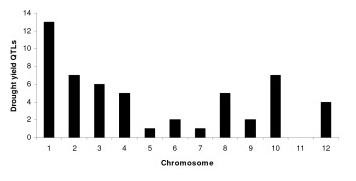
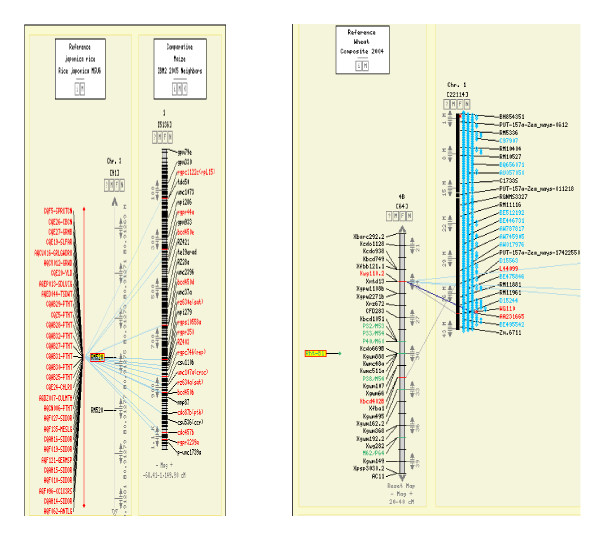
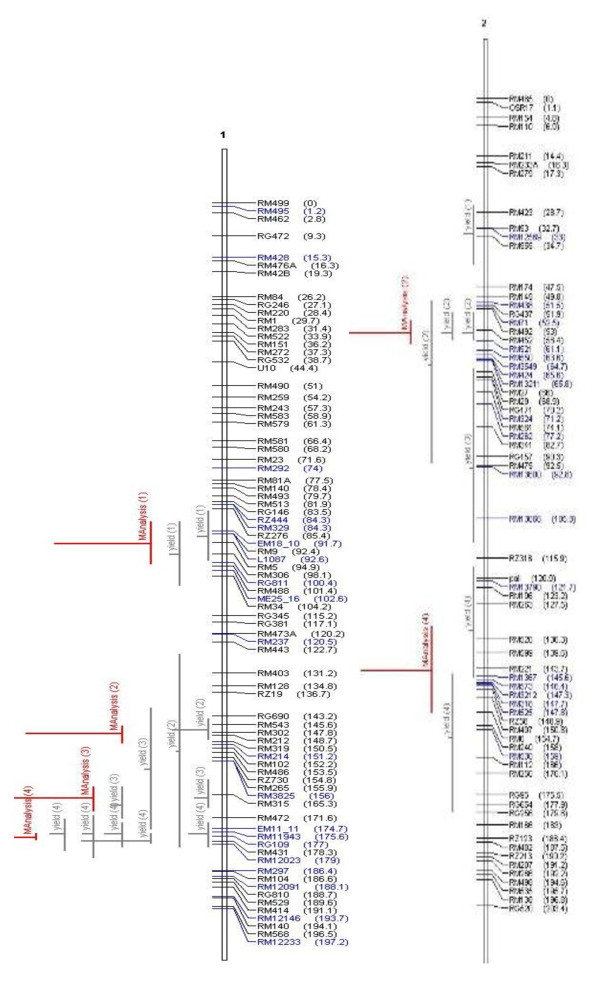
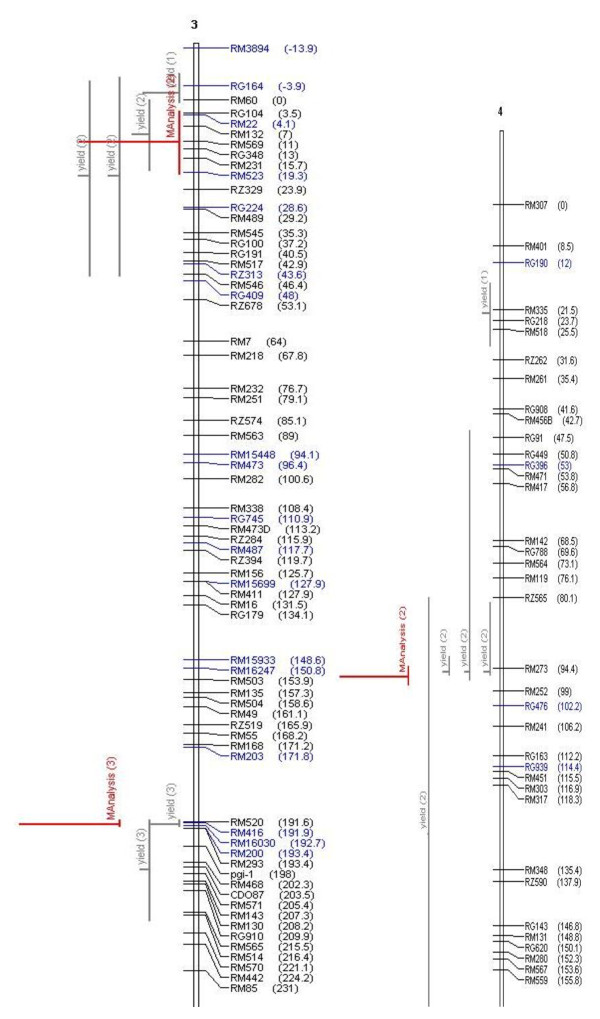
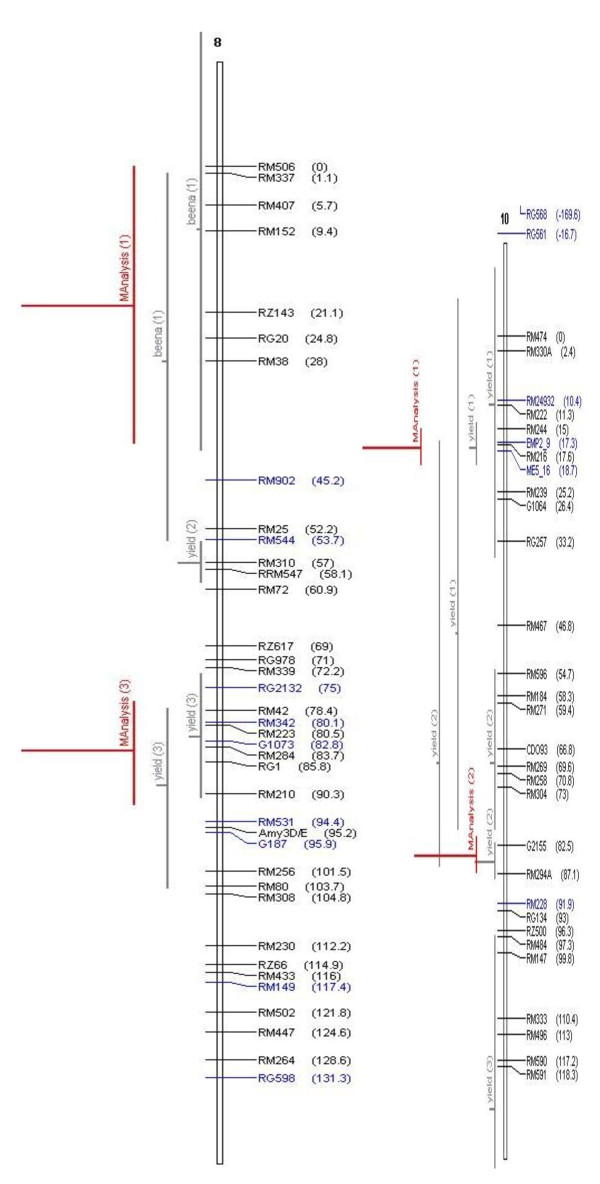
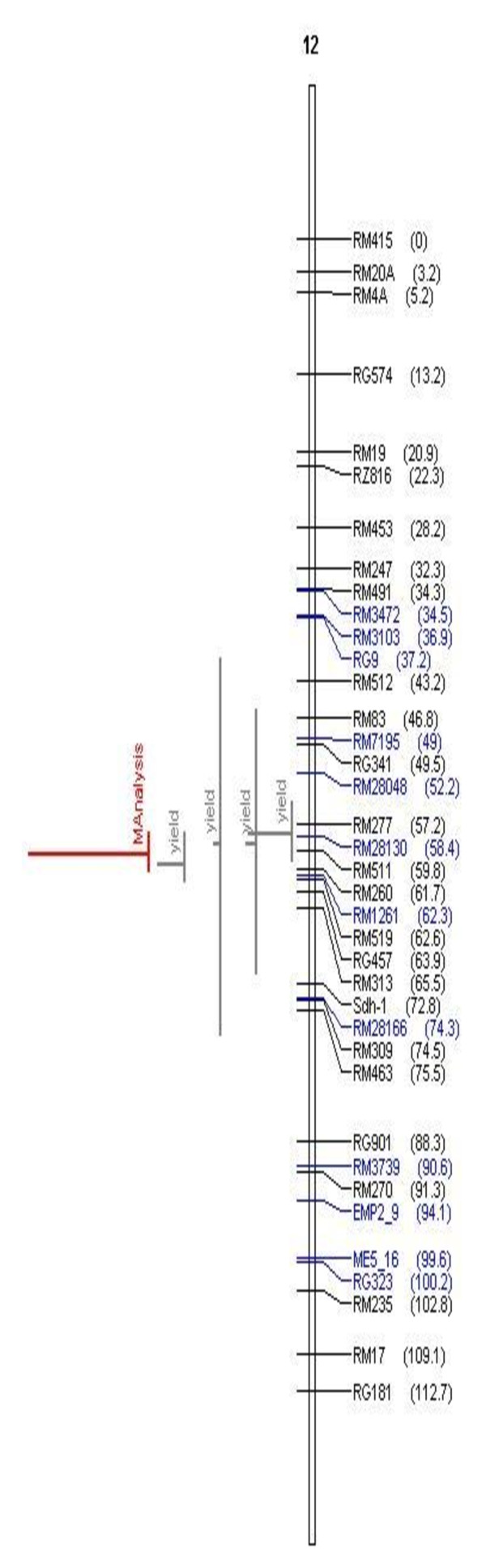
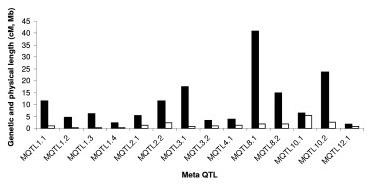
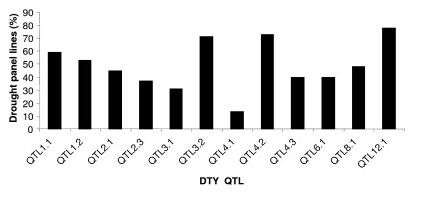
The integration of 15 maps resulted in a consensus map with 531 markers and a total map length of 1821 cM. Fifty-three yield QTL reported in 15 studies were projected on a consensus map and meta-analysis was performed. Fourteen meta-QTL were obtained on seven chromosomes. MQTL1.2, MQTL1.3, MQTL1.4, and MQTL12.1 were around 700 kb and corresponded to a reasonably small genetic distance of 1.8 to 5 cM and they are suitable for use in marker-assisted selection (MAS). The meta-QTL for grain yield under drought coincided with at least one of the meta-QTL identified for root and leaf morphology traits under drought in earlier reports. Validation of major-effect QTL on a panel of random drought-tolerant lines revealed the presence of at least one major QTL in each line. DTY12.1 was present in 85% of the lines, followed by DTY4.1 in 79% and DTY1.1 in 64% of the lines. Comparative genomics of meta-QTL with other cereals revealed that the homologous regions of MQTL1.4 and MQTL3.2 had QTL for grain yield under drought in maize, wheat, and barley respectively. The genes in the meta-QTL regions were analyzed by a comparative genomics approach and candidate genes were deduced for grain yield under drought. Three groups of genes such as stress-inducible genes, growth and development-related genes, and sugar transport-related genes were found in clusters in most of the meta-QTL.
Meta-QTL with small genetic and physical intervals could be useful in Marker-assisted selection individually and in combinations. Validation and comparative genomics of the major-effect QTL confirmed their consistency within and across the species. The shortlisted candidate genes can be cloned to unravel the molecular mechanism regulating grain yield under drought.
在过去的几年中,人们一直在努力鉴定水稻耐旱条件下的大效应 QTL。然而,在不同的环境和遗传背景下,鉴定出最精确和一致的 QTL 对于它们在标记辅助选择中的成功应用至关重要。在这项研究中,通过应用全基因组 QTL 荟萃分析方法,试图定位与耐旱条件下产量增加相关的一致 QTL 区域。
整合了 15 个图谱,得到了一个包含 531 个标记和总图谱长度为 1821cM 的共识图谱。在 15 项研究中报告的 53 个产量 QTL 被投影到共识图谱上,并进行了荟萃分析。在七个染色体上获得了 14 个 Meta-QTL。MQTL1.2、MQTL1.3、MQTL1.4 和 MQTL12.1 约为 700kb,对应于相当小的遗传距离 1.8 到 5cM,非常适合用于标记辅助选择(MAS)。在耐旱条件下的粒产量的 Meta-QTL 与先前报道中在耐旱条件下的根和叶形态性状的至少一个 Meta-QTL 重合。对一组随机耐旱性品系的主要效应 QTL 的验证表明,每个品系中至少存在一个主要 QTL。DTY12.1 存在于 85%的品系中,其次是 DTY4.1 存在于 79%的品系中,DTY1.1 存在于 64%的品系中。Meta-QTL 与其他谷物的比较基因组学表明,MQTL1.4 和 MQTL3.2 的同源区域在玉米、小麦和大麦中分别具有耐旱条件下的粒产量 QTL。通过比较基因组学方法分析 Meta-QTL 区域的基因,并推导出耐旱条件下粒产量的候选基因。在大多数 Meta-QTL 中,发现了三组基因,如应激诱导基因、生长发育相关基因和糖转运相关基因。
具有小遗传和物理间隔的 Meta-QTL 可以单独和组合使用,在标记辅助选择中非常有用。主要效应 QTL 的验证和比较基因组学证实了它们在种内和种间的一致性。被提名的候选基因可以被克隆,以揭示调节耐旱条件下粒产量的分子机制。