Department of Medicine, Duke University Medical Center, Durham, NC 27710, USA.
Oncogene. 2012 Jan 19;31(3):282-92. doi: 10.1038/onc.2011.238. Epub 2011 Jun 20.
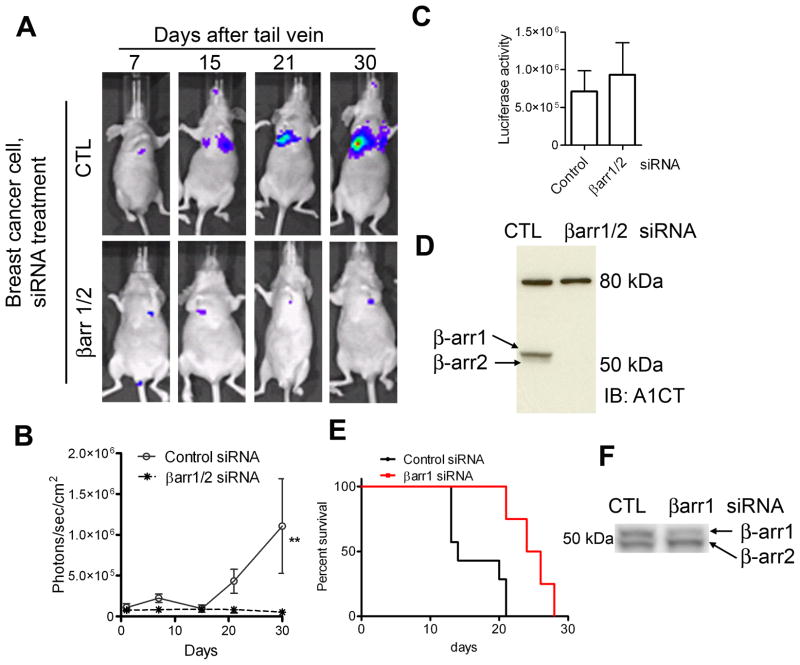
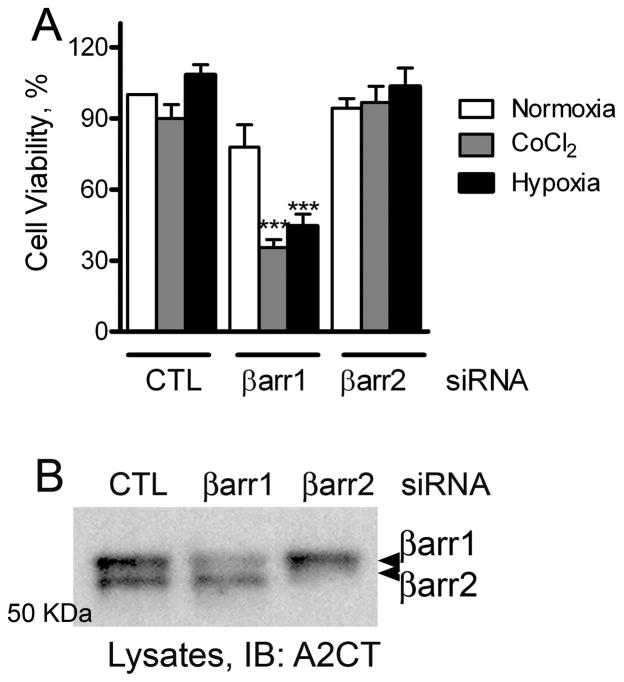
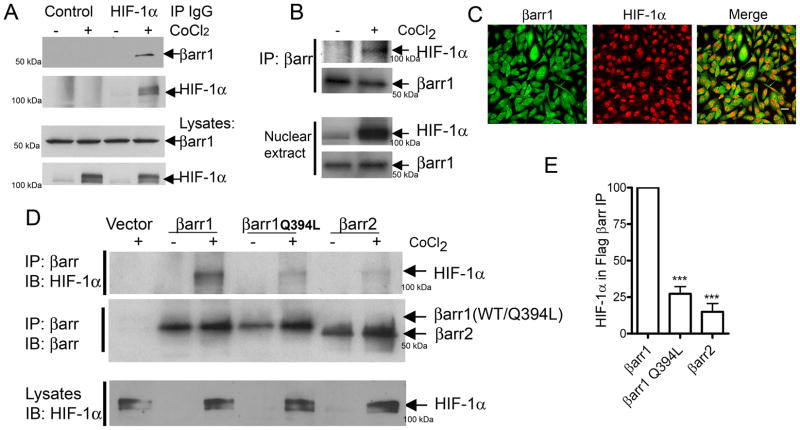
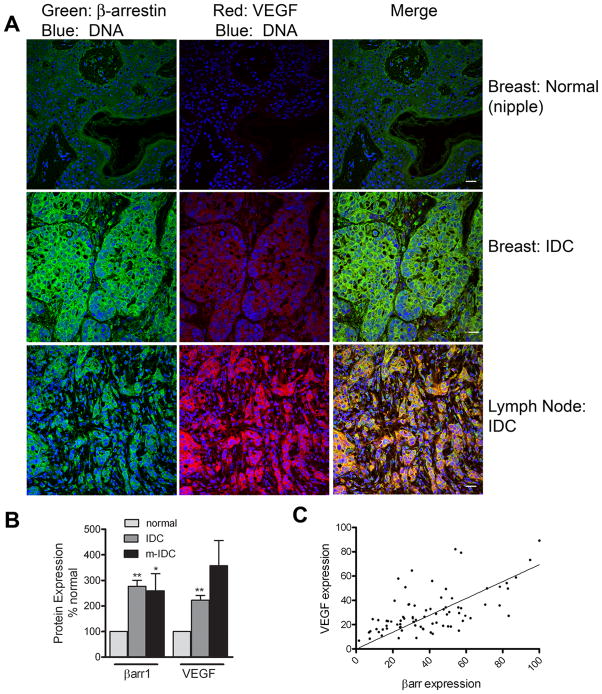
β-Arrestins 1 and 2 are multifunctional adaptor proteins originally discovered for their role in desensitizing seven-transmembrane receptor signaling via the heterotrimeric guanine nucleotide-binding proteins. Recently identified roles of β-arrestins include regulation of cancer cell chemotaxis and proliferation. Herein, we report that β-arrestin1 expression regulates breast tumor colonization in nude mice and cancer cell viability during hypoxia. β-Arrestin1 robustly interacts with nuclear hypoxia-induced factor-1α (HIF-1α) that is stabilized during hypoxia and potentiates HIF-1-dependent transcription of the angiogenic factor vascular endothelial growth factor-A (VEGF-A). Increased expression of β-arrestin1 in human breast cancer (infiltrating ductal carcinoma or IDC and metastatic IDC) correlates with increased levels of VEGF-A. While the anti-angiogenic drug thalidomide inhibits HIF-1-dependent VEGF transcription in breast carcinoma cells, it does not prevent HIF-1α stabilization, but leads to aberrant localization of HIF-1α to the perinuclear compartments and surprisingly stimulates nuclear export of β-arrestin1. Additionally, imatinib mesylate that inhibits release of VEGF induces nuclear export of β-arrestin1-HIF-1α complexes. Our findings suggest that β-arrestin1 regulates nuclear signaling during hypoxia to promote survival of breast cancer cells via VEGF signaling and that drugs that induce its translocation from the nucleus to the cytoplasm could be useful in anti-angiogenic and breast cancer therapies.
β- Arrestins 1 和 2 是多功能衔接蛋白,最初因其在通过异三聚体鸟苷酸结合蛋白使七跨膜受体信号脱敏中的作用而被发现。β-arrestin 的最近确定的作用包括调节癌细胞趋化性和增殖。在此,我们报告β-arrestin1 表达调节裸鼠乳腺癌的定植和低氧时癌细胞的活力。β-arrestin1 与核缺氧诱导因子-1α(HIF-1α)强烈相互作用,HIF-1α在低氧时稳定,并增强血管内皮生长因子-A(VEGF-A)的 HIF-1 依赖性转录。在人乳腺癌(浸润性导管癌或 IDC 和转移性 IDC)中β-arrestin1 的表达增加与 VEGF-A 水平的增加相关。虽然抗血管生成药物沙利度胺抑制乳腺癌细胞中 HIF-1 依赖性 VEGF 转录,但它不能防止 HIF-1α 稳定,而是导致 HIF-1α异常定位于核周区,并出人意料地刺激β-arrestin1 的核输出。此外,抑制 VEGF 释放的伊马替尼甲磺酸诱导β-arrestin1-HIF-1α 复合物的核输出。我们的发现表明,β-arrestin1 通过 VEGF 信号调节低氧期间的核信号,以促进乳腺癌细胞的存活,并且诱导其从核到细胞质易位的药物可能在抗血管生成和乳腺癌治疗中有用。