Jin Yi, Hu Yanxin, Han Deping, Wang Ming
Key Laboratory of Zoonosis of Ministry of Agriculture, College of Veterinary Medicine, China Agricultural University, Beijing, China.
J Biomed Biotechnol. 2011;2011:367846. doi: 10.1155/2011/367846. Epub 2011 May 29.
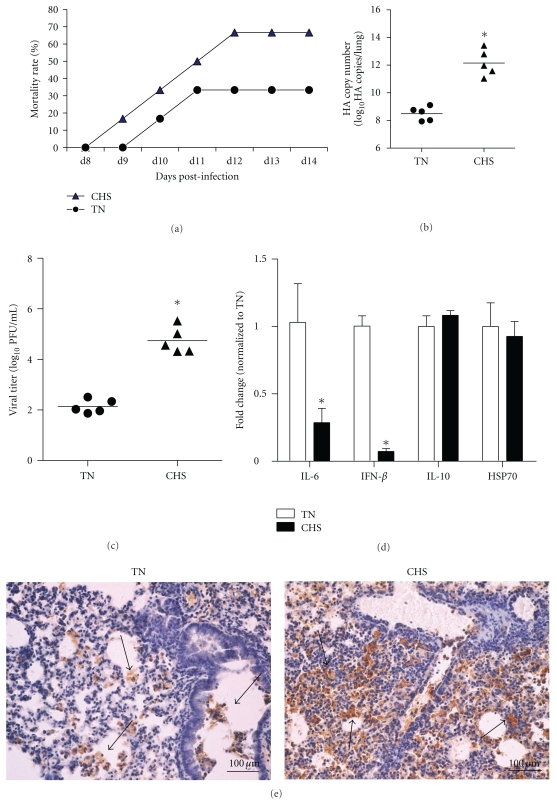
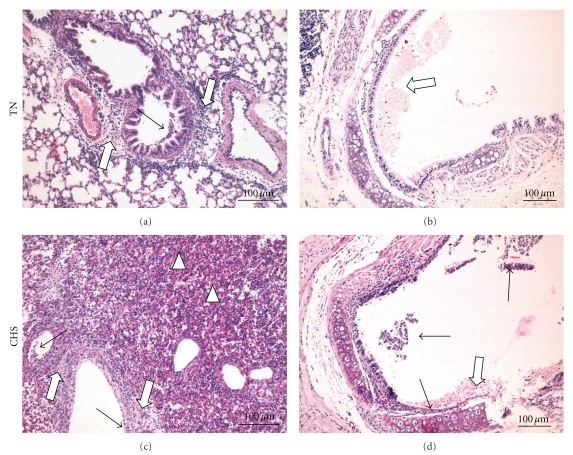
Chronic heat stress (CHS) can negatively affect immune response in animals. In this study we assessed the effects of CHS on host innate immunity and avian influenza virus H5N1 infection in mice. Mice were divided into two groups: CHS and thermally neutral (TN). The CHS treatment group exhibited reduced local immunity in the respiratory tract, including the number of pulmonary alveolar macrophages and lesions in the nasal mucosa, trachea, and lungs. Meanwhile, CHS retarded dendritic cells (DCs) maturation and reduced the mRNA levels of IL-6 and IFN-β significantly (P < .05). After the CHS treatment, mice were infected with H5N1 virus. The mortality rate and viral load in the lungs of CHS group were higher than those of TN group. The results suggest that the CHS treatment could suppress local immunity in the respiratory tract and innate host immunity in mice significantly and moderately increased the virulence in H5N1-infected mice.
慢性热应激(CHS)会对动物的免疫反应产生负面影响。在本研究中,我们评估了慢性热应激对小鼠宿主固有免疫及甲型流感病毒H5N1感染的影响。小鼠被分为两组:慢性热应激组和热中性(TN)组。慢性热应激治疗组呼吸道局部免疫功能降低,包括肺泡巨噬细胞数量以及鼻黏膜、气管和肺部的病变。同时,慢性热应激延缓了树突状细胞(DCs)的成熟,并显著降低了IL-6和IFN-β的mRNA水平(P < 0.05)。慢性热应激处理后,小鼠感染H5N1病毒。慢性热应激组小鼠的死亡率和肺内病毒载量均高于热中性组。结果表明,慢性热应激处理可显著抑制小鼠呼吸道局部免疫和宿主固有免疫,并适度增加H5N1感染小鼠的毒力。