Price Christopher T D, Kwaik Yousef Abu
Department of Microbiology and Immunology, College of Medicine, University of Louisville Louisville, KY, USA.
Front Microbiol. 2010 Nov 11;1:122. doi: 10.3389/fmicb.2010.00122. eCollection 2010.
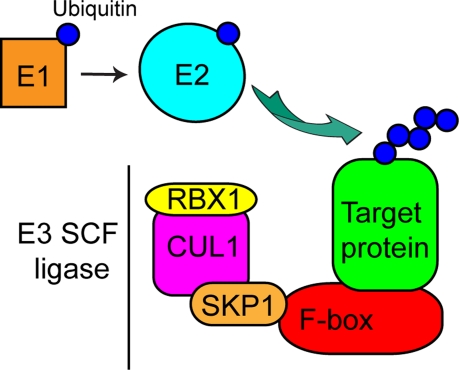
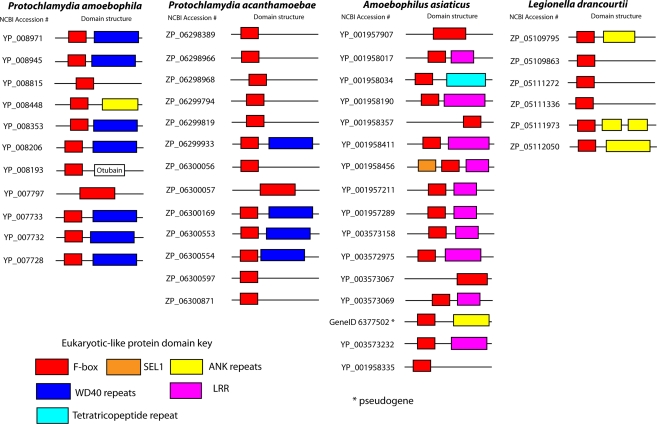
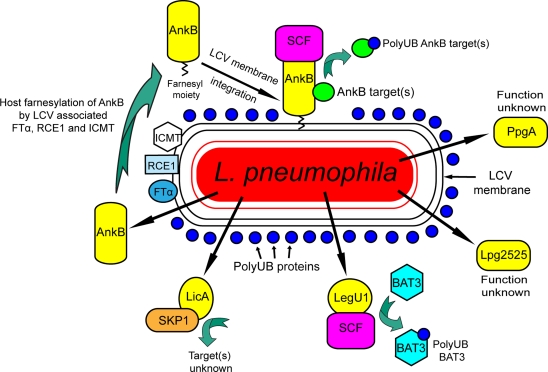
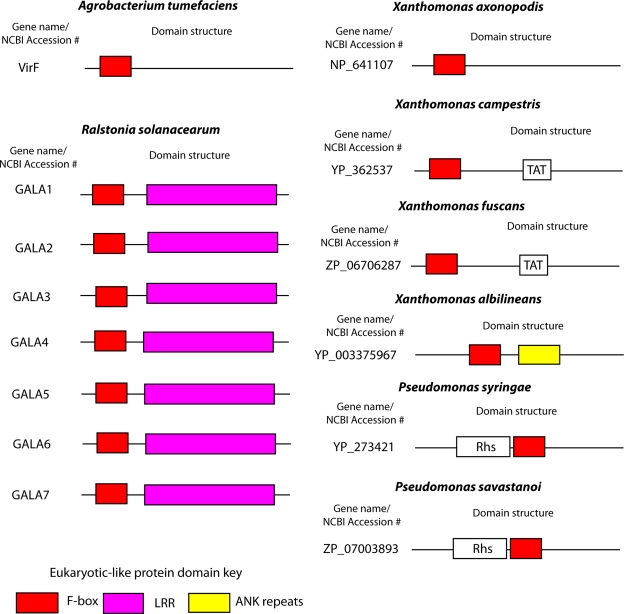
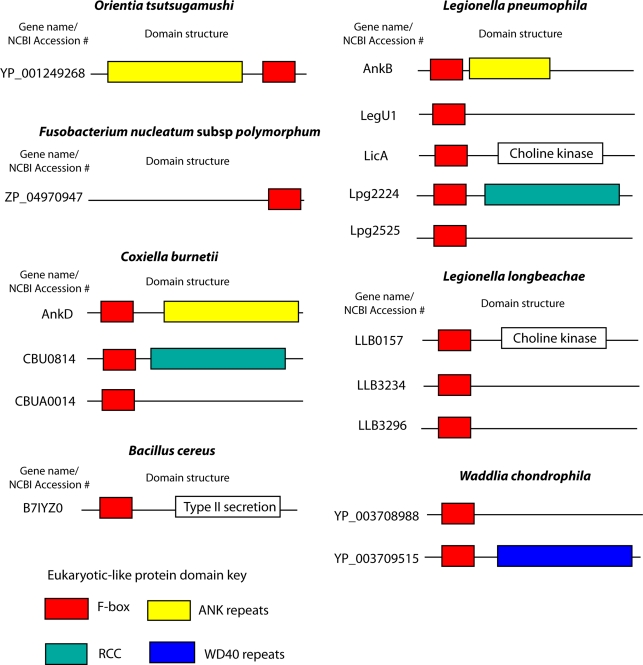
Microbial pathogens have evolved exquisite mechanisms to interfere and intercept host biological processes, often through molecular mimicry of specific host proteins. Ubiquitination is a highly conserved eukaryotic post-translational modification essential in determining protein fate, and is often hijacked by pathogenic bacteria. The conserved SKP1/CUL1/F-box (SCF) E3 ubiquitin ligase complex plays a key role in ubiquitination of proteins in eukaryotic cells. The F-box protein component of the SCF complex provides specificity to ubiquitination by binding to specific cellular proteins, targeting them to be ubiquitinated by the SCF complex. The bacterial pathogens. Legionella pneumophila, Agrobacterium tumefaciens, and Ralstonia solanacearum utilize type III or IV translocation systems to inject into the host cell eukaryotic-like F-box effectors that interact with the host SKP1 component of the SCF complex to trigger ubiquitination of specific host cells targets, which is essential to promote proliferation of these pathogens. Our bioinformatic analyses have identified at least 74 genes encoding putative F-box proteins belonging to 22 other bacterial species, including human pathogens, plant pathogens, and amebal endosymbionts. Therefore, subversion of the host ubiquitination machinery by bacterial F-box proteins may be a widespread strategy amongst pathogenic bacteria. The findings that bacterial F-box proteins harbor Ankyrin repeats as protein-protein interaction domains, which are present in F-box proteins of primitive but not higher eukaryotes, suggest acquisition of many bacterial F-box proteins from primitive eukaryotic hosts rather than the mammalian host.
微生物病原体已经进化出精妙的机制来干扰和阻断宿主的生物学过程,通常是通过分子模拟特定的宿主蛋白来实现。泛素化是一种高度保守的真核生物翻译后修饰,对于决定蛋白质的命运至关重要,并且经常被致病细菌所利用。保守的SKP1/CUL1/F-box(SCF)E3泛素连接酶复合物在真核细胞蛋白质的泛素化过程中起关键作用。SCF复合物的F-box蛋白成分通过与特定的细胞蛋白结合,赋予泛素化特异性,将这些蛋白靶向由SCF复合物进行泛素化。细菌病原体嗜肺军团菌、根癌土壤杆菌和青枯雷尔氏菌利用III型或IV型转运系统将类似真核细胞的F-box效应蛋白注入宿主细胞,这些效应蛋白与SCF复合物的宿主SKP1成分相互作用,触发特定宿主细胞靶标的泛素化,这对于促进这些病原体的增殖至关重要。我们的生物信息学分析已经鉴定出至少74个编码推定F-box蛋白的基因,它们属于其他22种细菌,包括人类病原体、植物病原体和变形虫内共生体。因此,细菌F-box蛋白颠覆宿主泛素化机制可能是致病细菌中一种广泛存在的策略。细菌F-box蛋白含有锚蛋白重复序列作为蛋白质-蛋白质相互作用结构域,这些结构域存在于原始真核生物而非高等真核生物的F-box蛋白中,这一发现表明许多细菌F-box蛋白是从原始真核宿主而非哺乳动物宿主获得的。