School of Biological Sciences, Monash University, Clayton, Victoria, Australia.
PLoS One. 2011;6(6):e21114. doi: 10.1371/journal.pone.0021114. Epub 2011 Jun 14.
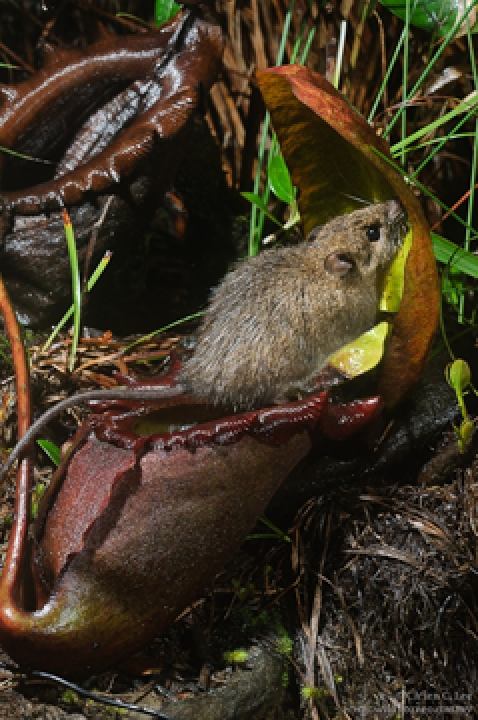
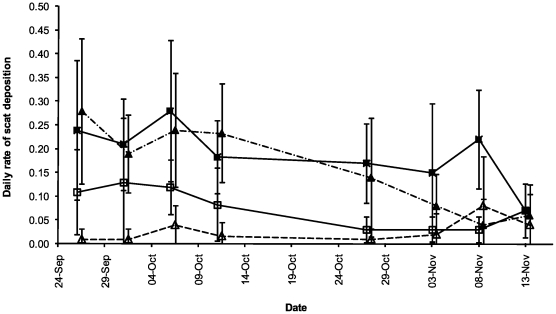
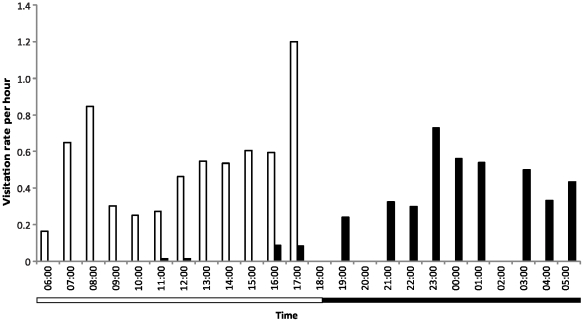
The carnivorous pitcher plant genus Nepenthes grows in nutrient-deficient substrates and produce jug-shaped leaf organs (pitchers) that trap arthropods as a source of N and P. A number of Bornean Nepenthes demonstrate novel nutrient acquisition strategies. Notably, three giant montane species are engaged in a mutualistic association with the mountain treeshrew, Tupaia montana, in which the treeshrew defecates into the pitchers while visiting them to feed on nectar secretions on the pitchers' lids.Although the basis of this resource mutualism has been elucidated, many aspects are yet to be investigated. We sought to provide insights into the value of the mutualism to each participant. During initial observations we discovered that the summit rat, R. baluensis, also feeds on sugary exudates of N. rajah pitchers and defecates into them, and that this behavior appears to be habitual. The scope of the study was therefore expanded to assess to what degree N. rajah interacts with the small mammal community.We found that both T. montana and R. baluensis are engaged in a mutualistic interaction with N. rajah. T .montana visit pitchers more frequently than R. baluensis, but daily scat deposition rates within pitchers do not differ, suggesting that the mutualistic relationships are of a similar strength. This study is the first to demonstrate that a mutualism exists between a carnivorous plant species and multiple members of a small mammal community. Further, the newly discovered mutualism between R. baluensis and N. rajah represents only the second ever example of a multidirectional resource-based mutualism between a mammal and a carnivorous plant.
肉食性猪笼草属植物生长在营养缺乏的基质中,并产生罐状的叶片器官(猪笼),以捕捉节肢动物作为氮和磷的来源。一些婆罗洲猪笼草表现出新颖的营养获取策略。值得注意的是,三种巨型山地物种与山地树鼩(Tupaia montana)形成互利共生关系,树鼩在访问猪笼以吸食盖子上的花蜜分泌物时会在猪笼里排便。尽管这种资源互利共生的基础已经阐明,但仍有许多方面有待研究。我们试图深入了解互利共生对每个参与者的价值。在初步观察中,我们发现山顶鼠(R. baluensis)也以 N. rajah 猪笼的含糖渗出物为食,并在其中排便,而且这种行为似乎是习惯性的。因此,研究范围扩大到评估 N. rajah 与小型哺乳动物社区的互动程度。我们发现,T. montana 和 R. baluensis 都与 N. rajah 形成互利共生关系。T.montana 比 R. baluensis 更频繁地访问猪笼,但每天在猪笼内的粪便沉积率没有差异,这表明互利共生关系的强度相似。这项研究首次表明,肉食性植物物种与小型哺乳动物社区的多个成员之间存在互利共生关系。此外,R. baluensis 和 N. rajah 之间新发现的互利共生关系仅代表哺乳动物和肉食性植物之间第二次出现的基于资源的多方向互利共生关系。