School of Biological Sciences, The University of Queensland, St Lucia, Queensland, Australia.
PLoS One. 2011;6(6):e20946. doi: 10.1371/journal.pone.0020946. Epub 2011 Jun 14.
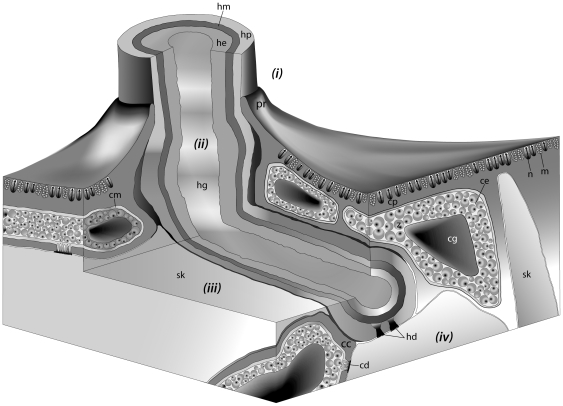
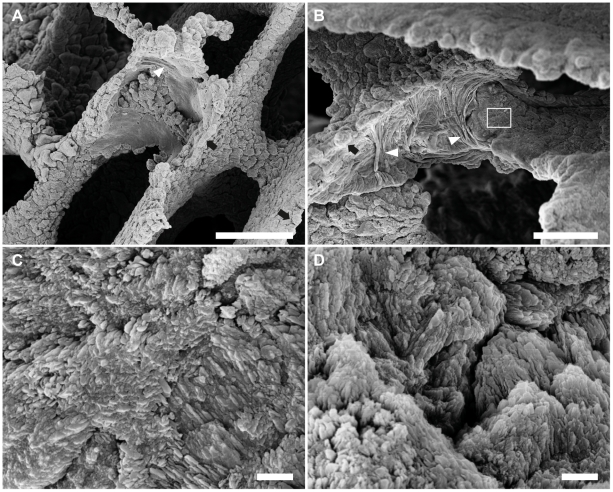
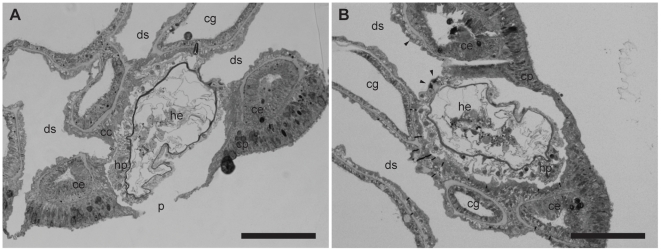
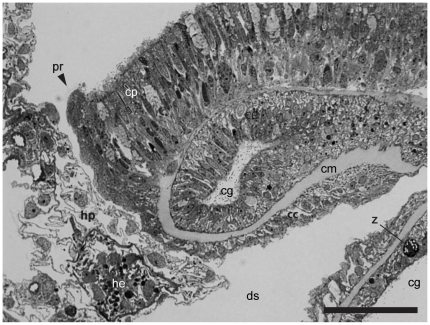
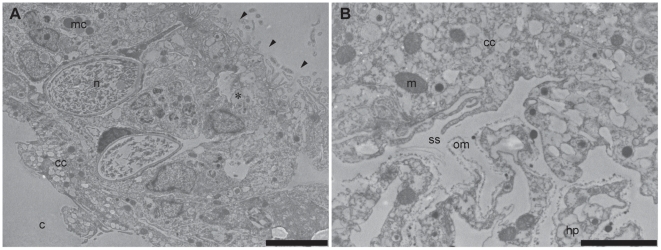
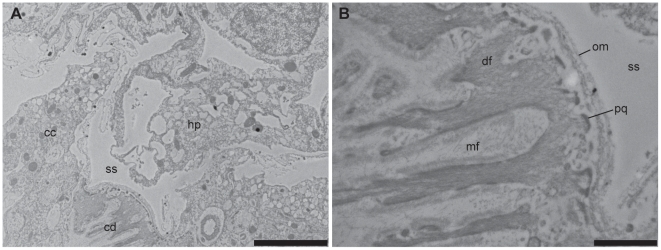
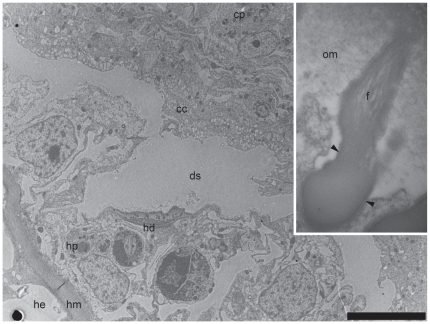
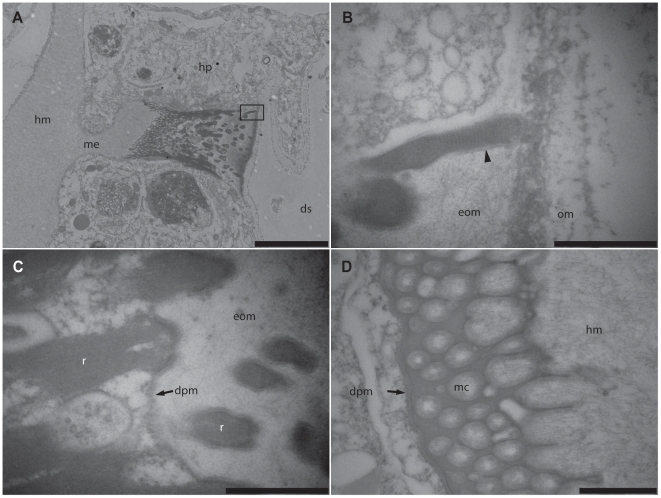
Hydroids form symbiotic relationships with a range of invertebrate hosts. Where they live with colonial invertebrates such as corals or bryozoans the hydroids may benefit from the physical support and protection of their host's hard exoskeleton, but how they interact with them is unknown. Electron microscopy was used to investigate the physical interactions between the colonial hydroid Zanclea margaritae and its reef-building coral host Acropora muricata. The hydroid tissues extend below the coral tissue surface sitting in direct contact with the host's skeleton. Although this arrangement provides the hydroid with protective support, it also presents problems of potential interference with the coral's growth processes and exposes the hydroid to overgrowth and smothering. Desmocytes located within the epidermal layer of the hydroid's perisarc-free hydrorhizae fasten it to the coral skeleton. The large apical surface area of the desmocyte and high bifurcation of the distal end within the mesoglea, as well as the clustering of desmocytes suggests that a very strong attachment between the hydroid and the coral skeleton. This is the first study to provide a detailed description of how symbiotic hydroids attach to their host's skeleton, utilising it for physical support. Results suggest that the loss of perisarc, a characteristic commonly associated with symbiosis, allows the hydroid to utilise desmocytes for attachment. The use of these anchoring structures provides a dynamic method of attachment, facilitating detachment from the coral skeleton during extension, thereby avoiding overgrowth and smothering enabling the hydroid to remain within the host colony for prolonged periods of time.
水螅与一系列无脊椎动物宿主形成共生关系。当它们与珊瑚或苔藓虫等群体无脊椎动物生活在一起时,水螅可能会受益于宿主坚硬外骨骼的物理支撑和保护,但它们与宿主的相互作用方式尚不清楚。电子显微镜被用来研究群体水螅 Zanclea margaritae 与其造礁珊瑚宿主 Acropora muricata 之间的物理相互作用。水螅组织延伸到珊瑚组织表面以下,与宿主的骨骼直接接触。虽然这种安排为水螅提供了保护支撑,但它也带来了潜在干扰珊瑚生长过程的问题,并使水螅面临过度生长和窒息的风险。位于水螅表皮层无体壁游离水螅根内的韧细胞将其固定在珊瑚骨骼上。韧细胞的大顶表面面积和在中胶层内远端的高分支,以及韧细胞的聚集表明水螅和珊瑚骨骼之间存在非常强的附着。这是第一项详细描述共生水螅如何附着在宿主骨骼上以获得物理支撑的研究。研究结果表明,体壁的丧失,这是与共生关系通常相关的一个特征,使水螅能够利用韧细胞进行附着。这些锚固结构的使用提供了一种动态的附着方法,使水螅在伸展时能够从珊瑚骨骼上脱离,从而避免过度生长和窒息,使水螅能够在宿主群体中长时间停留。