School of Physics, The University of Western Australia, Crawley, Western Australia, Australia.
PLoS One. 2011;6(6):e20805. doi: 10.1371/journal.pone.0020805. Epub 2011 Jun 14.
Novel diagnostic tools, including PCR and high field gradient magnetic fractionation (HFGMF), have improved detection of asexual Plasmodium falciparum parasites and especially infectious gametocytes in human blood. These techniques indicate a significant number of people carry gametocyte densities that fall below the conventional threshold of detection achieved by standard light microscopy (LM).
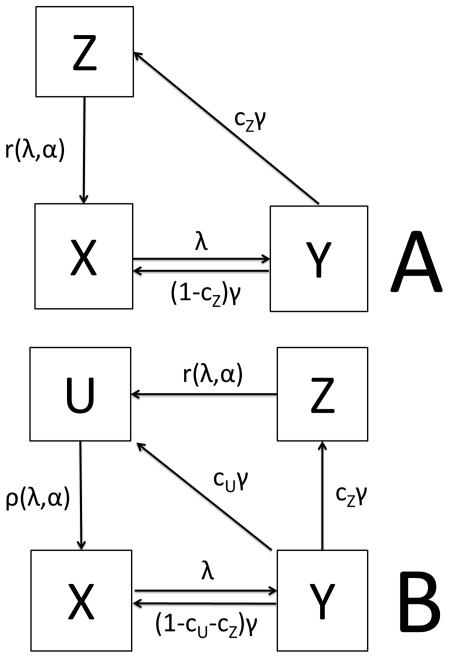
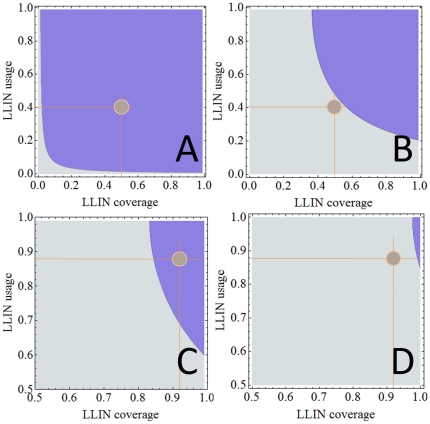
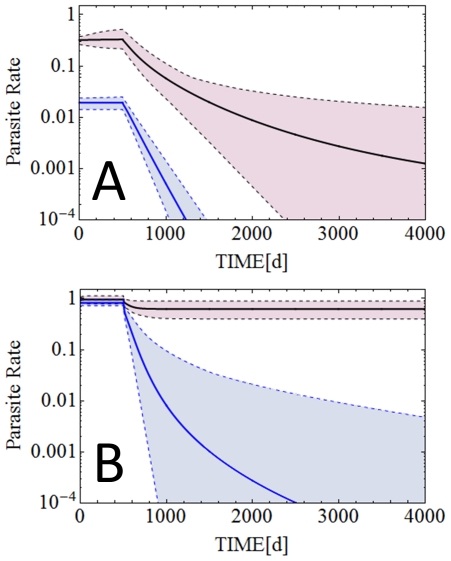
METHODOLOGY/PRINCIPAL FINDINGS: To determine how low-level gametocytemia may affect transmission in present large-scale efforts for P. falciparum control in endemic areas, we developed a refinement of the classical Ross-Macdonald model of malaria transmission by introducing multiple infective compartments to model the potential impact of highly prevalent, low gametocytaemic reservoirs in the population. Models were calibrated using field-based data and several numerical experiments were conducted to assess the effect of high and low gametocytemia on P. falciparum transmission and control. Special consideration was given to the impact of long-lasting insecticide-treated bed nets (LLIN), presently considered the most efficient way to prevent transmission, and particularly LLIN coverage similar to goals targeted by the Roll Back Malaria and Global Fund malaria control campaigns. Our analyses indicate that models which include only moderate-to-high gametocytemia (detectable by LM) predict finite eradication times after LLIN introduction. Models that include a low gametocytemia reservoir (requiring PCR or HFGMF detection) predict much more stable, persistent transmission. Our modeled outcomes result in significantly different estimates for the level and duration of control needed to achieve malaria elimination if submicroscopic gametocytes are included.
CONCLUSIONS/SIGNIFICANCE: It will be very important to complement current methods of surveillance with enhanced diagnostic techniques to detect asexual parasites and gametocytes to more accurately plan, monitor and guide malaria control programs aimed at eliminating malaria.
新型诊断工具,包括 PCR 和高磁场梯度磁分离(HFGMF),提高了对无性疟原虫寄生虫和人类血液中传染性配子体的检测。这些技术表明,大量人携带的配子体密度低于标准光镜(LM)检测到的传统阈值。
方法/主要发现:为了确定低水平配子血症如何影响目前在流行地区针对恶性疟原虫控制的大规模努力中的传播,我们通过引入多个感染性隔室来改进疟疾传播的经典 Ross-Macdonald 模型,以模拟人口中高度流行、低配子血症性储存库的潜在影响。模型使用现场数据进行校准,并进行了几个数值实验来评估高和低配子血症对恶性疟原虫传播和控制的影响。特别考虑了长效驱虫蚊帐(LLIN)的影响,目前被认为是预防传播的最有效方法,特别是类似于遏制疟疾和全球基金疟疾控制运动目标的 LLIN 覆盖率。我们的分析表明,仅包括中至高配子血症(可通过 LM 检测到)的模型预测在引入 LLIN 后有有限的根除时间。包括低配子血症储存库(需要 PCR 或 HFGMF 检测)的模型预测更稳定、持久的传播。如果包括亚微观配子体,我们建模的结果会导致实现消除疟疾所需的控制水平和持续时间的显著不同估计。
结论/意义:用增强的诊断技术来补充当前的监测方法,以更准确地检测无性寄生虫和配子体,对于规划、监测和指导旨在消除疟疾的疟疾控制计划将非常重要。