Department of Neuroscience, Mayo Clinic Florida, Jacksonville, Florida, United States of America.
PLoS One. 2011;6(6):e20818. doi: 10.1371/journal.pone.0020818. Epub 2011 Jun 9.
Insulin-degrading enzyme (IDE) is widely recognized as the principal protease responsible for the clearance and inactivation of insulin, but its role in glycemic control in vivo is poorly understood. We present here the first longitudinal characterization, to our knowledge, of glucose regulation in mice with pancellular deletion of the IDE gene (IDE-KO mice).
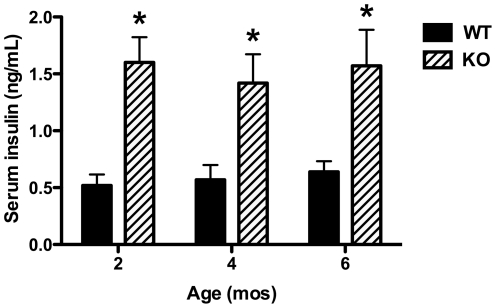
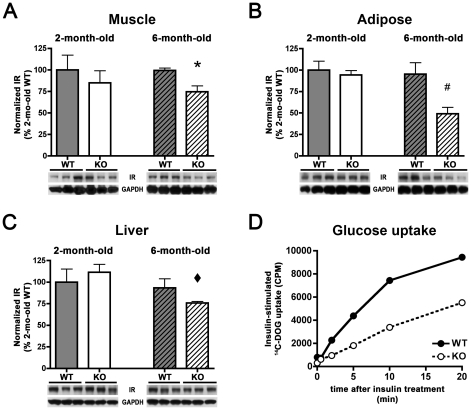
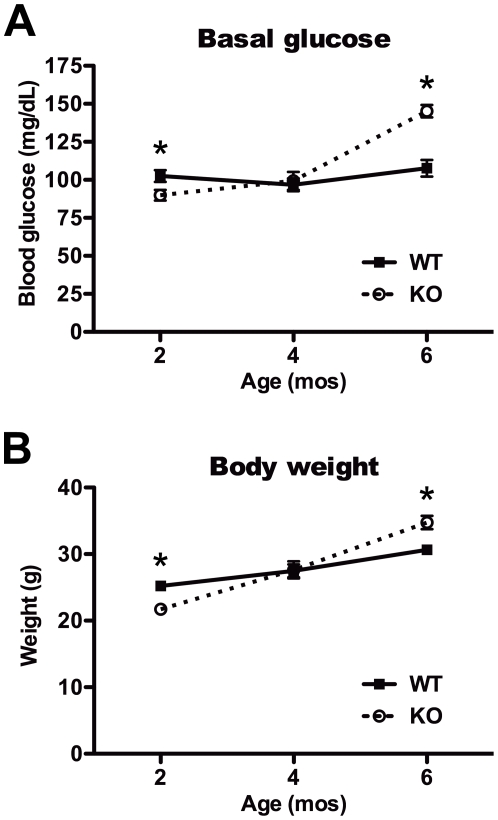
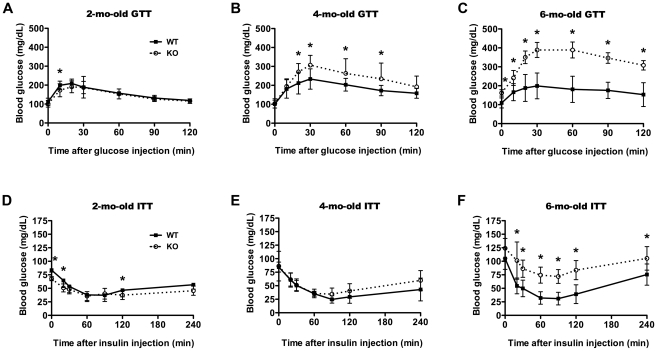
IDE-KO mice and wild-type (WT) littermates were characterized at 2, 4, and 6 months of age in terms of body weight, basal glucose and insulin levels, and insulin and glucose tolerance. Consistent with a functional role for IDE in insulin clearance, fasting serum insulin levels in IDE-KO mice were found to be ∼3-fold higher than those in wild-type (WT) controls at all ages examined. In agreement with previous observations, 6-mo-old IDE-KO mice exhibited a severe diabetic phenotype characterized by increased body weight and pronounced glucose and insulin intolerance. In marked contrast, 2-mo-old IDE-KO mice exhibited multiple signs of improved glycemic control, including lower fasting glucose levels, lower body mass, and modestly enhanced insulin and glucose tolerance relative to WT controls. Biochemically, the emergence of the diabetic phenotype in IDE-KO mice correlated with age-dependent reductions in insulin receptor (IR) levels in muscle, adipose, and liver tissue. Primary adipocytes harvested from 6-mo-old IDE-KO mice also showed functional impairments in insulin-stimulated glucose uptake.
Our results indicate that the diabetic phenotype in IDE-KO mice is not a primary consequence of IDE deficiency, but is instead an emergent compensatory response to chronic hyperinsulinemia resulting from complete deletion of IDE in all tissues throughout life. Significantly, our findings provide new evidence to support the idea that partial and/or transient inhibition of IDE may constitute a valid approach to the treatment of diabetes.
胰岛素降解酶(IDE)被广泛认为是负责清除和失活胰岛素的主要蛋白酶,但它在体内血糖控制中的作用知之甚少。我们在此介绍了 IDE 基因(IDE-KO 小鼠)全细胞缺失的小鼠的葡萄糖调节的首次纵向特征,据我们所知。
IDE-KO 小鼠和野生型(WT)同窝仔鼠在 2、4 和 6 个月大时进行特征描述,包括体重、基础血糖和胰岛素水平以及胰岛素和葡萄糖耐量。与 IDE 在胰岛素清除中的功能作用一致,IDE-KO 小鼠的空腹血清胰岛素水平在所有检查的年龄均比野生型(WT)对照高约 3 倍。与之前的观察结果一致,6 个月大的 IDE-KO 小鼠表现出严重的糖尿病表型,其特征为体重增加和明显的葡萄糖和胰岛素不耐受。相比之下,2 个月大的 IDE-KO 小鼠表现出多种改善的血糖控制迹象,包括空腹血糖水平降低、体重降低以及与 WT 对照相比胰岛素和葡萄糖耐量适度增强。生化上,IDE-KO 小鼠的糖尿病表型的出现与肌肉、脂肪和肝脏组织中胰岛素受体(IR)水平随年龄的降低相关。从 6 个月大的 IDE-KO 小鼠中收获的原代脂肪细胞也显示出胰岛素刺激的葡萄糖摄取功能障碍。
我们的结果表明,IDE-KO 小鼠的糖尿病表型不是 IDE 缺乏的主要后果,而是由于一生中所有组织中 IDE 的完全缺失导致慢性高胰岛素血症的代偿反应。重要的是,我们的发现提供了新的证据,支持部分和/或短暂抑制 IDE 可能构成治疗糖尿病的有效方法的观点。