Department of Laboratory Medicine, Laboratory of Hematology, Radboud University Medical Centre, Nijmegen, The Netherlands.
PLoS One. 2011;6(6):e20740. doi: 10.1371/journal.pone.0020740. Epub 2011 Jun 16.
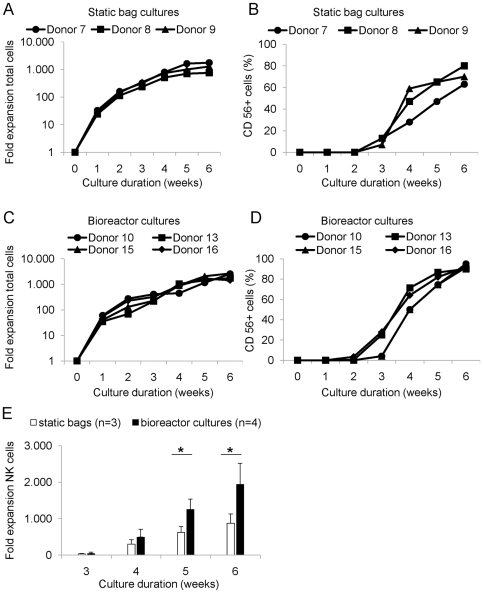
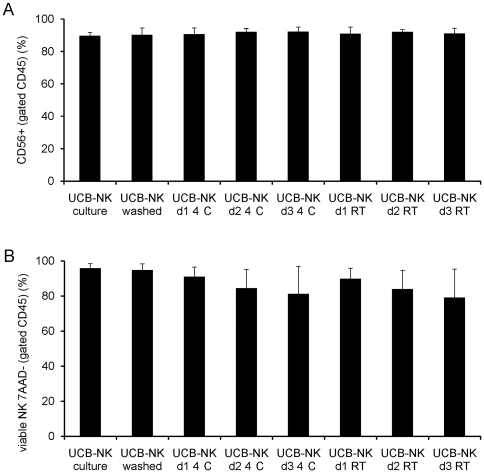
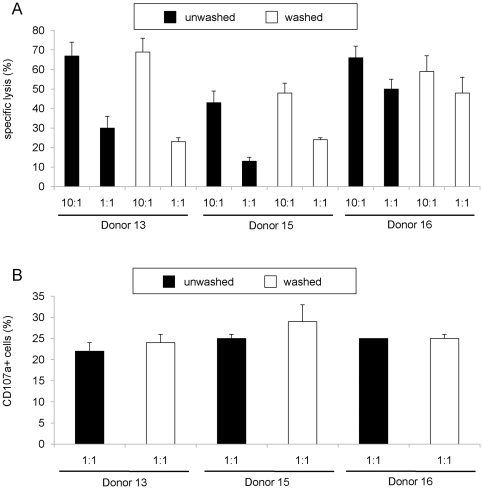
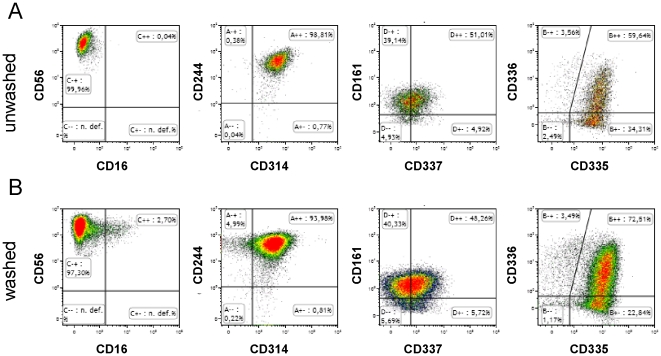
Natural killer (NK) cell-based adoptive immunotherapy is a promising treatment approach for many cancers. However, development of protocols that provide large numbers of functional NK cells produced under GMP conditions are required to facilitate clinical studies. In this study, we translated our cytokine-based culture protocol for ex vivo expansion of NK cells from umbilical cord blood (UCB) hematopoietic stem cells into a fully closed, large-scale, cell culture bioprocess. We optimized enrichment of CD34(+) cells from cryopreserved UCB units using the CliniMACS system followed by efficient expansion for 14 days in gas-permeable cell culture bags. Thereafter, expanded CD34(+) UCB cells could be reproducibly amplified and differentiated into CD56(+)CD3(-) NK cell products using bioreactors with a mean expansion of more than 2,000 fold and a purity of >90%. Moreover, expansion in the bioreactor yielded a clinically relevant dose of NK cells (mean: 2×10(9) NK cells), which display high expression of activating NK receptors and cytolytic activity against K562. Finally, we established a versatile closed washing procedure resulting in optimal reduction of medium, serum and cytokines used in the cell culture process without changes in phenotype and cytotoxic activity. These results demonstrate that large numbers of UCB stem cell-derived NK cell products for adoptive immunotherapy can be produced in closed, large-scale bioreactors for the use in clinical trials.
自然杀伤 (NK) 细胞过继免疫疗法是治疗多种癌症的一种很有前途的方法。然而,需要开发在 GMP 条件下产生大量功能 NK 细胞的方案,以促进临床研究。在这项研究中,我们将基于细胞因子的扩增脐带血 (UCB) 造血干细胞来源 NK 细胞的培养方案从体外翻译成完全封闭的、大规模的细胞培养生物工艺。我们使用 CliniMACS 系统优化了从冷冻 UCB 单位中富集 CD34+细胞,然后在透气细胞培养袋中进行 14 天的高效扩增。此后,使用生物反应器可重复性地扩增和分化扩增的 CD34+UCB 细胞,产生 CD56+CD3-NK 细胞产物,平均扩增超过 2000 倍,纯度>90%。此外,在生物反应器中扩增可获得临床相关剂量的 NK 细胞(平均值:2×10(9)NK 细胞),这些细胞对 K562 显示出高表达的激活性 NK 受体和细胞毒性活性。最后,我们建立了一种通用的封闭洗涤程序,在不改变表型和细胞毒性活性的情况下,可最佳减少细胞培养过程中使用的培养基、血清和细胞因子的用量。这些结果表明,大量的 UCB 干细胞来源的 NK 细胞产品可在封闭的、大规模的生物反应器中生产,用于临床试验。