Luevano Martha, Domogala Anna, Blundell Michael, Jackson Nicola, Pedroza-Pacheco Isabela, Derniame Sophie, Escobedo-Cousin Michelle, Querol Sergio, Thrasher Adrian, Madrigal Alejandro, Saudemont Aurore
University College London, Cancer Institute, London, United Kingdom ; Anthony Nolan Research Institute, London, United Kingdom.
Centre for Immunodeficiency, Molecular Immunology Unit, UCL Institute of Child Health, London, United Kingdom.
PLoS One. 2014 Jan 29;9(1):e87086. doi: 10.1371/journal.pone.0087086. eCollection 2014.
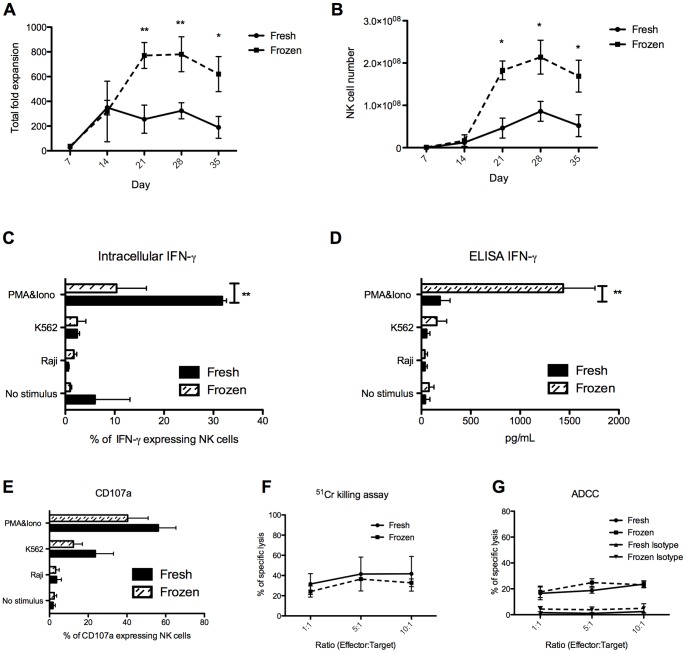
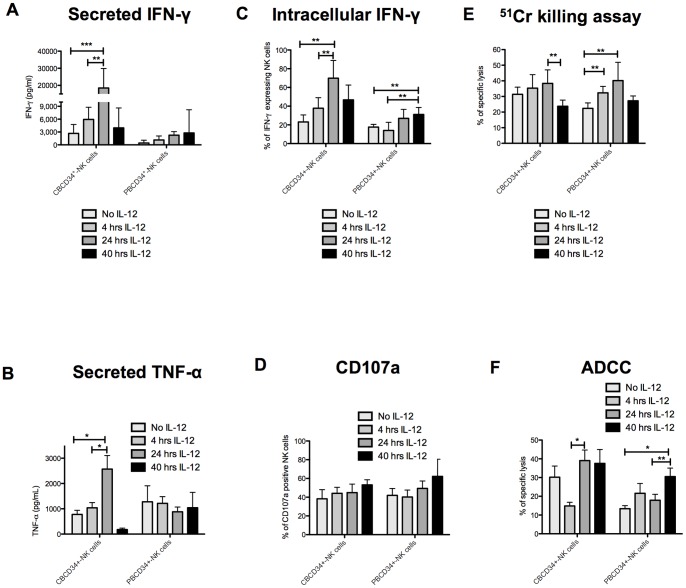
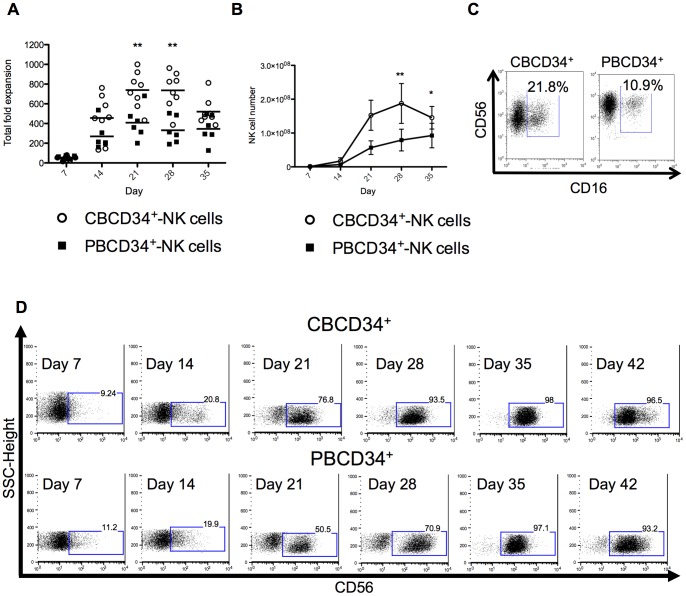
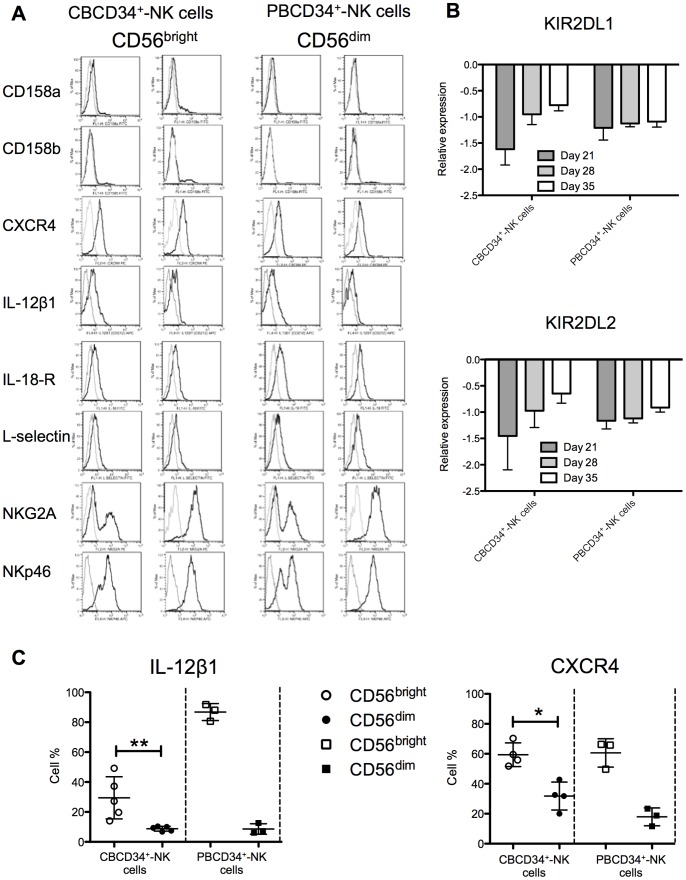
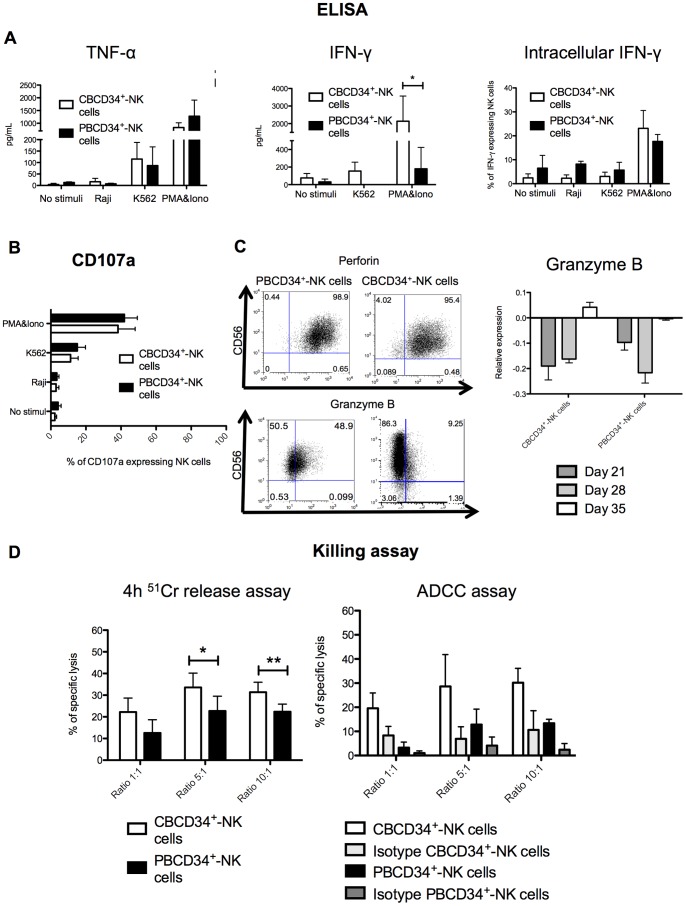
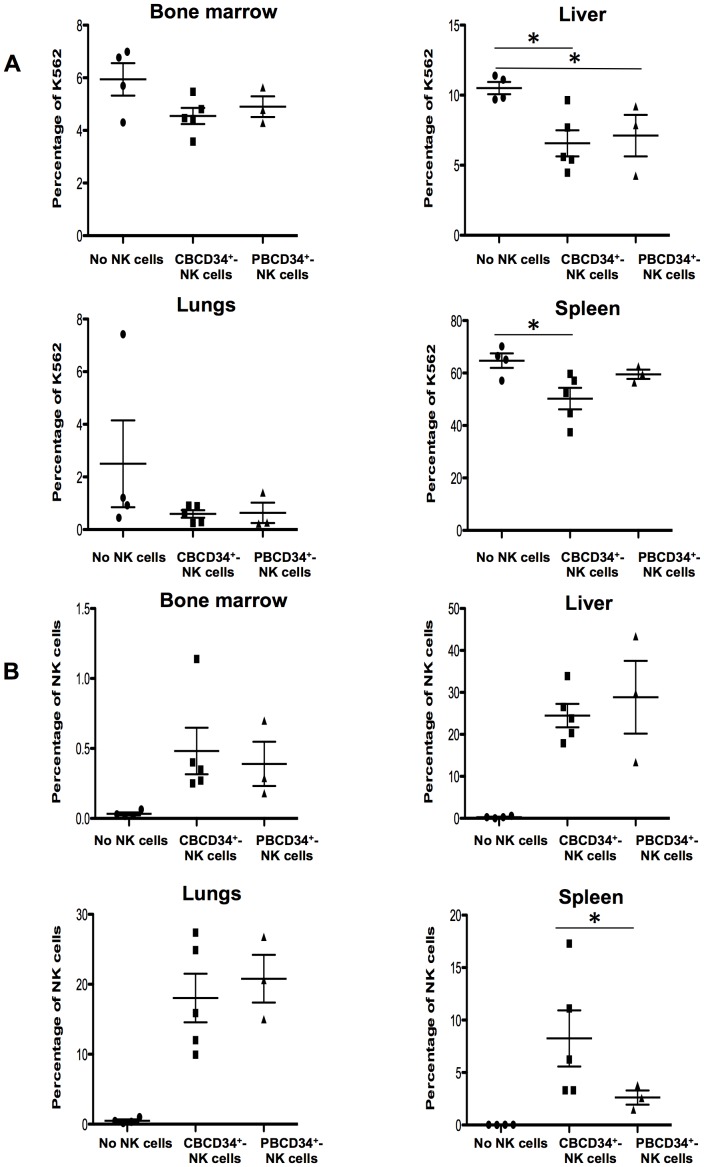
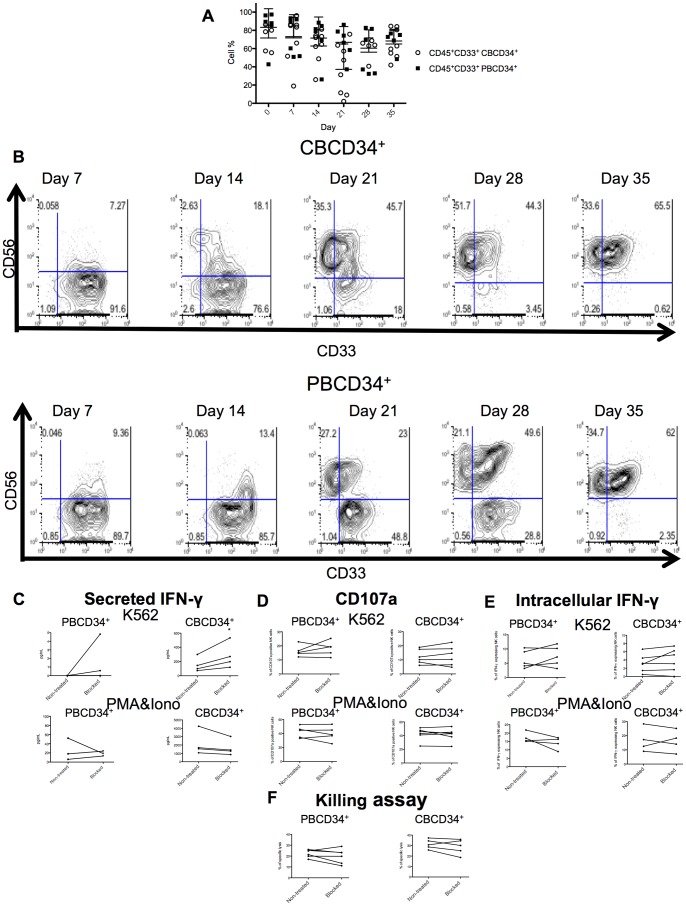
Adoptive natural killer (NK) cell therapy relies on the acquisition of large numbers of NK cells that are cytotoxic but not exhausted. NK cell differentiation from hematopoietic stem cells (HSC) has become an alluring option for NK cell therapy, with umbilical cord blood (UCB) and mobilized peripheral blood (PBCD34(+)) being the most accessible HSC sources as collection procedures are less invasive. In this study we compared the capacity of frozen or freshly isolated UCB hematopoietic stem cells (CBCD34(+)) and frozen PBCD34(+) to generate NK cells in vitro. By modifying a previously published protocol, we showed that frozen CBCD34(+) cultures generated higher NK cell numbers without loss of function compared to fresh CBCD34(+) cultures. NK cells generated from CBCD34(+) and PBCD34(+) expressed low levels of killer-cell immunoglobulin-like receptors but high levels of activating receptors and of the myeloid marker CD33. However, blocking studies showed that CD33 expression did not impact on the functions of the generated cells. CBCD34(+)-NK cells exhibited increased capacity to secrete IFN-γ and kill K562 in vitro and in vivo as compared to PBCD34(+)-NK cells. Moreover, K562 killing by the generated NK cells could be further enhanced by IL-12 stimulation. Our data indicate that the use of frozen CBCD34(+) for the production of NK cells in vitro results in higher cell numbers than PBCD34(+), without jeopardizing their functionality, rendering them suitable for NK cell immunotherapy. The results presented here provide an optimal strategy to generate NK cells in vitro for immunotherapy that exhibit enhanced effector function when compared to alternate sources of HSC.
过继性自然杀伤(NK)细胞疗法依赖于获取大量具有细胞毒性但未耗竭的NK细胞。从造血干细胞(HSC)分化产生NK细胞已成为NK细胞疗法的一个诱人选择,脐带血(UCB)和动员外周血(PBCD34(+))是最容易获取的HSC来源,因为采集程序的侵入性较小。在本研究中,我们比较了冷冻或新鲜分离的UCB造血干细胞(CBCD34(+))和冷冻PBCD34(+)在体外产生NK细胞的能力。通过修改先前发表的方案,我们发现与新鲜CBCD34(+)培养物相比,冷冻CBCD34(+)培养物产生的NK细胞数量更多且功能未丧失。从CBCD34(+)和PBCD34(+)产生的NK细胞表达低水平的杀伤细胞免疫球蛋白样受体,但高水平的激活受体和髓系标志物CD33。然而,阻断研究表明CD33表达并不影响所产生细胞的功能。与PBCD34(+)-NK细胞相比,CBCD34(+)-NK细胞在体外和体内分泌IFN-γ以及杀伤K562的能力增强。此外,IL-12刺激可进一步增强所产生的NK细胞对K562的杀伤作用。我们的数据表明,使用冷冻CBCD34(+)在体外生产NK细胞比PBCD34(+)产生的细胞数量更多,且不影响其功能,使其适用于NK细胞免疫疗法。本文呈现的结果提供了一种在体外产生NK细胞用于免疫疗法的最佳策略,与其他HSC来源相比,所产生的NK细胞具有增强的效应器功能。