Fisheries and Oceans Canada, Bedford Institute of Oceanography, Dartmouth, Nova Scotia, Canada.
PLoS One. 2011;6(6):e20981. doi: 10.1371/journal.pone.0020981. Epub 2011 Jun 15.
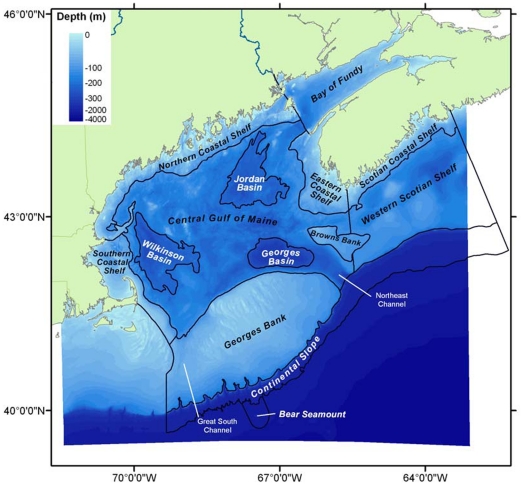
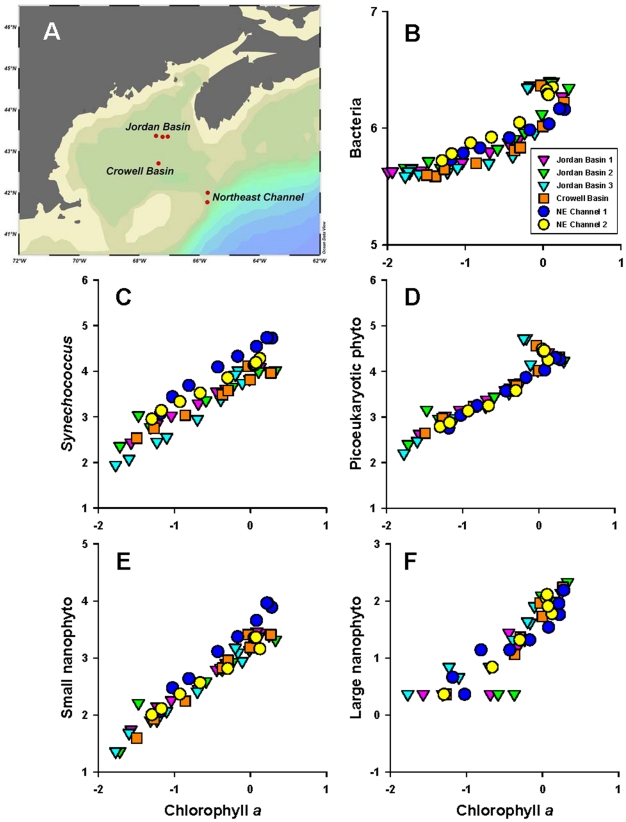
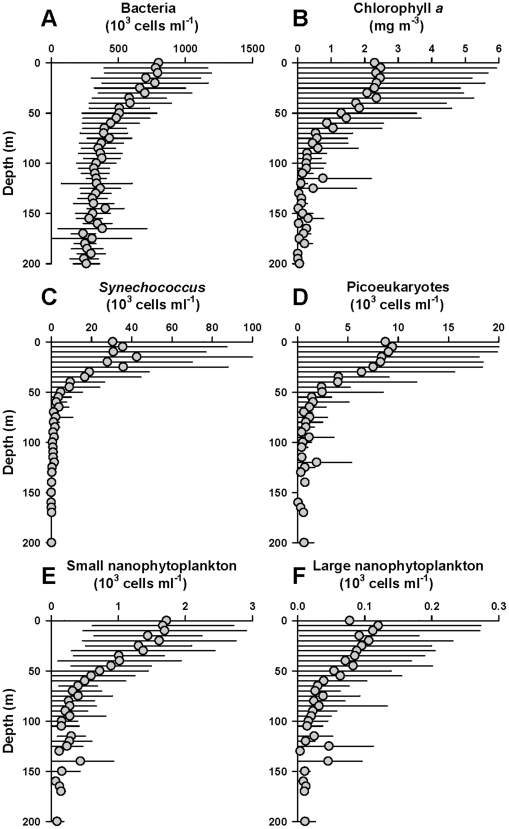
In the Gulf of Maine area (GoMA), as elsewhere in the ocean, the organisms of greatest numerical abundance are microbes. Viruses in GoMA are largely cyanophages and bacteriophages, including podoviruses which lack tails. There is also evidence of Mimivirus and Chlorovirus in the metagenome. Bacteria in GoMA comprise the dominant SAR11 phylotype cluster, and other abundant phylotypes such as SAR86-like cluster, SAR116-like cluster, Roseobacter, Rhodospirillaceae, Acidomicrobidae, Flavobacteriales, Cytophaga, and unclassified Alphaproteobacteria and Gammaproteobacteria clusters. Bacterial epibionts of the dinoflagellate Alexandrium fundyense include Rhodobacteraceae, Flavobacteriaceae, Cytophaga spp., Sulfitobacter spp., Sphingomonas spp., and unclassified Bacteroidetes. Phototrophic prokaryotes in GoMA include cyanobacteria that contain chlorophyll (mainly Synechococcus), aerobic anoxygenic phototrophs that contain bacteriochlorophyll, and bacteria that contain proteorhodopsin. Eukaryotic microalgae in GoMA include Bacillariophyceae, Dinophyceae, Prymnesiophyceae, Prasinophyceae, Trebouxiophyceae, Cryptophyceae, Dictyochophyceae, Chrysophyceae, Eustigmatophyceae, Pelagophyceae, Synurophyceae, and Xanthophyceae. There are no records of Bolidophyceae, Aurearenophyceae, Raphidophyceae, and Synchromophyceae in GoMA. In total, there are records for 665 names and 229 genera of microalgae. Heterotrophic eukaryotic protists in GoMA include Dinophyceae, Alveolata, Apicomplexa, amoeboid organisms, Labrynthulida, and heterotrophic marine stramenopiles (MAST). Ciliates include Strombidium, Lohmaniella, Tontonia, Strobilidium, Strombidinopsis and the mixotrophs Laboea strobila and Myrionecta rubrum (ex Mesodinium rubra). An inventory of selected microbial groups in each of 14 physiographic regions in GoMA is made by combining information on the depth-dependent variation of cell density and the depth-dependent variation of water volume. Across the entire GoMA, an estimate for the minimum abundance of cell-based microbes is 1.7×10(25) organisms. By one account, this number of microbes implies a richness of 10(5) to 10(6) taxa in the entire water volume of GoMA. Morphological diversity in microplankton is well-described but the true extent of taxonomic diversity, especially in the femtoplankton, picoplankton and nanoplankton--whether autotrophic, heterotrophic, or mixotrophic, is unknown.
在缅因湾地区(GoMA),与海洋中的其他地方一样,数量最多的生物是微生物。GoMA 中的病毒主要是蓝藻噬菌体和细菌噬菌体,包括缺乏尾巴的短尾噬菌体。宏基因组中也有 mimivirus 和 chlorovirus 的证据。GoMA 中的细菌包括占主导地位的 SAR11 型聚类群,以及其他丰富的聚类群,如 SAR86 样聚类群、SAR116 样聚类群、玫瑰杆菌、红螺菌科、酸杆菌科、黄杆菌目、噬纤维菌和未分类的 α-变形菌纲和γ-变形菌纲聚类群。甲藻亚历山大 fundyense 的细菌附生生物包括红杆菌科、黄杆菌科、噬纤维菌属、硫杆菌属、鞘氨醇单胞菌属和未分类的拟杆菌门。GoMA 中的光养原核生物包括含有叶绿素(主要是聚球藻)的蓝细菌、含有细菌叶绿素的好氧厌氧光养生物以及含有蛋白紫质的细菌。GoMA 中的真核微藻包括硅藻、甲藻、金藻、绿藻、毛霉、隐藻、黄藻、金藻、黄藻、隐藻、黄藻和黄藻。GoMA 中没有记录到 Bolidophyceae、Aurearenophyceae、Raphidophyceae 和 Synchromophyceae。共有 665 个微藻名称和 229 个属的记录。GoMA 中的异养真核原生动物包括甲藻、纤毛动物门、顶复门、变形虫、 Labrynthulida 和异养海洋鞭毛藻类(MAST)。纤毛虫包括 Strombidium、Lohmaniella、Tontonia、Strobilidium、Strombidinopsis 和混合营养体 Laboea strobila 和 Myrionecta rubrum(前 Mesodinium rubra)。通过结合关于细胞密度随深度变化和水体体积随深度变化的信息,对 GoMA 中 14 个地貌区域的每个区域中选定微生物组的库存进行了综合评估。在整个 GoMA 中,基于细胞的微生物最低丰度估计值为 1.7×10(25)个生物体。据估计,这些微生物的数量意味着 GoMA 整个水体中的生物种类丰富度在 10(5)到 10(6)之间。微浮游生物的形态多样性描述得很好,但真正的分类多样性程度,特别是在 femtoplankton、picoplankton 和 nanoplankton 中,无论是自养、异养还是混合营养,都还不得而知。