Division of Neonatology, The Children's Hospital of Philadelphia, 3535 Market St., Room 1433, Philadelphia, PA 19104, USA.
J Gambl Stud. 2012 Jun;28(2):225-38. doi: 10.1007/s10899-011-9256-y.
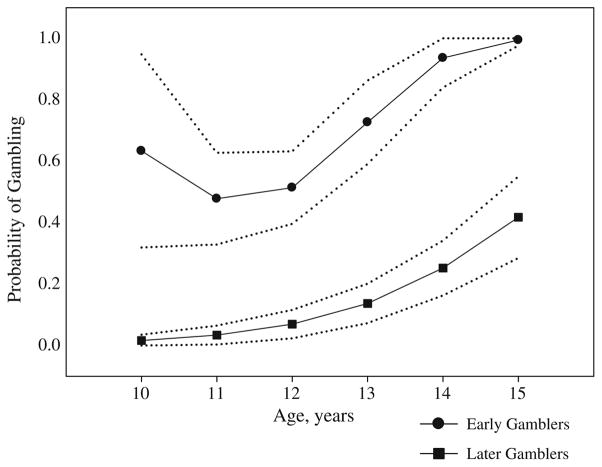
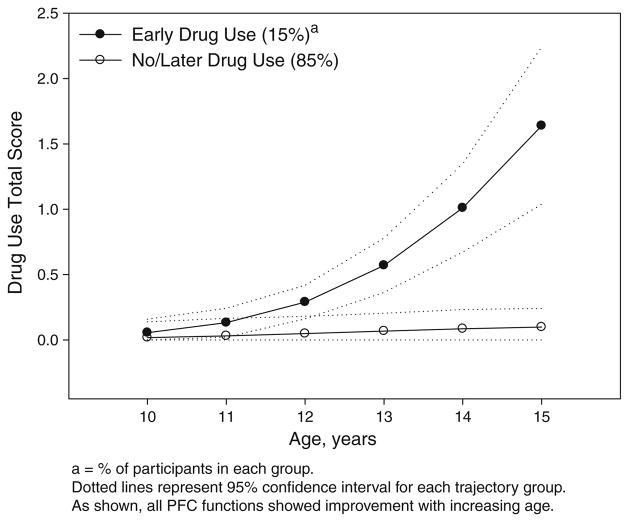
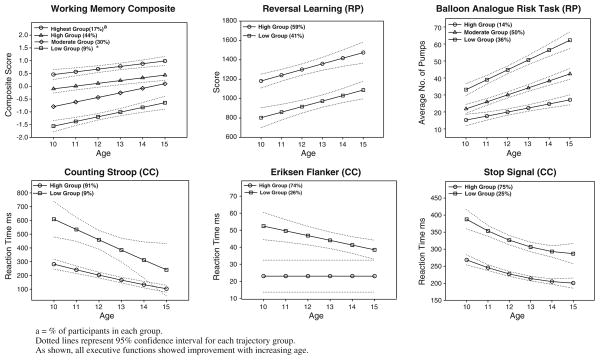
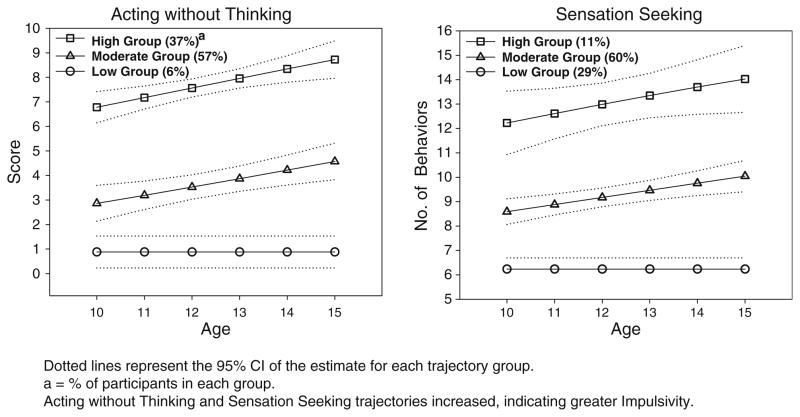
Our objectives for this report were to identify trajectories of youth gambling behavior, and to examine their relation to executive cognitive function (ECF) and associated problem behaviors. Philadelphia school children, enrolled at ages 10-12 years (n = 387; 49% male), completed three annual assessments of risk behaviors, ECF, impulsivity, problem behaviors and demographics. Across ages 10-15 years, using methods from Nagin et al., two groups were identified: Early Gamblers (n = 111) initiated early and continued in later assessments, and Later Gamblers (n = 276) initiated at later ages and gambled less. Betting money on cards and sports were the most frequently reported gambling behaviors. Using gambling group as outcome, final backward selection logistic regression model showed Early Gamblers are more likely male (P = 0.001), report more active coping (P = 0.042), impulsive behaviors (P ≤ 0.008), and have friends who gamble (P = 0.001). Groups were similar in ECF, parental monitoring, marital status, SES, and race. Early Gamblers had higher incidence of problem behaviors and drug use (all P ≤ 0.006). Two gambling groups were identified in early adolescence with Early Gamblers showing higher levels of impulsivity and comorbid problems but similar levels of ECF compared to Late Gamblers. As more gambling groups are identified through later adolescence, ECF may emerge as a relevant precursor of problem gambling at this later time.
我们本报告的目的是确定青少年赌博行为的轨迹,并研究其与执行认知功能(ECF)和相关问题行为的关系。费城的学龄儿童(n=387,49%为男性)在 10-12 岁(n=387,49%为男性)和 15 岁时分别完成了三次风险行为、ECF、冲动性、问题行为和人口统计学评估。在 10-15 岁期间,使用内金等人的方法,确定了两组:早期赌徒(n=111)早期开始并在以后的评估中继续赌博,晚期赌徒(n=276)后期开始且赌博次数较少。用卡片和体育下注是最常报告的赌博行为。使用赌博组作为结果,最终向后选择逻辑回归模型显示,早期赌徒更可能是男性(P=0.001),报告更多的积极应对(P=0.042)、冲动行为(P≤0.008)和有赌博朋友(P=0.001)。两组在 ECF、父母监督、婚姻状况、社会经济地位和种族方面相似。早期赌徒出现问题行为和药物使用的发生率更高(均 P≤0.006)。在青少年早期确定了两个赌博组,早期赌徒表现出更高水平的冲动和共病问题,但与晚期赌徒相比,ECF 水平相似。随着更多的赌博群体在青春期后期被识别出来,ECF 可能会在这个后期时间成为问题赌博的一个相关前兆。