Faculty of Medicine and Health Sciences, University of East Anglia, Norwich, Norfolk, NR4 7TJ, UK.
J Foot Ankle Res. 2011 Jun 25;4:19. doi: 10.1186/1757-1146-4-19.
Plantar heel pain is a commonly occurring foot complaint. Stretching is frequently utilised as a treatment, yet a systematic review focusing only on its effectiveness has not been published. This review aimed to assess the effectiveness of stretching on pain and function in people with plantar heel pain.
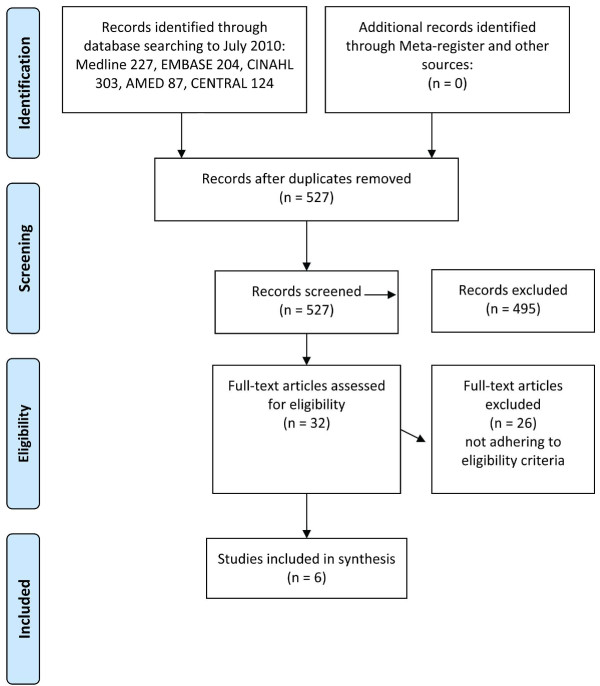
Medline, EMBASE, CINAHL, AMED, and The Cochrane Library were searched from inception to July 2010. Studies fulfilling the inclusion criteria were independently assessed, and their quality evaluated using the modified PEDro scale.
Six studies including 365 symptomatic participants were included. Two compared stretching with a control, one study compared stretching to an alternative intervention, one study compared stretching to both alternative and control interventions, and two compared different stretching techniques and durations. Quality rating on the modified Pedro scale varied from two to eight out of a maximum of ten points. The methodologies and interventions varied significantly between studies, making meta-analysis inappropriate. Most participants improved over the course of the studies, but when stretching was compared to alternative or control interventions, the changes only reached statistical significance in one study that used a combination of calf muscle stretches and plantar fascia stretches in their stretching programme. Another study comparing different stretching techniques, showed a statistically significant reduction in some aspects of pain in favour of plantar fascia stretching over calf stretches in the short term.
There were too few studies to assess whether stretching is effective compared to control or other interventions, for either pain or function. However, there is some evidence that plantar fascia stretching may be more effective than Achilles tendon stretching alone in the short-term. Appropriately powered randomised controlled trials, utilizing validated outcome measures, blinded assessors and long-term follow up are needed to assess the efficacy of stretching.
足底足跟疼痛是一种常见的足部疾病。伸展运动常被用作一种治疗方法,但尚未发表过仅关注其疗效的系统评价。本综述旨在评估伸展运动对足底足跟疼痛患者疼痛和功能的疗效。
从建库到 2010 年 7 月,检索了 Medline、EMBASE、CINAHL、AMED 和 The Cochrane Library。独立评估符合纳入标准的研究,并使用改良 PEDro 量表评估其质量。
纳入了 6 项研究,共 365 名有症状的参与者。其中 2 项研究比较了伸展运动与对照组,1 项研究比较了伸展运动与替代干预,1 项研究比较了伸展运动与替代和对照组,2 项研究比较了不同的伸展技术和持续时间。改良 Pedro 量表的质量评分从最高 10 分中的 2 分到 8 分不等。研究之间的方法学和干预措施差异很大,因此不适合进行荟萃分析。大多数参与者在研究过程中有所改善,但当伸展运动与替代或对照组相比时,只有一项研究使用小腿肌肉伸展和足底筋膜伸展相结合的伸展方案,其结果在统计学上具有显著意义。另一项比较不同伸展技术的研究显示,在短期随访中,足底筋膜伸展在某些疼痛方面比小腿伸展更有效。
由于研究数量太少,无法评估与对照组或其他干预措施相比,伸展运动在疼痛或功能方面是否有效。然而,有一些证据表明,在短期内,足底筋膜伸展可能比单独伸展跟腱更有效。需要进行适当的、随机的、对照试验,使用经过验证的结局指标、盲法评估和长期随访来评估伸展运动的疗效。