Faculty of Tropical Medicine, Mahidol University, Bangkok, Thailand.
Confl Health. 2011 Jun 28;5(1):9. doi: 10.1186/1752-1505-5-9.
This study aims to assess the situation of communicable diseases under national surveillance in the Cyclone Nargis-affected areas in Myanmar (Burma) before and after the incident.
Monthly data during 2007, 2008 and 2009 from the routine reporting system for disease surveillance of the Myanmar Ministry of Health (MMOH) were reviewed and compared with weekly reporting from the Early Warning and Rapid Response (EWAR) system. Data from some UN agencies, NGOs and Tri-Partite Core Group (TCG) periodic reviews were also extracted for comparisons with indicators from Sphere and the Inter-Agency Standing Committee.
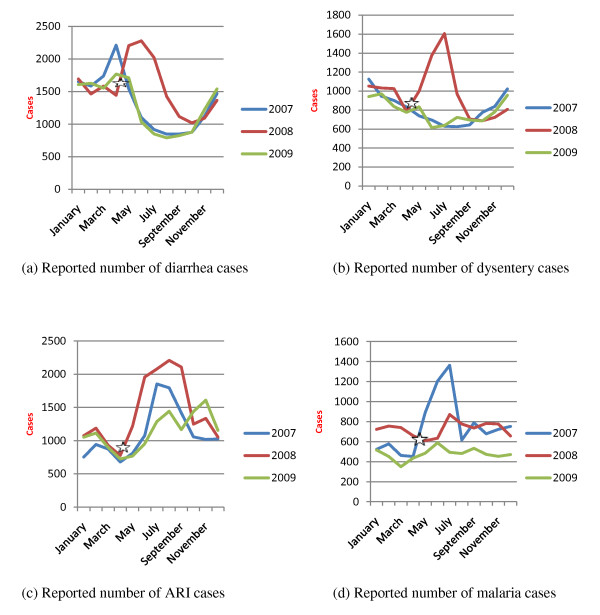
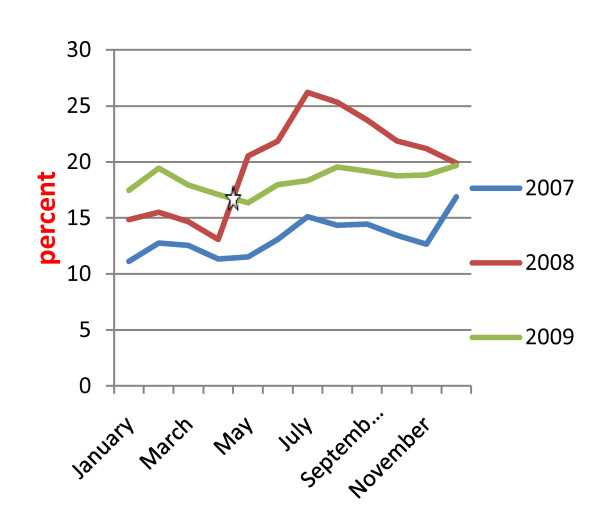
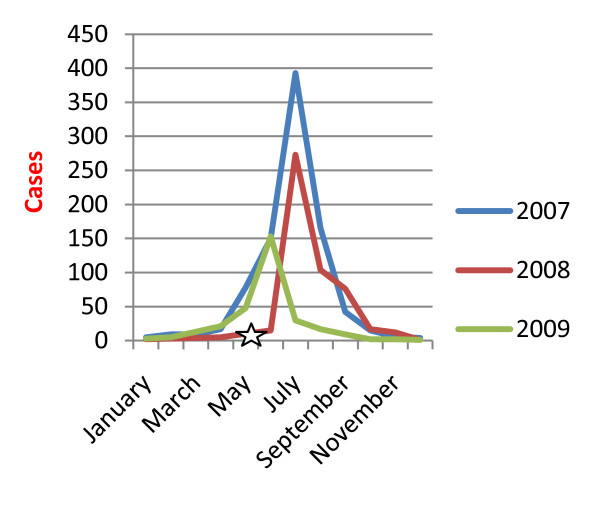
Compared to 2007 and 2009, large and atypical increases in diarrheal disease and especially dysentery cases occurred in 2008 following Cyclone Nargis. A seasonal increase in ARI reached levels higher than usual in the months of 2008 post-Nargis. The number of malaria cases post-Nargis also increased, but it was less clear if this reflected normal seasonal patterns or was specifically associated with the disaster event. There was no significant change in the occurrence of other communicable diseases in Nargis-affected areas. Except for a small decrease in mortality for diarrheal diseases and ARI in 2008 in Nargis-affected areas, population-based mortality rates for all other communicable diseases showed no significant change in 2008 in these areas, compared to 2007 and 2009. Tuberculosis control programs reached their targets of 70% case detection and 85% treatment success rates in 2007 and 2008. Vaccination coverage rates for DPT 3rd dose and measles remained at high though measles coverage still did not reach the Sphere target of 95% even by 2009. Sanitary latrine coverage in the Nargis-affected area dropped sharply to 50% in the months of 2008 following the incident but then rose to 72% in 2009.
While the incidence of diarrhea, dysentery and ARI increased post-Nargis in areas affected by the incident, the incidence rate for other diseases and mortality rates did not increase, and normal disease patterns resumed by 2009. This suggests that health services as well as prevention and control measures provided to the Nargis-affected population mitigated what could have been a far more severe health impact.
本研究旨在评估 2008 年纳尔吉斯气旋事件前后缅甸受影响地区国家监测的传染病情况。
审查了 2007 年、2008 年和 2009 年缅甸卫生部疾病监测常规报告系统的月度数据,并与早期预警和快速反应(EWAR)系统的每周报告进行了比较。还提取了一些联合国机构、非政府组织和三方核心小组(TCG)定期审查的数据,以与 Sphere 和机构间常设委员会的指标进行比较。
与 2007 年和 2009 年相比,2008 年纳尔吉斯气旋后,腹泻病和特别是痢疾病例大幅增加,呈非典型性增加。2008 年气旋后,呼吸道感染的季节性增加达到了高于往常的水平。疟疾病例也有所增加,但尚不清楚这是否反映了正常的季节性模式,还是与灾害事件有特定关联。在受纳尔吉斯气旋影响的地区,其他传染病的发生没有明显变化。除了 2008 年受纳尔吉斯气旋影响地区腹泻病和呼吸道感染死亡率略有下降外,与 2007 年和 2009 年相比,2008 年这些地区所有其他传染病的人群死亡率均无显著变化。2007 年和 2008 年,结核病控制规划达到了 70%的病例检出率和 85%的治疗成功率目标。2009 年,DPT 第三剂和麻疹疫苗的接种覆盖率仍保持较高水平,但麻疹覆盖率仍未达到 Sphere 目标的 95%。受纳尔吉斯气旋影响地区的卫生厕所覆盖率在事件发生后的 2008 年急剧下降至 50%,但在 2009 年上升至 72%。
尽管受事件影响地区的腹泻、痢疾和呼吸道感染发病率在纳尔吉斯气旋后有所增加,但其他疾病的发病率和死亡率并未增加,到 2009 年已恢复正常疾病模式。这表明,向纳尔吉斯受灾人口提供的卫生服务以及预防和控制措施减轻了本可能造成的更严重的健康影响。