Department of Neurology, Center for Neural Development and Disease, University of Rochester Medical Center, 601 Elmwood Avenue, Rochester, NY 14642 USA.
Curr Gene Ther. 2011 Oct;11(5):332-40. doi: 10.2174/156652311797415845.
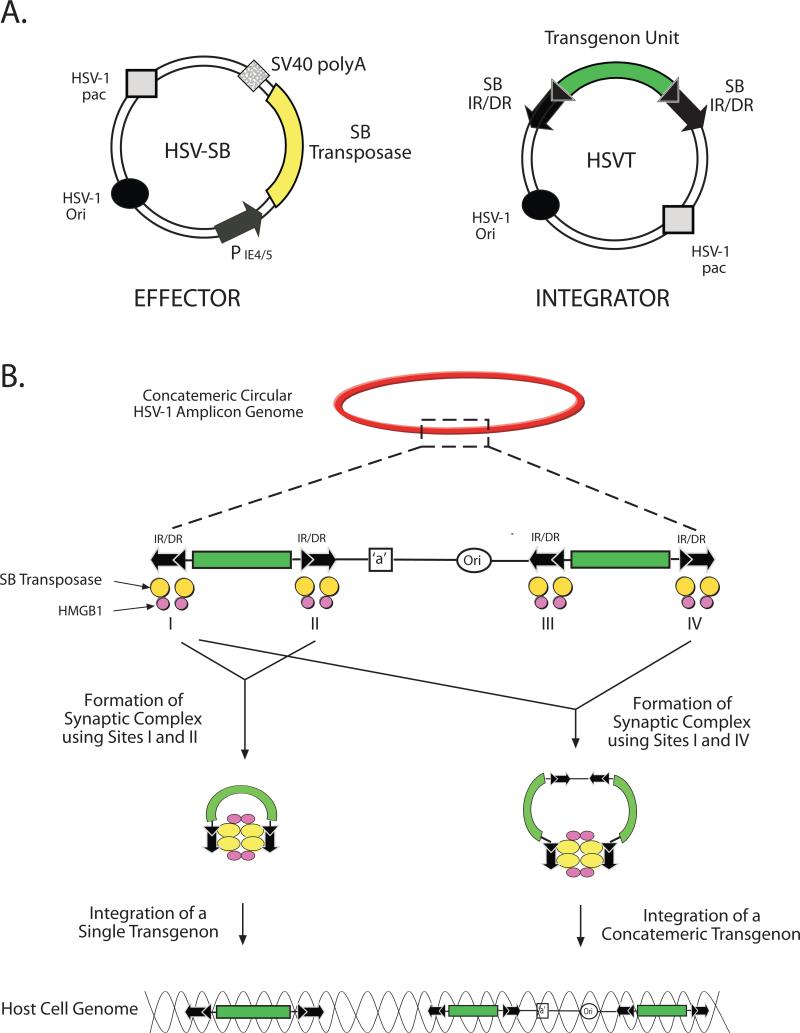
The pursuits of sustainable treatments for diseases and disorders that afflict the central nervous system (CNS) have proven challenging for the field of viral vector-based gene therapy. However, recent advances in viral vector technology coupled with efficient delivery methods have opened up new avenues that show promise at the preclinical testing stage. The development of the Herpes Simplex Virus/Sleeping Beauty (HSV/SB) hybrid vector represents such an advance for devising treatments targeting the CNS with its potential for stably integrating large transgenomic segments of DNA within the genomes of transduced cells. In utero administration of this hybrid vector into the embryonic mouse brain has revealed the capacity for widespread transgene dissemination due to the targeting of a neuronal precursor cell population. This unique feature has provided the means to stably express a transgene throughout the brain for prolonged periods, which is a prerequisite for the treatment of progressive CNS disorders. In this review we provide a comprehensive breakdown of the characteristics of the HSV/SB vector system and how it can be efficiently employed in the derivation of CNS-targeted gene therapeutic strategies.
为中枢神经系统(CNS)疾病和障碍寻找可持续的治疗方法,这对基于病毒载体的基因治疗领域来说是一个挑战。然而,病毒载体技术的最新进展以及高效的传递方法,为临床前测试阶段开辟了新的途径,展示了希望。单纯疱疹病毒/睡美人(HSV/SB)杂交载体的开发就是一个这样的进展,它为设计针对 CNS 的治疗方法提供了可能,因为它具有在转导细胞的基因组中稳定整合大片段转基因的潜力。将这种杂交载体在体内递送到胚胎鼠脑内,由于靶向神经元前体细胞群,揭示了广泛的转基因传播能力。这一独特的特性为在整个大脑中稳定表达转基因提供了条件,这是治疗进行性 CNS 疾病的前提。在这篇综述中,我们全面分析了 HSV/SB 载体系统的特性,以及如何有效地将其用于开发针对 CNS 的基因治疗策略。