Institute of Immunology, Witten/Herdecke University, Stockumer Str, 10, 58448 Witten, Germany.
Cancer Cell Int. 2011 Jun 28;11(1):21. doi: 10.1186/1475-2867-11-21.
Tumor tissue resembles chronically inflamed tissue. Since chronic inflammatory conditions are a strong stimulus for bone marrow-derived cells (BMDCs) it can be assumed that recruitment of BMDCs into cancer tissue should be a common phenomenon. Several data have outlined that BMDC can influence tumor growth and metastasis, e.g., by inducing a paracrine acting feedback loop in tumor cells. Likewise, cell fusion and horizontal gene transfer are further mechanisms how BMDCs can trigger tumor progression.
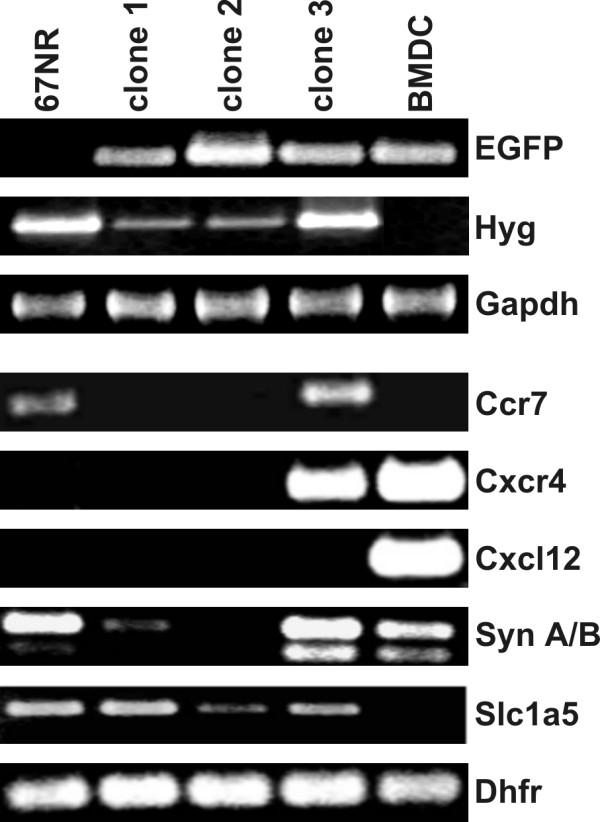
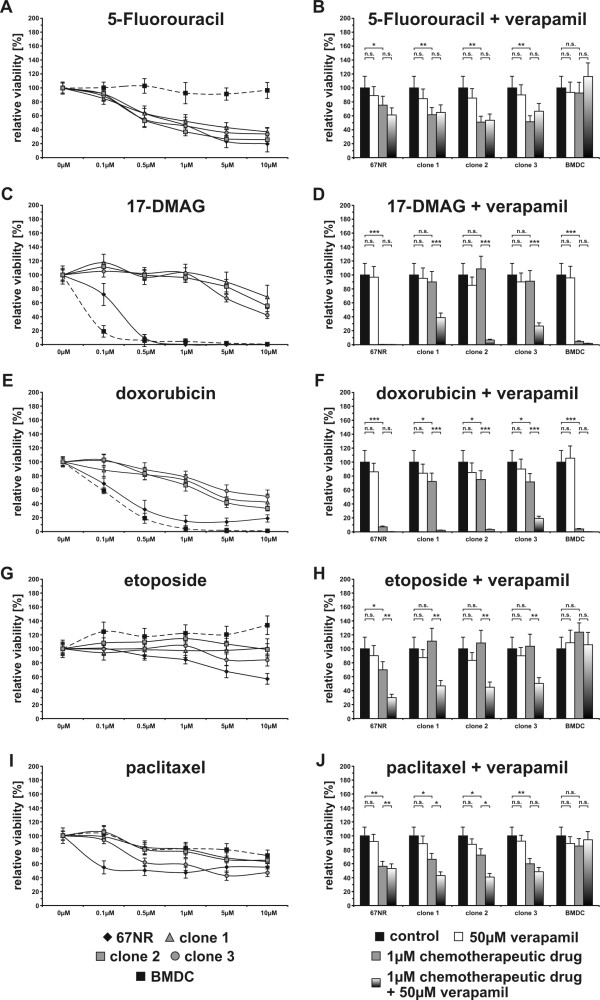
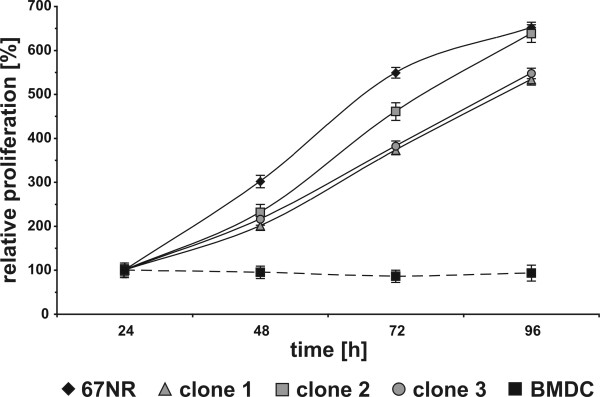
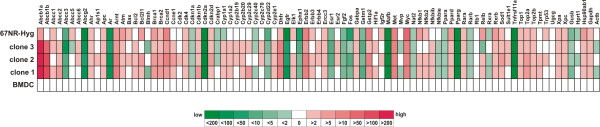
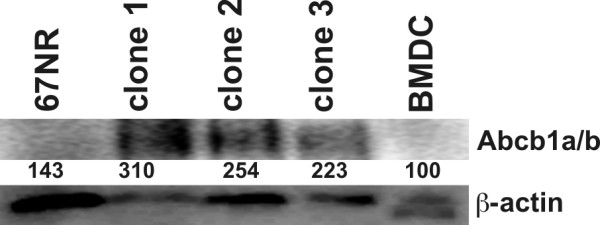
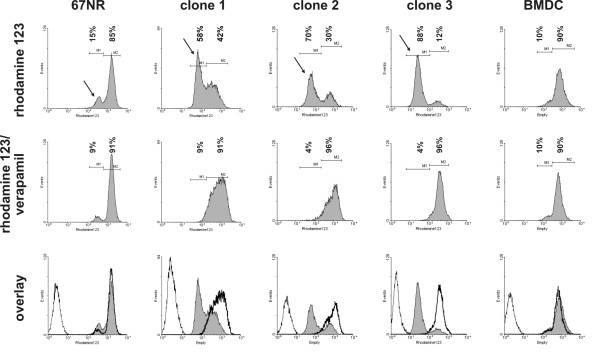
Hygromycin resistant murine 67NR-Hyg mammary carcinoma cells were co-cultivated with puromycin resistant murine BMDCs from Tg(GFPU)5Nagy/J mice. Isolation of hygromycin/puromycin resistant mBMDC/67NR-Hyg cell clones was performed by a dual drug selection procedure. PCR analysis revealed an overlap of parental markers in mBMDC/67NR-Hyg cell clones, suggesting that dual resistant cells originated by cell fusion. By contrast, both STR and SNP data analysis indicated that only parental 67NR-Hyg alleles were found in mBMDC/67NR-Hyg cell clones favoring horizontal gene transfer as the mode of origin. RealTime-PCR-array analysis showed a marked up-regulation of Abcb1a and Abcb1b ABC multidrug transporters in mBMDC/67NR-Hyg clones, which was verified by Western Blot analysis. Moreover, the markedly increased Abcb1a/Abcb1b expression was correlated to an efficient Rhodamine 123 efflux, which was completely inhibited by verapamil, a well-known Abcb1a/Abcb1b inhibitor. Likewise, mBMDCs/67NR-Hyg clones revealed a marked resistance towards chemotherapeutic drugs including 17-DMAG, doxorubicin, etoposide and paclitaxel. In accordance to Rhodamine 123 efflux data, chemotherapeutic drug resistance of mBMDC/67NR-Hyg cells was impaired by verapamil mediated blockage of Abc1a/Abcb1b multidrug transporter function.
Co-cultivation of mBMDCs and mouse 67NR-Hyg mammary carcinoma cells gave rise to highly drug resistant cells. Even though it remains unknown whether mBMDC/67NR-Hyg clones originated by cell fusion or horizontal gene transfer, our data indicate that the exchange of genetic information between two cellular entities is crucial for the origin of highly drug resistant cancer (hybrid) cells, which might be capable to survive chemotherapy.
肿瘤组织类似于慢性炎症组织。由于慢性炎症状态是骨髓来源细胞(BMDC)的强烈刺激,因此可以假设 BMDC 向肿瘤组织的募集应该是一种常见现象。有几项数据表明,BMDC 可以影响肿瘤的生长和转移,例如,通过诱导肿瘤细胞中的旁分泌作用反馈环。同样,细胞融合和水平基因转移是 BMDC 触发肿瘤进展的进一步机制。
与 puromycin 抗性的鼠 BMDC 共培养 Hygromycin 抗性的鼠 67NR-Hyg 乳腺癌细胞,来自 Tg(GFPU)5Nagy/J 小鼠。通过双重药物选择程序分离 Hygromycin/puromycin 抗性 mBMDC/67NR-Hyg 细胞克隆。PCR 分析显示 mBMDC/67NR-Hyg 细胞克隆中存在亲本标记的重叠,表明双抗性细胞源自细胞融合。相比之下,STR 和 SNP 数据分析均表明,仅在 mBMDC/67NR-Hyg 细胞克隆中发现亲本 67NR-Hyg 等位基因,有利于水平基因转移作为起源模式。RealTime-PCR-array 分析显示,mBMDC/67NR-Hyg 克隆中 ABCB1A 和 ABCB1B ABC 多药转运体的表达显著上调,Western blot 分析证实了这一点。此外,显著增加的 Abcb1a/Abcb1b 表达与 Rhodamine 123 的有效外排相关,这被 verapamil 完全抑制,verapamil 是一种已知的 Abcb1a/Abcb1b 抑制剂。同样,mBMDC/67NR-Hyg 克隆对包括 17-DMAG、多柔比星、依托泊苷和紫杉醇在内的化疗药物表现出明显的耐药性。与 Rhodamine 123 外排数据一致,verapamil 介导的 ABCB1A/ABCB1B 多药转运体功能阻断可削弱 mBMDC/67NR-Hyg 细胞的化疗药物耐药性。
鼠 BMDC 和鼠 67NR-Hyg 乳腺癌细胞的共培养产生了高度耐药的细胞。尽管尚不清楚 mBMDC/67NR-Hyg 克隆是源自细胞融合还是水平基因转移,但我们的数据表明,两个细胞实体之间遗传信息的交换对于高度耐药的癌症(杂交)细胞的起源至关重要,这些细胞可能有能力在化疗中存活下来。