Saunders Katherine H, Nazareth Shivani, Pressman Peter I
Genetic Risk Assessment Program, Weill Cornell Breast Center, NewYork-Presbyterian Hospital, 425 East 61 Street, 10th Floor, New York, NY 10065, USA.
Hered Cancer Clin Pract. 2011 Jun 28;9(1):3. doi: 10.1186/1897-4287-9-3.
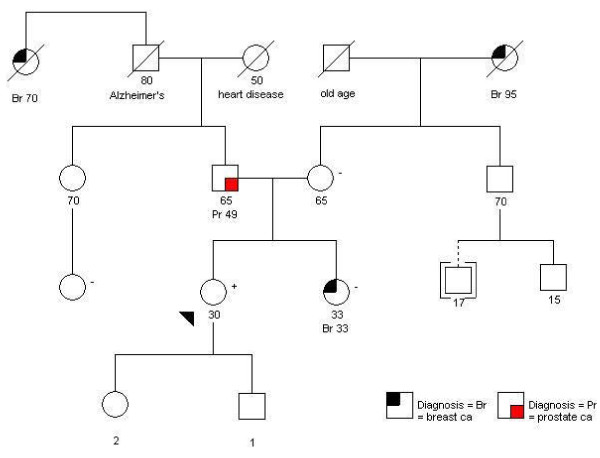
The BRCA1/2 genes account for a significant portion of hereditary breast and ovarian cancers and they are especially prevalent in the Ashkenazi Jewish population. Women who have a mutation can prevent breast and ovarian cancer with surgical intervention. We describe an Ashkenazi Jewish patient who illustrates that current testing criteria are too restrictive, particularly for this population of patients. The patient's sister was diagnosed with breast cancer at age 33; however, she was not a mutation carrier. Based on practice guidelines, the patient was not recommended genetic testing. She subsequently underwent direct-to-consumer (DTC) testing and discovered that she was a mutation carrier. This case demonstrates the need for clinicians to be aware of the higher prevalence of BRCA mutations in the Ashkenazi population. It also exemplifies the need to involve medical professionals, including genetic counselors, in the dissemination of DNA test results.
BRCA1/2基因在遗传性乳腺癌和卵巢癌中占很大比例,在阿什肯纳兹犹太人群体中尤为普遍。携带突变的女性可通过手术干预预防乳腺癌和卵巢癌。我们描述了一位阿什肯纳兹犹太患者,该患者表明当前的检测标准过于严格,尤其是对这类患者群体而言。患者的姐姐在33岁时被诊断出患有乳腺癌;然而,她并非突变携带者。根据实践指南,未建议该患者进行基因检测。她随后接受了直接面向消费者(DTC)的检测,发现自己是突变携带者。该病例表明临床医生需要了解BRCA突变在阿什肯纳兹人群体中更高的患病率。它还例证了需要让包括遗传咨询师在内的医学专业人员参与DNA检测结果的传播。