Meherishi Shuchita, Khandelwal Sunila, Swarankar M L, Kaur Prabhleen
Department of Obstetrics and Gynecology, Mahatma Gandhi Medical College, Jaipur, Rajasthan, India.
J Midlife Health. 2010 Jul;1(2):74-8. doi: 10.4103/0976-7800.76216.
In earlier days, hormone replacement therapy (HRT) was recommended for menopause symptoms and also gained much popularity. However, the Women's Health Initiative (WHI) studies suggested an increased risk of cardiovascular and Alzheimer's disease. These findings led to a dramatic decrease in hormone therapy (HT) prescriptions all over the world. However, the WHI conclusions remain debatable especially because of contradictory results from antecedent studies. Inspite of these controversies, post-WHI, most gynecologists refrain from prescribing MHT (menopausal hormone replacement therapy, MHT). Furthermore, many Indian gynecologists prefer to prescribe alternative treatments that would help alleviate symptoms and thus avoid HRT. We decided to carry out a survey and document the current opinions regarding indications of HRT and alternative therapies and prescribing practices of Jaipur-based gynecologists.
This study was designed to find out the current attitudes and practices of gynecologists (Jaipur) towards management of menopause.
A questionnaire concerning attitudes, management strategies, and use of HT was mailed out to gynecologists, and they are asked to complete the questionnaire. Data were analyzed using the total number of respondents (n = 321). The results were analyzed using a simple percentage method as this was most suitable for this kind of studies.
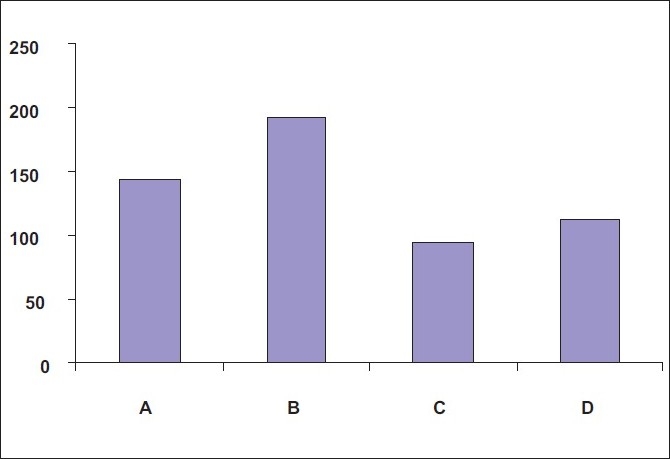
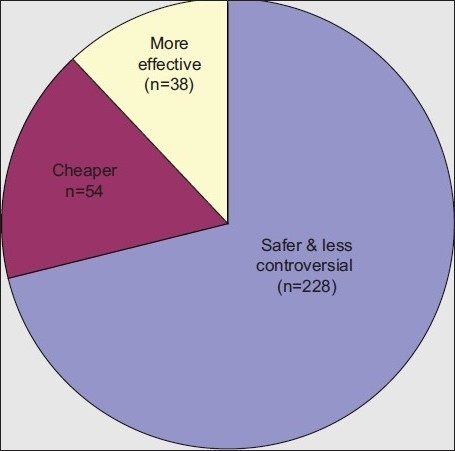
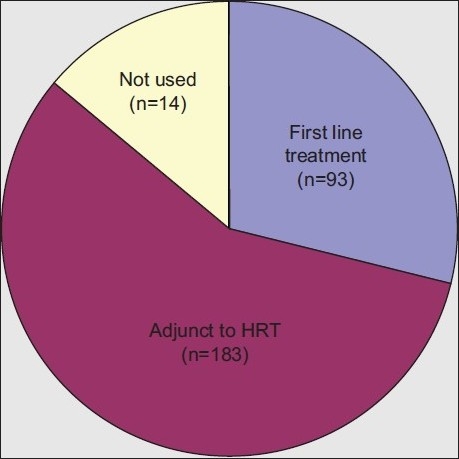
From the results, 69.04% gynecologists were currently prescribing MHT. Hot flashes were the most common indication for MHT prescriptions and 78.57% were familiar with controversies surrounding WHI study. Also, 61.9% would consider using MHT for themselves. Alternative therapy was adopted by 83.48% in their prescribing practice. The reason cited by 71% for preferring alternative therapies was that it was safer and less controversial.
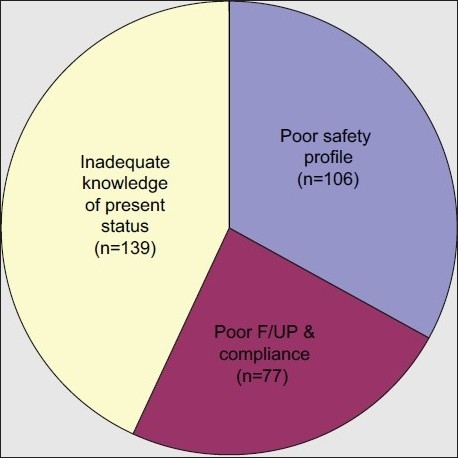
The prescribing practices of Jaipur gynecologists in lieu of ongoing controversies surrounding HT have shifted and now also support alternative therapies for menopause management. In this era of phasic prescriptions, for immediate relief of hot flashes and mood swings, MHT was favored. However, for long-term management of women with poor compliance, alternative therapies were considered a safer option.
在早期,激素替代疗法(HRT)因可缓解更年期症状而被推荐使用,且广受欢迎。然而,妇女健康倡议(WHI)研究表明,其会增加心血管疾病和阿尔茨海默病的风险。这些发现导致全球激素疗法(HT)处方量急剧下降。然而,WHI的结论仍存在争议,尤其是因为先前研究结果相互矛盾。尽管存在这些争议,但在WHI研究之后,大多数妇科医生都不再开绝经激素替代疗法(MHT)的处方。此外,许多印度妇科医生更倾向于开一些有助于缓解症状的替代疗法药物,从而避免使用激素替代疗法。我们决定开展一项调查,记录斋浦尔妇科医生目前对激素替代疗法的适应症、替代疗法以及开药习惯的看法。
本研究旨在了解斋浦尔妇科医生目前对更年期管理的态度和做法。
向妇科医生邮寄了一份关于态度、管理策略和激素疗法使用情况的问卷,并要求他们填写。使用总受访者数量(n = 321)对数据进行分析。由于这种方法最适合此类研究,因此采用简单百分比法对结果进行分析。
结果显示,69.04%的妇科医生目前正在开MHT的处方。潮热是MHT处方最常见的适应症,78.57%的医生了解围绕WHI研究的争议。此外,61.9%的医生会考虑为自己使用MHT。83.48%的医生在开药时采用了替代疗法。71%的医生选择替代疗法的原因是其更安全且争议较小。
鉴于围绕激素疗法的持续争议,斋浦尔妇科医生的开药习惯已经发生转变,现在也支持采用替代疗法来管理更年期。在这个分阶段开药的时代,为了立即缓解潮热和情绪波动,MHT更受青睐。然而,对于依从性差的女性进行长期管理时,替代疗法被认为是更安全的选择。