University of Massachusetts Medical School, Graduate School of Nursing, Worcester, MA.
Department of Medicine, David Geffen School of Medicine at University of California, Los Angeles, CA.
Menopause. 2018 Dec 21;26(6):588-597. doi: 10.1097/GME.0000000000001282.
To better understand how to educate patients and providers about study findings relevant to treatment guidelines, we assessed pre- versus post-Women's Health Initiative (WHI) differences in menopausal hormone therapy (MHT) initiation and continuation and their correlates, and in women's reasons for initiation and discontinuation.
We analyzed survey data from up to 14 approximately annual visits over 17 years (1996-2013) from 3,018 participants in the Study of Women's Health Across the Nation, a prospective cohort study. We used logistic regression to compare pre- versus post-WHI associations of covariates with MHT initiation and continuation, and to compare pre- versus post-WHI reasons for initiation and continuation.
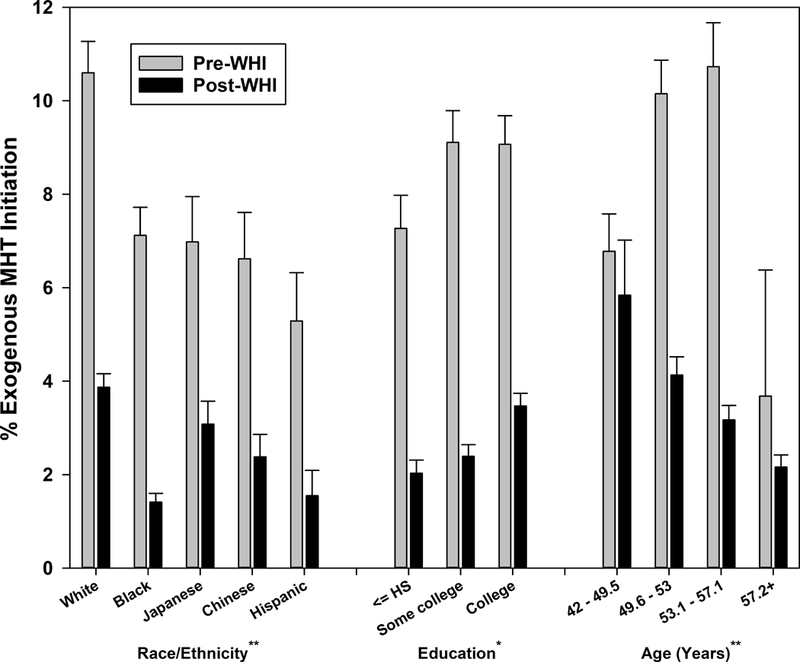
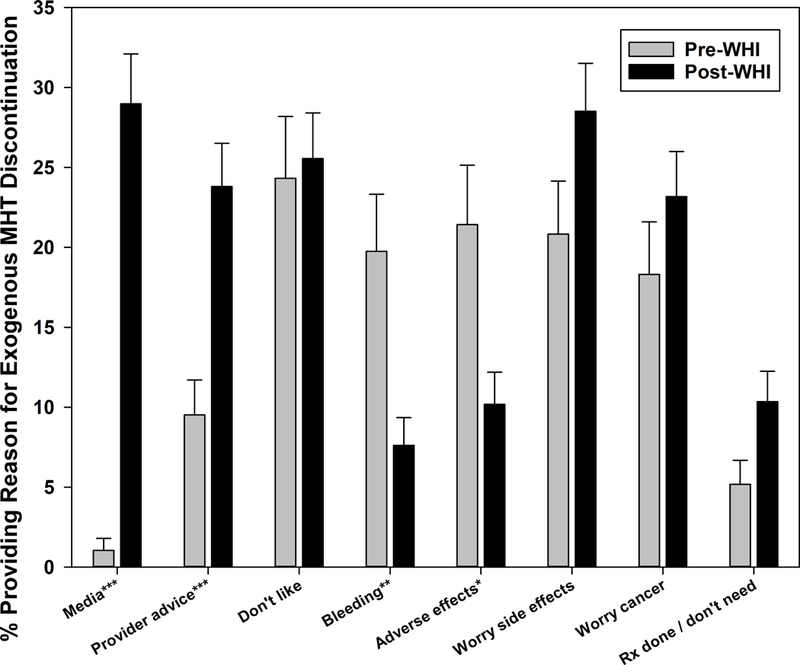
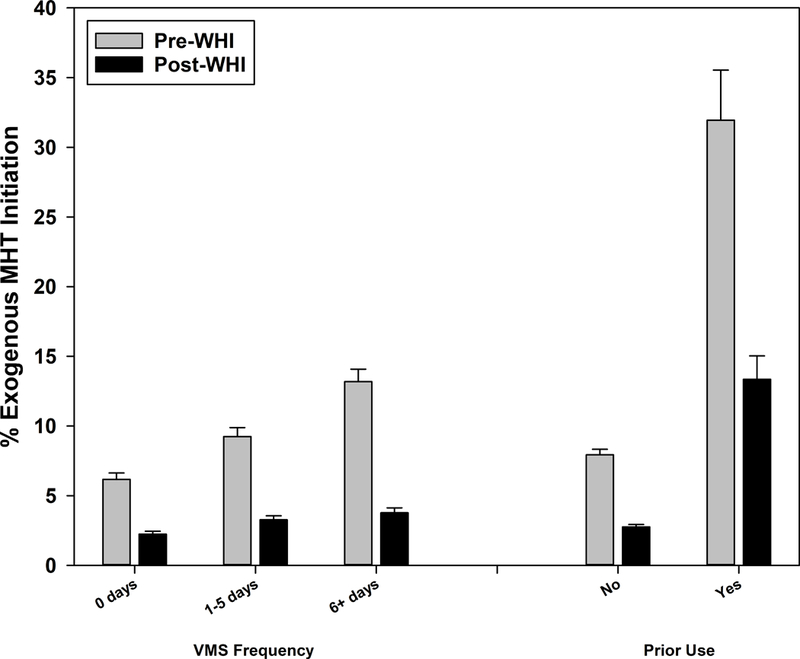
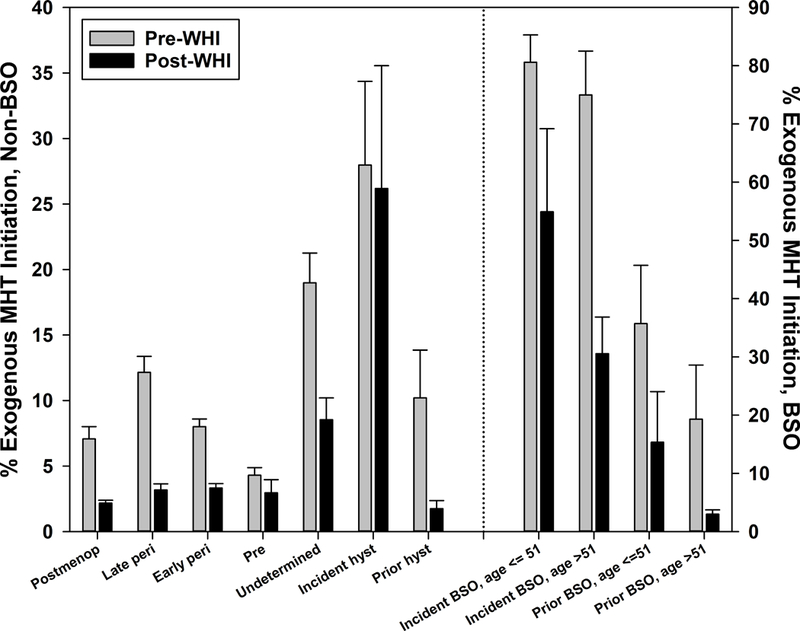
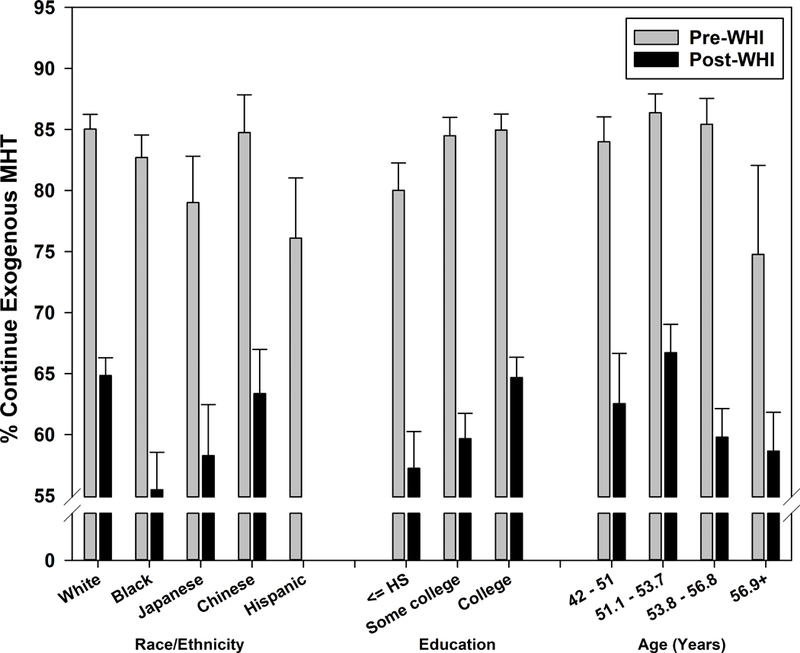
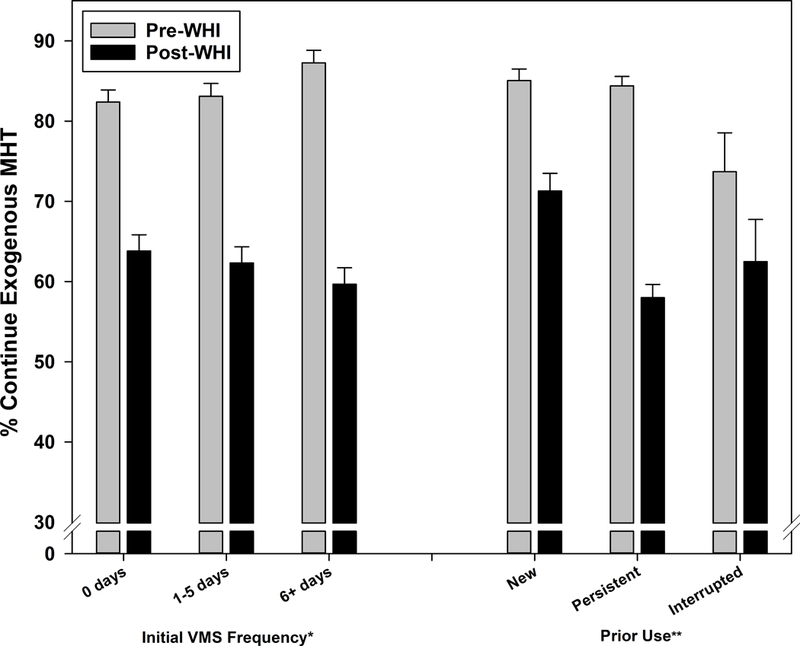
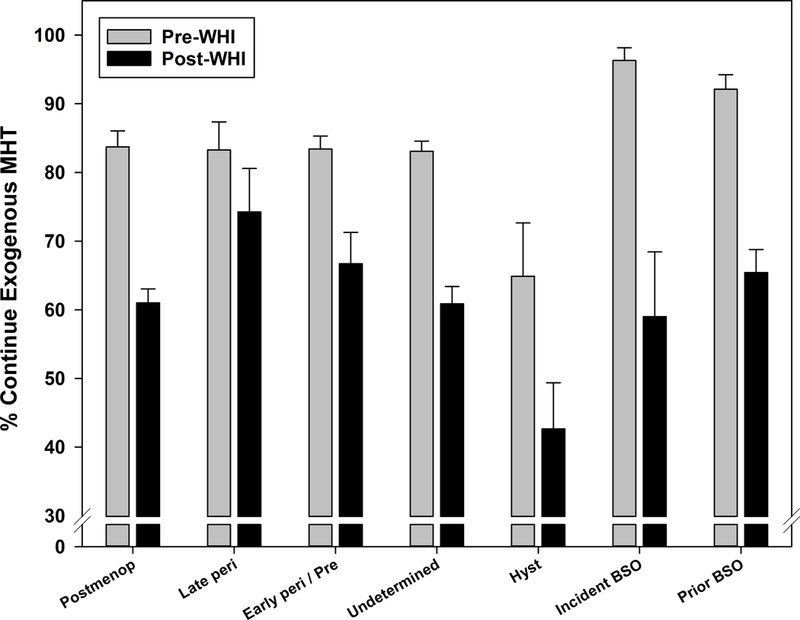
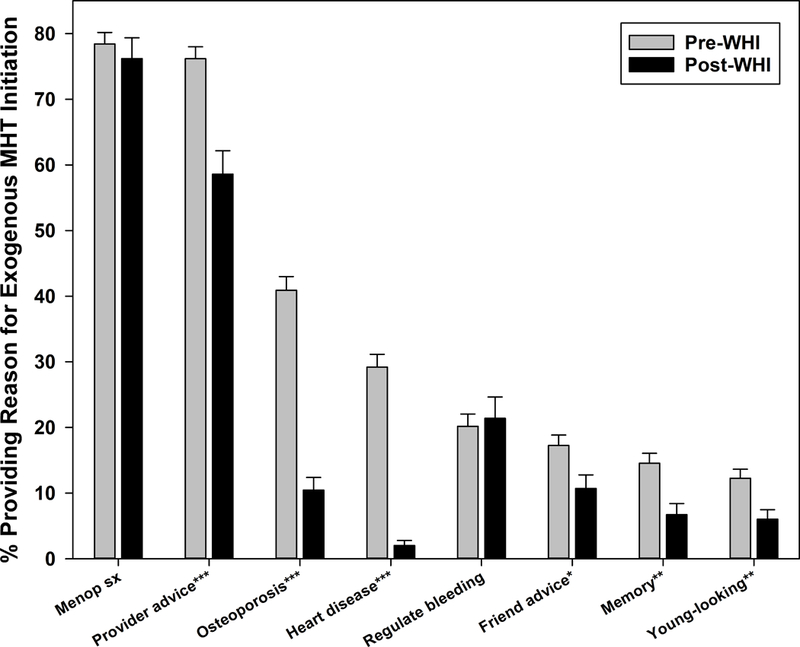
MHT initiation dropped from 8.6% pre-WHI to 2.8% post-WHI (P < 0.0001), and the corresponding decrease in MHT continuation was 84.0% to 62.0% (P < 0.0001). Decreases in MHT initiation and continuation occurred across a range of participant subgroups, consistent with wide dissemination of post-WHI recommendations. However, contrary to current guidelines, we found large declines in MHT use in subgroups for whom MHT is often recommended, that is, younger women and those with more vasomotor symptoms. Post-WHI, women's reasons for MHT initiation and discontinuation reflected concerns highlighted by WHI results. The largest declines in initiation reasons were for reducing risks of osteoporosis and heart disease, whereas the largest increases in discontinuation reasons were for media reports and provider advice.
Immediate post-WHI recommendations for MHT use were widely adopted. MHT risks documented in older women, however, may have led younger symptomatic women to forgo MHT for symptom relief.
为了更好地了解如何向患者和医务人员传授与治疗指南相关的研究发现,我们评估了(美国)妇女健康倡议(WHI)前后激素治疗(MHT)起始和持续的差异及其相关因素,以及女性起始和停止 MHT 的原因。
我们分析了来自于参加全国妇女健康研究(一项前瞻性队列研究)的 3018 名参与者,他们在 17 年(1996-2013 年)内最多接受了 14 次年度调查。我们使用逻辑回归比较了(美国)妇女健康倡议前后与 MHT 起始和持续相关的协变量的关联,并比较了(美国)妇女健康倡议前后起始和持续的原因。
MHT 起始率从 WHI 前的 8.6%下降到 WHI 后的 2.8%(P<0.0001),MHT 持续率的相应下降为 84.0%至 62.0%(P<0.0001)。MHT 起始和持续率的下降发生在一系列参与者亚组中,与 WHI 后建议的广泛传播一致。然而,与当前指南相反,我们发现 MHT 在通常推荐使用 MHT 的亚组中大量减少,即年轻女性和血管舒缩症状更严重的女性。WHI 后,女性开始和停止 MHT 的原因反映了 WHI 结果所强调的问题。起始原因中最大的下降是降低骨质疏松症和心脏病的风险,而停止原因中最大的增加是媒体报道和提供者的建议。
WHI 后立即推荐使用 MHT,然而,在老年女性中发现的 MHT 风险可能导致年轻有症状的女性为了缓解症状而放弃 MHT。