Department of Surgery, Indiana University School of Medicine, Indianapolis, IN, USA.
Surgery. 2011 Aug;150(2):197-203. doi: 10.1016/j.surg.2011.05.010. Epub 2011 Jun 30.
Gender differences exist in myocardial response to acute ischemia/reperfusion (I/R) injury and estrogen mediates cardioprotection in the female heart after I/R. Accumulating evidence has indicated that stromal cell-derived factor-1 (SDF-1) is increased in the ischemic heart and initiates cardioprotective effects. However, it is unknown whether SDF-1 plays a role in gender-specific response to myocardial I/R and in estrogen-induced acute protection. Therefore, we hypothesize that (1) increased SDF-1 production will be observed in female hearts compared with male hearts in response to I/R, which is attributable to the effect of estrogen; and that (2) estrogen receptor (ER)α, not ERβ mediates estrogen-contributed SDF-1 expression in female hearts after I/R.
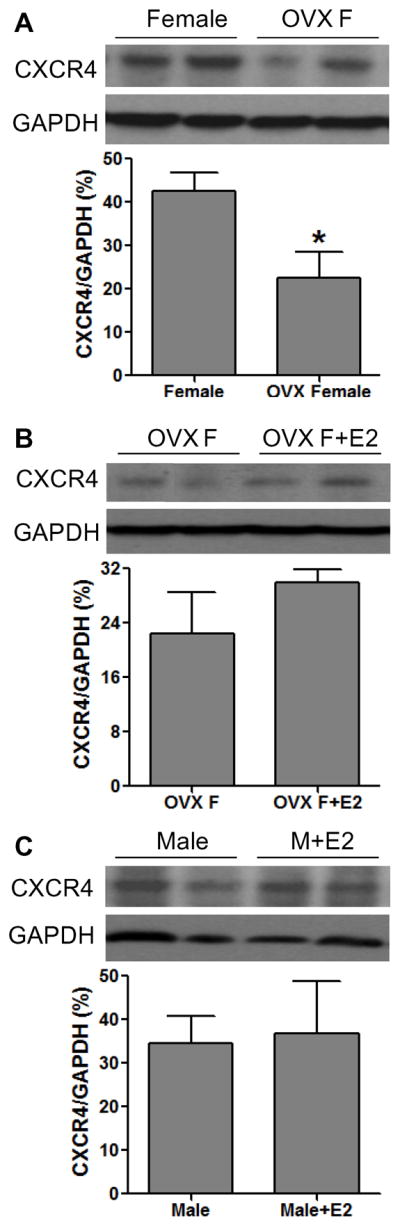
Heart tissue subjected to I/R injury was assessed for myocardial expression of SDF-1 (by enzyme-linked immunosorbent assay) and SDF-1 receptor-CXCR4 (Western blot). Groups were as follows: Rat hearts from adult male, female, ovariectomized female (OVX F), and male and OVX F supplemented with chronic 17β-estradiol (E2), and mouse hearts from adult male and female wild-type, ERα knockout (ERαKO) and ERβKO.
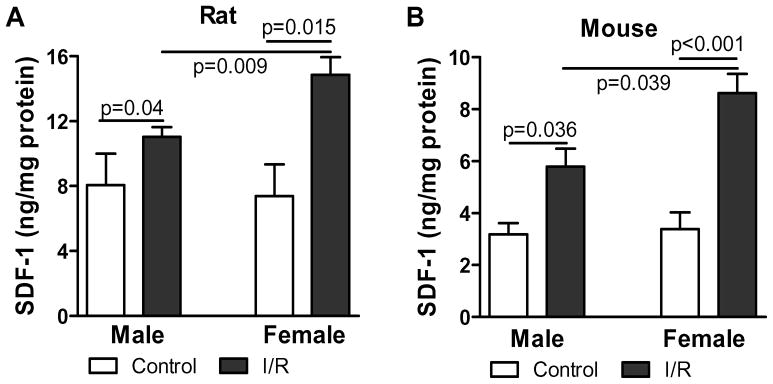
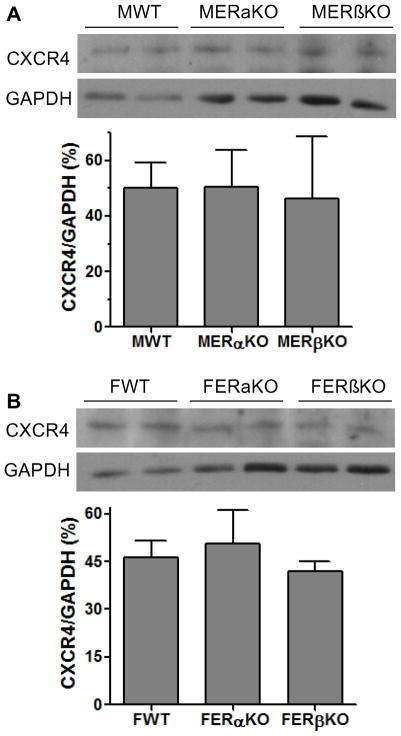
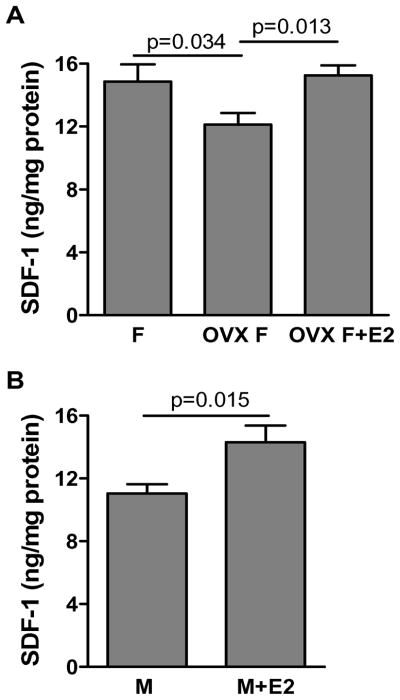
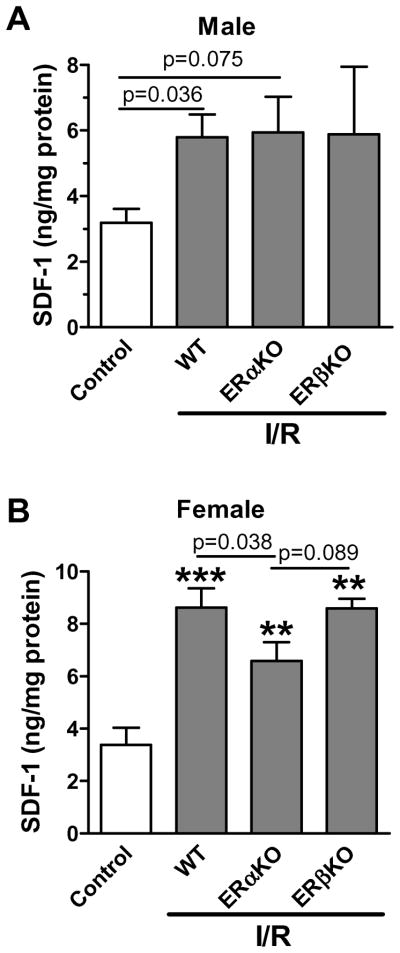
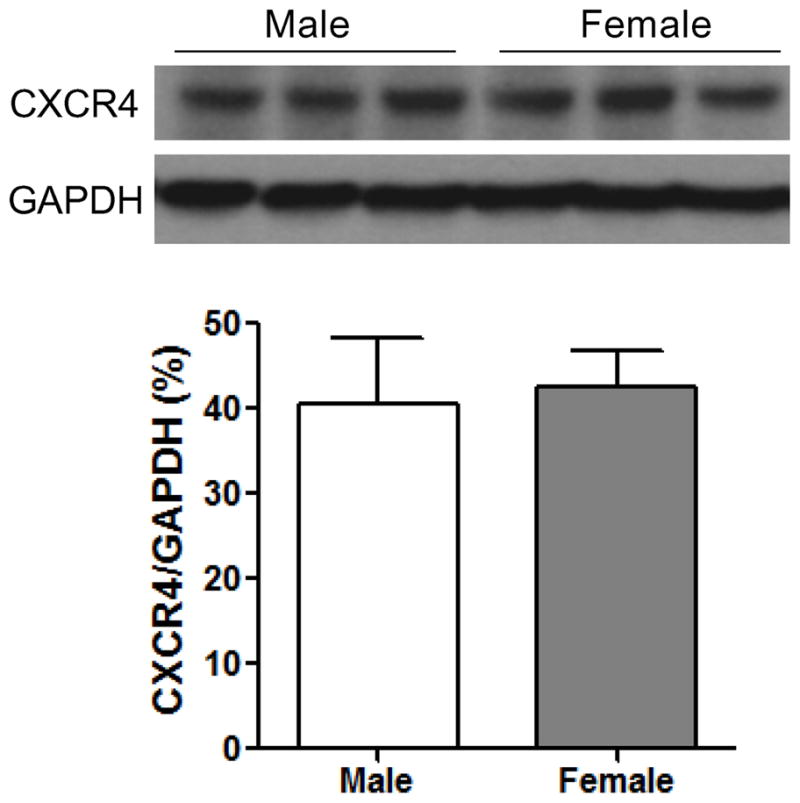
I/R significantly increased myocardial SDF-1 expression in both genders. Higher levels of SDF-1 existed in female hearts after I/R compared with males. Depletion of endogenous estrogen by ovariectomy reduced cardiac SDF-1 production in females after I/R. E2 supplementation significantly restored SDF-1 expression in OVX F and males compared with their counterparts. Notably, ablation of ERα, not ERβ, markedly decreased SDF-1 production in females after I/R. Unlike SDF-1, cardiac CXCR4 expression was not affected by gender, sex hormone, or ERs in the ischemic heart.
Our study represents the first evidence that female hearts exhibit higher levels of SDF-1 expression compared with males after acute I/R. This increased myocardial SDF-1 production in females is partly owing to effect of estrogen through ERα, but not ERβ.
急性缺血/再灌注(I/R)损伤导致心肌反应存在性别差异,雌激素可介导 I/R 后女性心脏的心脏保护作用。越来越多的证据表明,基质细胞衍生因子-1(SDF-1)在缺血心脏中增加,并启动心脏保护作用。然而,尚不清楚 SDF-1 是否在心肌 I/R 的性别特异性反应中发挥作用,以及在雌激素诱导的急性保护中是否发挥作用。因此,我们假设:(1)与男性心脏相比,女性心脏在 I/R 后会观察到 SDF-1 产生增加,这归因于雌激素的作用;(2)雌激素受体(ER)α,而不是 ERβ,介导 I/R 后雌性心脏中雌激素介导的 SDF-1 表达。
通过酶联免疫吸附试验(ELISA)和 SDF-1 受体-CXCR4(Western blot)评估 I/R 损伤心脏的 SDF-1 心肌表达。分组如下:成年雄性、雌性、去卵巢雌性(OVX F)大鼠心脏,以及雄性和 OVX F 补充慢性 17β-雌二醇(E2)的心脏,以及成年雄性和雌性野生型、ERα 敲除(ERαKO)和 ERβKO 小鼠心脏。
I/R 显著增加了两性的心肌 SDF-1 表达。与男性相比,I/R 后女性心脏的 SDF-1 水平更高。卵巢切除术通过去除内源性雌激素减少了 I/R 后雌性心脏的 SDF-1 产生。与相应组相比,E2 补充显著恢复了 OVX F 和雄性的 SDF-1 表达。值得注意的是,与 ERβ 相比,ERα 的缺失显著降低了 I/R 后雌性的 SDF-1 产生。与 SDF-1 不同,心脏 CXCR4 表达不受性别、性激素或缺血心脏中的 ER 影响。
我们的研究首次证明,与男性相比,急性 I/R 后女性心脏的 SDF-1 表达水平更高。女性心脏中这种增加的心肌 SDF-1 产生部分归因于雌激素通过 ERα,而不是 ERβ 的作用。