Breast Cancer Medicine Service, Memorial Sloan-Kettering Cancer Center, New York, NY 10065, USA.
Clin Breast Cancer. 2011 Oct;11(5):306-11. doi: 10.1016/j.clbc.2011.03.021. Epub 2011 May 3.
SRC activation is associated with cell migration, proliferation, and metastasis. Saracatinib is an oral tyrosine kinase inhibitor (TKI) selective for SRC. We performed this trial to evaluate the efficacy and safety of saracatinib monotherapy in patients with estrogen receptor (ER)(-) and progesterone receptor (PR)(-) metastatic breast cancer (MBC).
Patients who had undergone ≤ 1 previous chemotherapy regimen for measurable ER(-) and PR(-) MBC received saracatinib 175 mg orally daily. The primary endpoint was disease control defined as complete response (CR) + partial response (PR) + stable disease (SD) > 6 months. Secondary endpoints included toxicity and progression-free survival (PFS). Levels of circulating tumor cells (CTCs) in response to therapy were measured over time.
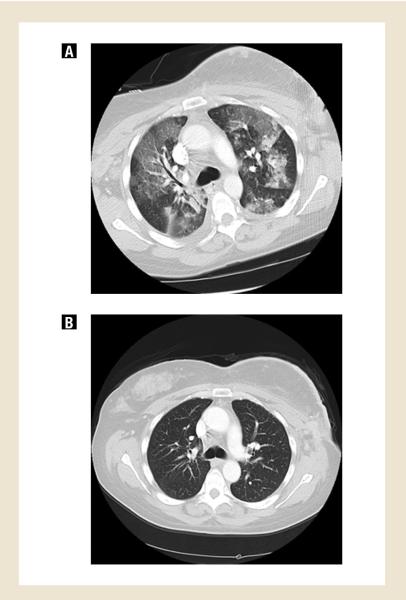
Nine patients were treated on study. After a median of 2 cycles (range 1-3), no patient had achieved CR, PR, or SD >6 months. The median time to treatment failure was 82 days (12-109 days).The majority (89%) of patients discontinued saracatinib because of disease progression. One patient acquired potentially treatment-related grade 4 hypoxia with interstitial infiltrates and was removed from the study. Common adverse events included fatigue, elevated liver enzymes, nausea, hyponatremia, dyspnea, cough, and adrenal insufficiency.
These efficacy results were not sufficiently promising to justify continued accrual to this study. Based on this series, saracatinib does not appear to have significant single-agent activity for the treatment of patients with ER(-)/PR(-) MBC.
SRC 激活与细胞迁移、增殖和转移有关。沙卡替尼是一种口服酪氨酸激酶抑制剂(TKI),对 SRC 具有选择性。我们进行这项试验是为了评估沙卡替尼单药治疗雌激素受体(ER)(-)和孕激素受体(PR)(-)转移性乳腺癌(MBC)患者的疗效和安全性。
接受过≤1 次针对可测量的 ER(-)和 PR(-)MBC 的化疗方案的患者接受沙卡替尼 175 mg 口服,每日 1 次。主要终点是疾病控制定义为完全缓解(CR)+部分缓解(PR)+稳定疾病(SD)>6 个月。次要终点包括毒性和无进展生存期(PFS)。随着时间的推移,测量了循环肿瘤细胞(CTC)对治疗的反应。
9 名患者接受了研究治疗。在中位 2 个周期(范围 1-3)后,没有患者达到 CR、PR 或 SD>6 个月。治疗失败的中位时间为 82 天(12-109 天)。大多数(89%)患者因疾病进展而停止使用沙卡替尼。1 名患者因间质性浸润而出现潜在与治疗相关的 4 级缺氧,被排除在研究之外。常见的不良反应包括疲劳、肝酶升高、恶心、低钠血症、呼吸困难、咳嗽和肾上腺功能不全。
这些疗效结果没有足够的前景,无法证明继续招募该研究。基于这一系列,沙卡替尼似乎对治疗 ER(-)/PR(-)MBC 患者没有明显的单药活性。