• 文献检索
  • 文档翻译
  • 深度研究
  • 学术资讯
  • Suppr Zotero 插件Zotero 插件
  • 邀请有礼
  • 套餐&价格
  • 历史记录
应用&插件
Suppr Zotero 插件Zotero 插件浏览器插件Mac 客户端Windows 客户端微信小程序
定价
高级版会员购买积分包购买API积分包
服务
文献检索文档翻译深度研究API 文档MCP 服务
关于我们
关于 Suppr公司介绍联系我们用户协议隐私条款
关注我们

Suppr 超能文献

核心技术专利:CN118964589B侵权必究
粤ICP备2023148730 号-1Suppr @ 2026

文献检索

告别复杂PubMed语法,用中文像聊天一样搜索,搜遍4000万医学文献。AI智能推荐,让科研检索更轻松。

立即免费搜索

文件翻译

保留排版,准确专业,支持PDF/Word/PPT等文件格式,支持 12+语言互译。

免费翻译文档

深度研究

AI帮你快速写综述,25分钟生成高质量综述,智能提取关键信息,辅助科研写作。

立即免费体验

黏膜黏附纳米颗粒可能通过改变其微观结构而破坏人体保护性黏液屏障。

Mucoadhesive nanoparticles may disrupt the protective human mucus barrier by altering its microstructure.

机构信息

Department of Biomedical Engineering, Johns Hopkins University School of Medicine, Baltimore, Maryland, United States of America.

出版信息

PLoS One. 2011;6(6):e21547. doi: 10.1371/journal.pone.0021547. Epub 2011 Jun 29.

DOI:10.1371/journal.pone.0021547
PMID:21738703
原文链接:https://pmc.ncbi.nlm.nih.gov/articles/PMC3126822/
Abstract

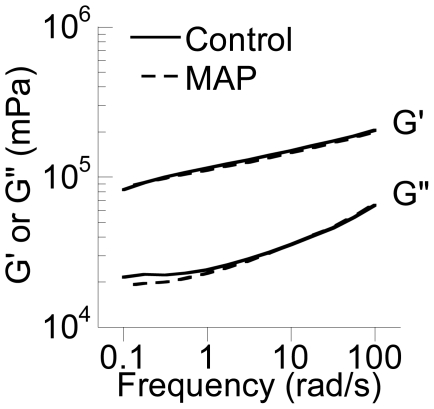
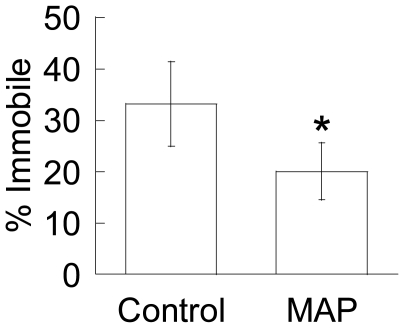
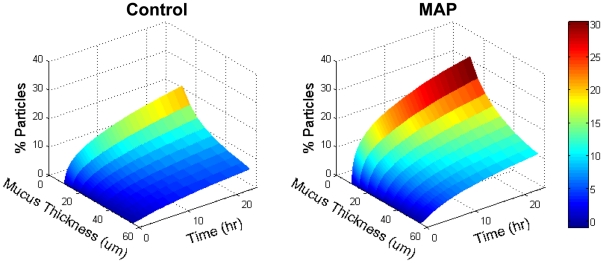
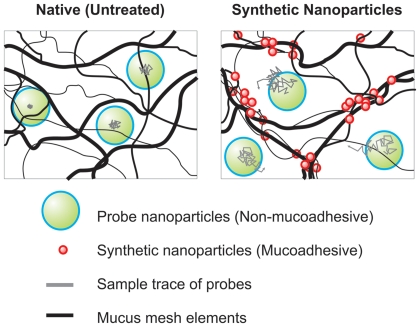
Mucus secretions typically protect exposed surfaces of the eyes and respiratory, gastrointestinal and female reproductive tracts from foreign entities, including pathogens and environmental ultrafine particles. We hypothesized that excess exposure to some foreign particles, however, may cause disruption of the mucus barrier. Many synthetic nanoparticles are likely to be mucoadhesive due to hydrophobic, electrostatic or hydrogen bonding interactions. We therefore sought to determine whether mucoadhesive particles (MAP) could alter the mucus microstructure, thereby allowing other foreign particles to more easily penetrate mucus. We engineered muco-inert probe particles 1 µm in diameter, whose diffusion in mucus is limited only by steric obstruction from the mucus mesh, and used them to measure possible MAP-induced changes to the microstructure of fresh human cervicovaginal mucus. We found that a 0.24% w/v concentration of 200 nm MAP in mucus induced a ∼10-fold increase in the average effective diffusivity of the probe particles, and a 2- to 3-fold increase in the fraction capable of penetrating physiologically thick mucus layers. The same concentration of muco-inert particles, and a low concentration (0.0006% w/v) of MAP, had no detectable effect on probe particle penetration rates. Using an obstruction-scaling model, we determined that the higher MAP dose increased the average mesh spacing ("pore" size) of mucus from 380 nm to 470 nm. The bulk viscoelasticity of mucus was unaffected by MAP exposure, suggesting MAP may not directly impair mucus clearance or its function as a lubricant, both of which depend critically on the bulk rheological properties of mucus. Our findings suggest mucoadhesive nanoparticles can substantially alter the microstructure of mucus, highlighting the potential of mucoadhesive environmental or engineered nanoparticles to disrupt mucus barriers and cause greater exposure to foreign particles, including pathogens and other potentially toxic nanomaterials.

摘要

黏液分泌物通常可保护眼睛、呼吸道、胃肠道和女性生殖道等暴露表面免受外来物,包括病原体和环境超细颗粒的侵害。我们假设,然而,过多地暴露于某些外来颗粒可能会破坏黏液屏障。许多合成纳米颗粒由于疏水、静电或氢键相互作用而很可能具有黏液附着性。因此,我们试图确定黏液附着性颗粒(MAP)是否会改变黏液的微观结构,从而使其他外来颗粒更容易穿透黏液。我们设计了直径为 1 µm 的黏液惰性探针颗粒,其在黏液中的扩散仅受到来自黏液网格的空间位阻的限制,并使用它们来测量 MAP 对新鲜人宫颈黏液的微观结构可能产生的变化。我们发现,浓度为 0.24%(w/v)的 200nm MAP 可使探针颗粒的平均有效扩散系数增加约 10 倍,并使能够穿透生理厚度黏液层的部分增加 2 至 3 倍。相同浓度的黏液惰性颗粒和低浓度(0.0006%(w/v))的 MAP 对探针颗粒的穿透率没有可检测到的影响。使用阻塞缩放模型,我们确定更高剂量的 MAP 增加了黏液的平均网格间距(“孔”大小),从 380nm 增加到 470nm。MAP 暴露对黏液的整体粘弹性没有影响,这表明 MAP 可能不会直接损害黏液清除功能或其作为润滑剂的功能,这两者都严重依赖于黏液的整体流变学特性。我们的研究结果表明,黏液附着性纳米颗粒可以显著改变黏液的微观结构,突出了黏液附着性环境或工程纳米颗粒破坏黏液屏障并导致更多外来颗粒,包括病原体和其他潜在有毒纳米材料暴露的潜在可能性。
https://cdn.ncbi.nlm.nih.gov/pmc/blobs/cbd4/3126822/04b94f0fa446/pone.0021547.g005.jpg
https://cdn.ncbi.nlm.nih.gov/pmc/blobs/cbd4/3126822/6d816a00bdc8/pone.0021547.g001.jpg
https://cdn.ncbi.nlm.nih.gov/pmc/blobs/cbd4/3126822/713d2a2ef61e/pone.0021547.g003.jpg
https://cdn.ncbi.nlm.nih.gov/pmc/blobs/cbd4/3126822/0d03601bb6a5/pone.0021547.g004.jpg
https://cdn.ncbi.nlm.nih.gov/pmc/blobs/cbd4/3126822/04b94f0fa446/pone.0021547.g005.jpg
https://cdn.ncbi.nlm.nih.gov/pmc/blobs/cbd4/3126822/6d816a00bdc8/pone.0021547.g001.jpg
https://cdn.ncbi.nlm.nih.gov/pmc/blobs/cbd4/3126822/713d2a2ef61e/pone.0021547.g003.jpg
https://cdn.ncbi.nlm.nih.gov/pmc/blobs/cbd4/3126822/0d03601bb6a5/pone.0021547.g004.jpg
https://cdn.ncbi.nlm.nih.gov/pmc/blobs/cbd4/3126822/04b94f0fa446/pone.0021547.g005.jpg

相似文献

1
Mucoadhesive nanoparticles may disrupt the protective human mucus barrier by altering its microstructure.黏膜黏附纳米颗粒可能通过改变其微观结构而破坏人体保护性黏液屏障。
PLoS One. 2011;6(6):e21547. doi: 10.1371/journal.pone.0021547. Epub 2011 Jun 29.
2
Nanoparticles reveal that human cervicovaginal mucus is riddled with pores larger than viruses.纳米颗粒揭示,人类宫颈阴道黏液充满了比病毒还大的孔。
Proc Natl Acad Sci U S A. 2010 Jan 12;107(2):598-603. doi: 10.1073/pnas.0911748107. Epub 2009 Dec 16.
3
Rapid transport of muco-inert nanoparticles in cystic fibrosis sputum treated with N-acetyl cysteine.经 N-乙酰半胱氨酸处理的囊性纤维化痰液中具有黏膜惰性的纳米颗粒的快速转运。
Nanomedicine (Lond). 2011 Feb;6(2):365-75. doi: 10.2217/nnm.10.123.
4
Nanoparticle penetration of human cervicovaginal mucus: the effect of polyvinyl alcohol.纳米颗粒在人宫颈阴道黏液中的渗透:聚乙烯醇的作用。
J Control Release. 2014 Oct 28;192:202-8. doi: 10.1016/j.jconrel.2014.07.045. Epub 2014 Jul 29.
5
Rapid transport of large polymeric nanoparticles in fresh undiluted human mucus.大的聚合物纳米颗粒在新鲜未稀释的人黏液中的快速运输。
Proc Natl Acad Sci U S A. 2007 Jan 30;104(5):1482-7. doi: 10.1073/pnas.0608611104. Epub 2007 Jan 23.
6
The microstructure and bulk rheology of human cervicovaginal mucus are remarkably resistant to changes in pH.人体宫颈阴道黏液的微观结构和整体流变学对 pH 值的变化具有显著的抵抗力。
Biomacromolecules. 2013 Dec 9;14(12):4429-35. doi: 10.1021/bm401356q. Epub 2013 Nov 22.
7
Altering mucus rheology to "solidify" human mucus at the nanoscale.改变黏液流变学以在纳米尺度上“固化”人类黏液。
PLoS One. 2009;4(1):e4294. doi: 10.1371/journal.pone.0004294. Epub 2009 Jan 28.
8
Biodegradable polymer nanoparticles that rapidly penetrate the human mucus barrier.可快速穿透人体黏液屏障的可生物降解聚合物纳米颗粒。
Proc Natl Acad Sci U S A. 2009 Nov 17;106(46):19268-73. doi: 10.1073/pnas.0905998106. Epub 2009 Nov 9.
9
PEGylation for enhancing nanoparticle diffusion in mucus.聚乙二醇化用于增强纳米颗粒在黏液中的扩散。
Adv Drug Deliv Rev. 2018 Jan 15;124:125-139. doi: 10.1016/j.addr.2017.08.010. Epub 2017 Sep 4.
10
Drug carrier nanoparticles that penetrate human chronic rhinosinusitis mucus.穿透人类慢性鼻-鼻窦炎黏液的药物载体纳米颗粒。
Biomaterials. 2011 Sep;32(26):6285-90. doi: 10.1016/j.biomaterials.2011.05.008. Epub 2011 Jun 12.

引用本文的文献

1
Forgotten but not gone: Particulate matter as contaminations of mucosal systems.被遗忘却未消逝:作为黏膜系统污染物的颗粒物
Biophys Rev (Melville). 2021 Aug 10;2(3):031302. doi: 10.1063/5.0054075. eCollection 2021 Sep.
2
The use of combination therapy for the improvement of colistin activity against bacterial biofilm.联合治疗提高黏菌素对细菌生物膜活性的应用。
Braz J Microbiol. 2024 Mar;55(1):411-427. doi: 10.1007/s42770-023-01189-7. Epub 2023 Nov 30.
3
Impact of mucus modulation by -acetylcysteine on nanoparticle toxicity.

本文引用的文献

1
Biodegradable nanoparticles composed entirely of safe materials that rapidly penetrate human mucus.完全由安全材料组成的可生物降解纳米颗粒,能迅速穿透人体黏液。
Angew Chem Int Ed Engl. 2011 Mar 7;50(11):2597-600. doi: 10.1002/anie.201006849. Epub 2011 Feb 18.
2
Airway mucus function and dysfunction.气道黏液的功能与功能障碍。
N Engl J Med. 2010 Dec 2;363(23):2233-47. doi: 10.1056/NEJMra0910061.
3
Nanoparticles reveal that human cervicovaginal mucus is riddled with pores larger than viruses.纳米颗粒揭示,人类宫颈阴道黏液充满了比病毒还大的孔。
乙酰半胱氨酸对黏液的调节作用对纳米颗粒毒性的影响。
Int J Pharm X. 2023 Sep 21;6:100212. doi: 10.1016/j.ijpx.2023.100212. eCollection 2023 Dec 15.
4
Airway mucus in pulmonary diseases: Muco-adhesive and muco-penetrating particles to overcome the airway mucus barriers.肺部疾病中的气道黏液:克服气道黏液屏障的黏附性和穿透性颗粒。
Int J Pharm. 2023 Mar 5;634:122661. doi: 10.1016/j.ijpharm.2023.122661. Epub 2023 Feb 1.
5
Characterization of Systemic and Mucosal Humoral Immune Responses to an Adjuvanted Intranasal SARS-CoV-2 Protein Subunit Vaccine Candidate in Mice.小鼠中一种佐剂鼻内接种的SARS-CoV-2蛋白亚单位候选疫苗的全身和粘膜体液免疫反应特征
Vaccines (Basel). 2022 Dec 23;11(1):30. doi: 10.3390/vaccines11010030.
6
Disulfide disruption reverses mucus dysfunction in allergic airway disease.二硫键破坏可逆转变应性气道疾病中的黏液功能障碍。
Nat Commun. 2021 Jan 11;12(1):249. doi: 10.1038/s41467-020-20499-0.
7
Overcoming negatively charged tissue barriers: Drug delivery using cationic peptides and proteins.克服带负电荷的组织屏障:使用阳离子肽和蛋白质进行药物递送。
Nano Today. 2020 Oct;34. doi: 10.1016/j.nantod.2020.100898. Epub 2020 Jun 20.
8
Engineering the drug carrier biointerface to overcome biological barriers to drug delivery.工程化药物载体生物界面以克服药物传递的生物学屏障。
Adv Drug Deliv Rev. 2020 Dec;167:89-108. doi: 10.1016/j.addr.2020.06.007. Epub 2020 Jun 11.
9
Chemical and Microstructural Characterization of pH and [Ca] Dependent Sol-Gel Transitions in Mucin Biopolymer.黏蛋白生物聚合物中 pH 和 [Ca] 依赖性溶胶-凝胶转变的化学和微观结构特征。
Sci Rep. 2020 May 29;10(1):8760. doi: 10.1038/s41598-020-65392-4.
10
The Effect of the Chorion on Size-Dependent Acute Toxicity and Underlying Mechanisms of Amine-Modified Silver Nanoparticles in Zebrafish Embryos.绒毛膜对胺修饰的银纳米颗粒在斑马鱼胚胎中尺寸依赖性急性毒性及潜在机制的影响。
Int J Mol Sci. 2020 Apr 20;21(8):2864. doi: 10.3390/ijms21082864.
Proc Natl Acad Sci U S A. 2010 Jan 12;107(2):598-603. doi: 10.1073/pnas.0911748107. Epub 2009 Dec 16.
4
Mucins, mucus, and sputum.黏蛋白、黏液和痰液。
Chest. 2009 Feb;135(2):505-512. doi: 10.1378/chest.08-0412.
5
The penetration of fresh undiluted sputum expectorated by cystic fibrosis patients by non-adhesive polymer nanoparticles.非粘性聚合物纳米颗粒对囊性纤维化患者咳出的新鲜未稀释痰液的穿透作用。
Biomaterials. 2009 May;30(13):2591-7. doi: 10.1016/j.biomaterials.2008.12.076. Epub 2009 Jan 26.
6
Altering mucus rheology to "solidify" human mucus at the nanoscale.改变黏液流变学以在纳米尺度上“固化”人类黏液。
PLoS One. 2009;4(1):e4294. doi: 10.1371/journal.pone.0004294. Epub 2009 Jan 28.
7
Micro- and macrorheology of mucus.黏液的微观和宏观流变学
Adv Drug Deliv Rev. 2009 Feb 27;61(2):86-100. doi: 10.1016/j.addr.2008.09.012. Epub 2009 Jan 3.
8
Mucus-penetrating nanoparticles for drug and gene delivery to mucosal tissues.用于将药物和基因递送至粘膜组织的粘液穿透性纳米颗粒。
Adv Drug Deliv Rev. 2009 Feb 27;61(2):158-71. doi: 10.1016/j.addr.2008.11.002. Epub 2008 Dec 13.
9
Addressing the PEG mucoadhesivity paradox to engineer nanoparticles that "slip" through the human mucus barrier.解决聚乙二醇(PEG)粘膜粘附性悖论,以设计出能“滑过”人体粘液屏障的纳米颗粒。
Angew Chem Int Ed Engl. 2008;47(50):9726-9. doi: 10.1002/anie.200803526.
10
Close-to-native ultrastructural preservation by high pressure freezing.通过高压冷冻实现接近原生的超微结构保存。
Methods Cell Biol. 2008;88:151-64. doi: 10.1016/S0091-679X(08)00409-3.