Walter and Eliza Hall Institute of Medical Research, Parkville, Victoria 3052, Australia.
J Immunol. 2011 Aug 15;187(4):1566-77. doi: 10.4049/jimmunol.1100027. Epub 2011 Jul 8.
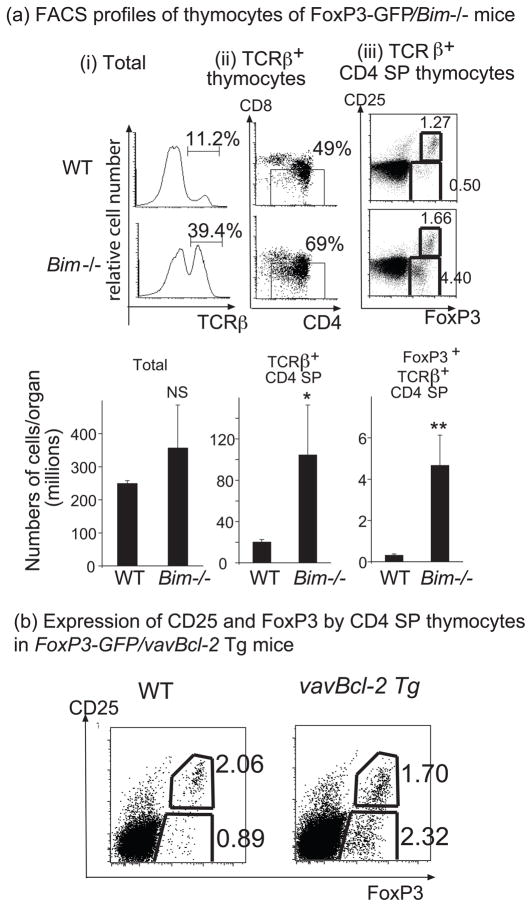
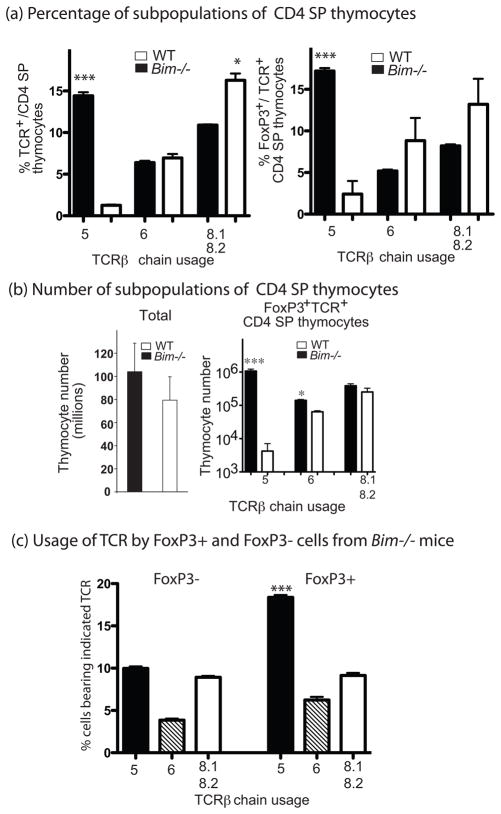
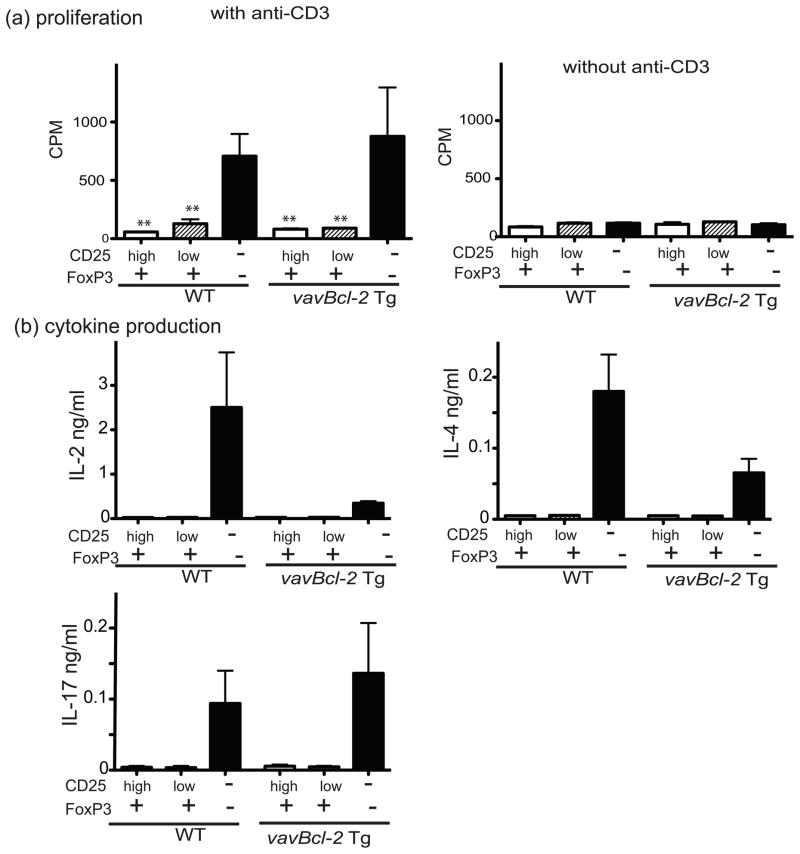
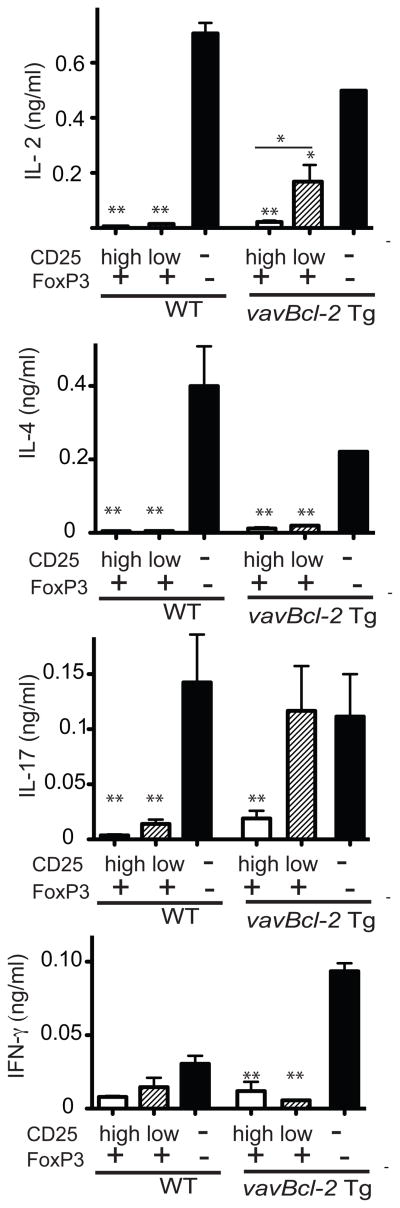
Defects in the Bcl-2-regulated apoptotic pathway inhibit the deletion of self-reactive T cells. What is unresolved, however, is the nature and fate of such self-reactive T cells escaping deletion. In this study, we report that mice with such defects contained increased numbers of CD25(low)Foxp3(+) cells in the thymus and peripheral lymph tissues. The increased CD25(low)Foxp3(+) population contained a large fraction of cells bearing self-reactive TCRs, evident from a prominent increase in self-superantigen-specific Foxp3(+)Vβ5(+)CD4(+) T cells in BALB/c Bim(-/-) mice compared with control animals. The survival rate of the expanded CD25(low)Foxp3(+) cells was similar to that of CD25(high)Foxp3(+) CD4 T cells in vitro and in vivo. IL-2R stimulation, but not TCR ligation, upregulated CD25 on CD25(low)Foxp3(+)CD4(+) T cells in vitro and in vivo. The expanded CD25(low)Foxp3(+)CD4(+) T cells from Bim(-/-) mice were anergic but also had weaker regulatory function than CD25(high)Foxp3(+) CD4(+) T cells from the same mice. Analysis of Bim(-/-) mice that also lacked Fas showed that the peripheral homeostasis of this expanded population was in part regulated by this death receptor. In conclusion, these results show that self-reactive T cell escapes from thymic deletion in mice defective in the Bcl-2-regulated apoptotic pathway upregulate Foxp3 and become unresponsive upon encountering self-Ag without necessarily gaining potent regulatory function. This clonal functional diversion may help to curtail autoaggressiveness of escaped self-reactive CD4(+) T cells and thereby safeguard immunological tolerance.
Bcl-2 调控的凋亡途径缺陷会抑制自身反应性 T 细胞的清除。然而,尚未解决的问题是逃脱删除的此类自身反应性 T 细胞的性质和命运。在这项研究中,我们报告说,具有此类缺陷的小鼠的胸腺和外周淋巴组织中的 CD25(low)Foxp3(+)细胞数量增加。增加的 CD25(low)Foxp3(+)群体包含大量带有自身反应性 TCR 的细胞,这从 BALB/c Bim(-/-)小鼠中明显增加的自身超抗原特异性 Foxp3(+)Vβ5(+)CD4(+)T 细胞中可以明显看出与对照动物相比。体外和体内扩增的 CD25(low)Foxp3(+)细胞的存活率与 CD25(high)Foxp3(+)CD4 T 细胞相似。IL-2R 刺激而不是 TCR 交联,可上调体外和体内 CD25(low)Foxp3(+)CD4(+)T 细胞上的 CD25。来自 Bim(-/-)小鼠的扩增的 CD25(low)Foxp3(+)CD4(+)T 细胞呈无反应状态,但与来自同一小鼠的 CD25(high)Foxp3(+)CD4(+)T 细胞相比,其调节功能较弱。对还缺乏 Fas 的 Bim(-/-)小鼠的分析表明,该扩增群体的外周稳态部分受到该死亡受体的调节。总之,这些结果表明,在 Bcl-2 调控的凋亡途径缺陷的小鼠中,逃避胸腺删除的自身反应性 T 细胞上调 Foxp3 并在遇到自身抗原时变得无反应,而不一定获得有效的调节功能。这种克隆功能转向可能有助于限制逃脱的自身反应性 CD4(+)T 细胞的自身攻击性,并从而维持免疫耐受。