Department of Infectious Diseases, Oslo University Hospital, Ulleval, Oslo, Norway.
BMC Infect Dis. 2011 Jul 11;11:190. doi: 10.1186/1471-2334-11-190.
HIV-associated anemia is common and associated with poor prognosis. However, its response to antiretroviral treatment (ART) in rural Africa is poorly understood.
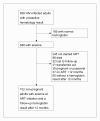
HIV-infected adults (≥15 years) who enrolled in HIV care at Haydom Lutheran Hospital in northern Tanzania were included in the study. The effect of ART (zidovudine/stavudine + lamivudine + efavirenz/nevirapine) on HIV-associated anemia was studied in a subset of patients who were anemic at the time they started ART and had a follow-up hemoglobin measurement 12 months later. Pregnant women were excluded from the study, as were women who had given birth within the past 6 weeks. Anemia was defined as hemoglobin <12 g/dL in women and <13 g/dL in men. We applied paired sample T-tests to compare hemoglobin levels before and one year after ART initiation, and logistic regression models to identify predictors of persistent anemia.
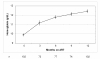
At enrollment, mean hemoglobin was 10.3 g/dL, and 649 of 838 patients (77.4%) were anemic. Of the anemic patients, 254 (39.1%) had microcytosis and hypochromia. Among 102 patients who were anemic at ART initiation and had a follow-up hemoglobin measurement after 12 months, the mean hemoglobin increased by 2.5 g/dL (P < 0.001); however, 39 patients (38.2%) were still anemic after 12 months of ART. Independent predictors of persistent anemia were mean cell volume in the lower quartile (<76.0 fL; Odds Ratio [OR] 4.34; 95% confidence interval [CI] 1.22-15.5) and a zidovudine-containing initial regimen (OR 2.91; 95% CI 1.03-8.19).
Most patients had anemia at enrollment, of whom nearly 40% had microcytosis and hypochromia suggestive of iron deficiency. The mean hemoglobin increased significantly in patients who received ART, but one third were still anemic 12 months after ART initiation indicating that additional interventions to treat HIV-associated anemia in rural Africa might be warranted, particularly in patients with microcytosis and those treated with zidovudine.
HIV 相关贫血在非洲农村地区很常见,与预后不良有关。然而,人们对其在接受抗逆转录病毒治疗(ART)后的反应知之甚少。
本研究纳入了在坦桑尼亚北部海登路德教会医院接受 HIV 护理的 HIV 感染成年人(≥15 岁)。对在开始接受 ART 时即贫血且在 12 个月后有随访血红蛋白测量值的患者亚组,研究了 ART(齐多夫定/司他夫定+拉米夫定+依非韦伦/奈韦拉平)对 HIV 相关贫血的影响。研究排除了孕妇和过去 6 周内分娩的妇女。贫血定义为女性血红蛋白<12 g/dL,男性血红蛋白<13 g/dL。我们应用配对样本 t 检验比较 ART 治疗前和治疗后 1 年的血红蛋白水平,并应用逻辑回归模型确定持续性贫血的预测因素。
在入组时,平均血红蛋白为 10.3 g/dL,838 例患者中有 649 例(77.4%)贫血。在贫血患者中,254 例(39.1%)有小细胞低色素性。在 102 例开始 ART 时贫血且在 12 个月后有随访血红蛋白测量值的患者中,平均血红蛋白增加了 2.5 g/dL(P<0.001);然而,在接受 ART 治疗 12 个月后,仍有 39 例(38.2%)患者贫血。持续性贫血的独立预测因素是平均红细胞体积处于较低四分位数(<76.0 fL;比值比[OR]4.34;95%置信区间[CI]1.22-15.5)和初始包含齐多夫定的方案(OR 2.91;95%CI 1.03-8.19)。
大多数患者在入组时即有贫血,其中近 40%有小细胞低色素性,提示缺铁。接受 ART 的患者平均血红蛋白显著升高,但在开始 ART 治疗 12 个月后,仍有三分之一的患者贫血,表明在农村非洲地区,可能需要采取额外的干预措施来治疗 HIV 相关贫血,特别是在有小细胞低色素性和接受齐多夫定治疗的患者中。