Bay Joseph M, Patterson Bruce K, Teng Nelson N H
Division of Gynecologic Oncology, Department of Obstetrics and Gynecology, Stanford University School of Medicine, Stanford, CA 94305-5317, USA.
Infect Dis Obstet Gynecol. 2011;2011:463081. doi: 10.1155/2011/463081. Epub 2011 Jun 4.
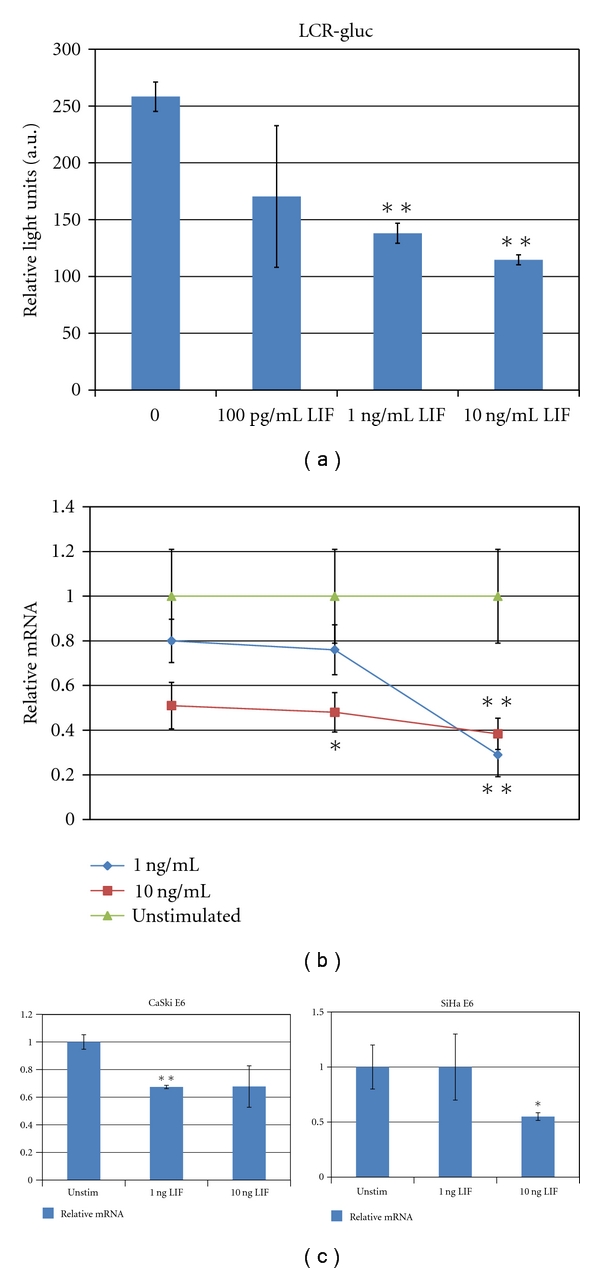
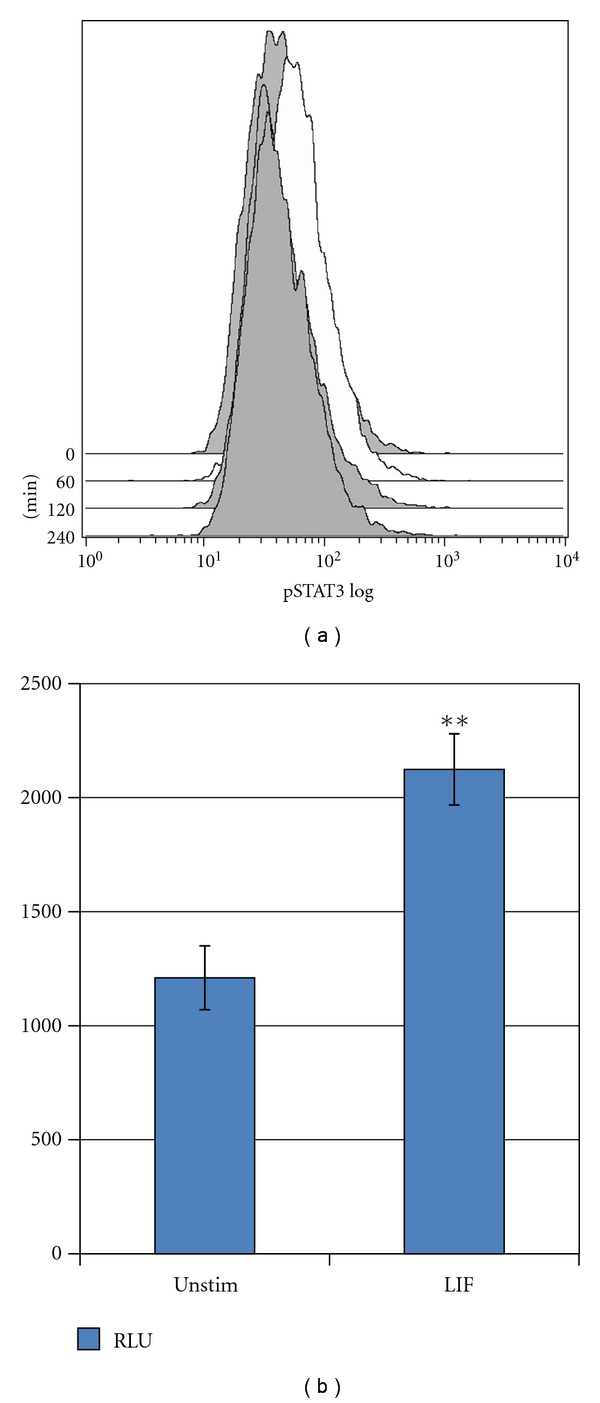
The constitutive proliferation and resistance to differentiation and apoptosis of neoplastic cervical cells depend on sustained expression of human papillomavirus oncogenes. Inhibition of these oncogenes is a goal for the prevention of progression of HPV-induced neoplasias to cervical cancer. SiHa cervical cancer cells were transfected with an HPV-16 promoter reporter construct and treated with leukemia inhibitory factor (LIF), a human cytokine of the interleukin 6 superfamily. SiHa and CaSki cervical cancer cells were also assessed for proliferation by MTT precipitation, programmed cell death by flow cytometry, and HPV E6 and E7 expression by real-time PCR. LIF-treated cervical cancer cells showed significantly reduced HPV LCR activation, reduced levels of E6 and E7 mRNA, and reduced proliferation. We report the novel use of LIF to inhibit viral oncogene expression in cervical cancer cells, with concomitant reduction in proliferation suggesting re-engagement of cell-cycle regulation.
肿瘤性宫颈细胞的组成性增殖以及对分化和凋亡的抵抗取决于人乳头瘤病毒癌基因的持续表达。抑制这些癌基因是预防人乳头瘤病毒诱导的肿瘤发展为宫颈癌的目标。将人乳头瘤病毒16型启动子报告构建体转染至SiHa宫颈癌细胞,并使用白血病抑制因子(LIF,白细胞介素6超家族的一种人类细胞因子)进行处理。还通过MTT沉淀法评估了SiHa和CaSki宫颈癌细胞的增殖情况,通过流式细胞术评估了程序性细胞死亡情况,并通过实时PCR评估了人乳头瘤病毒E6和E7的表达情况。经LIF处理的宫颈癌细胞显示人乳头瘤病毒长控制区(LCR)激活显著降低,E6和E7 mRNA水平降低,且增殖减少。我们报告了LIF在抑制宫颈癌细胞中病毒癌基因表达方面的新用途,同时增殖减少表明细胞周期调控重新参与其中。