Alzamora Rodrigo, O'Mahony Fiona, Ko Wing-Hung, Yip Tiffany Wai-Nga, Carter Derek, Irnaten Mustapha, Harvey Brian Joseph
Department of Molecular Medicine, Education and Research Centre, Royal College of Surgeons in Ireland, Beaumont Hospital Dublin, Ireland.
Front Physiol. 2011 Jun 30;2:33. doi: 10.3389/fphys.2011.00033. eCollection 2011.
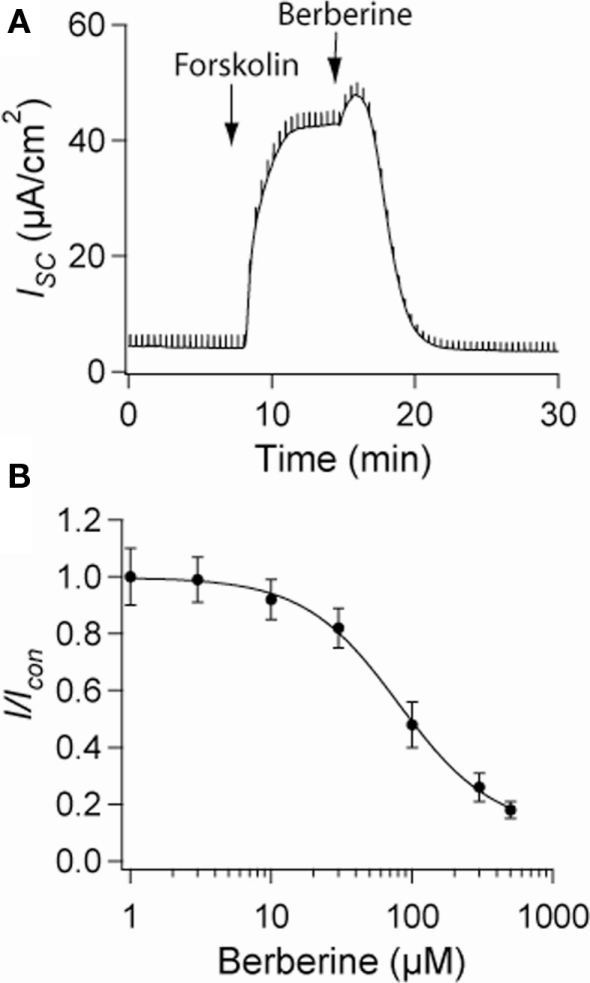
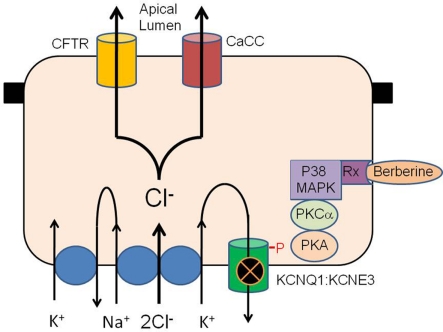
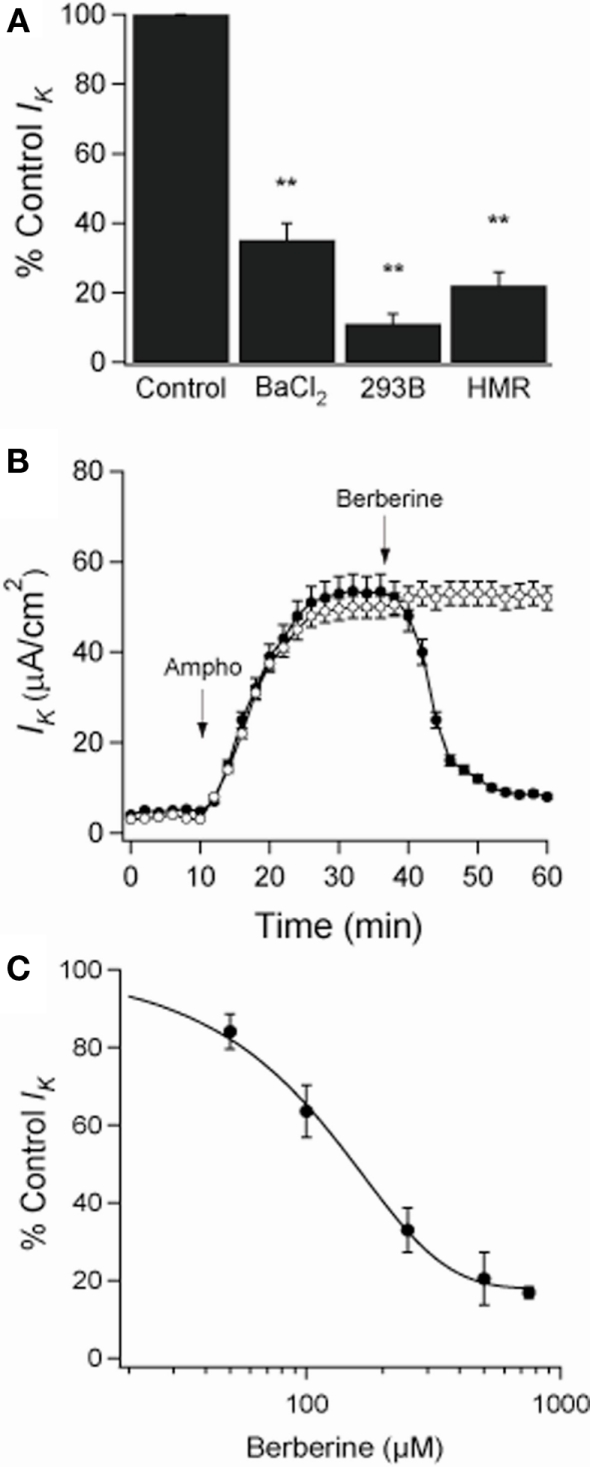
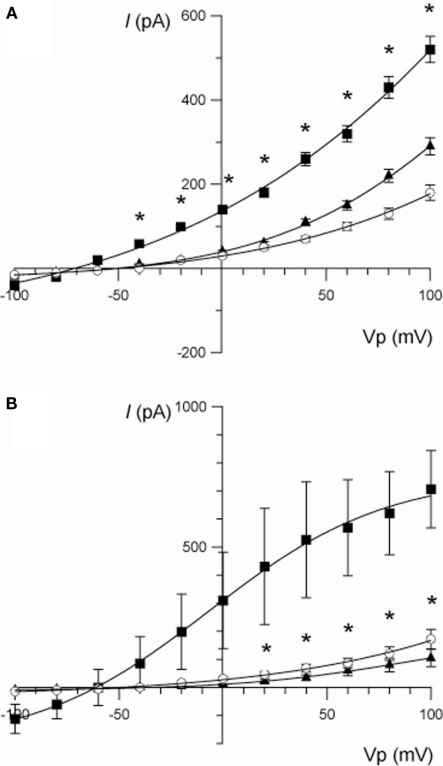
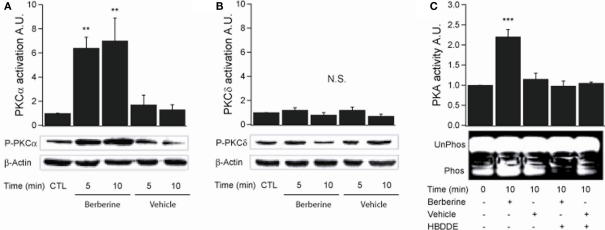
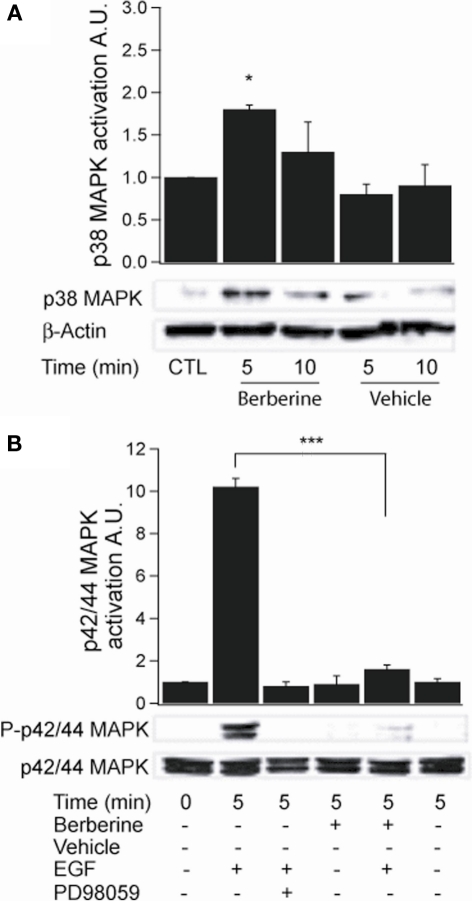
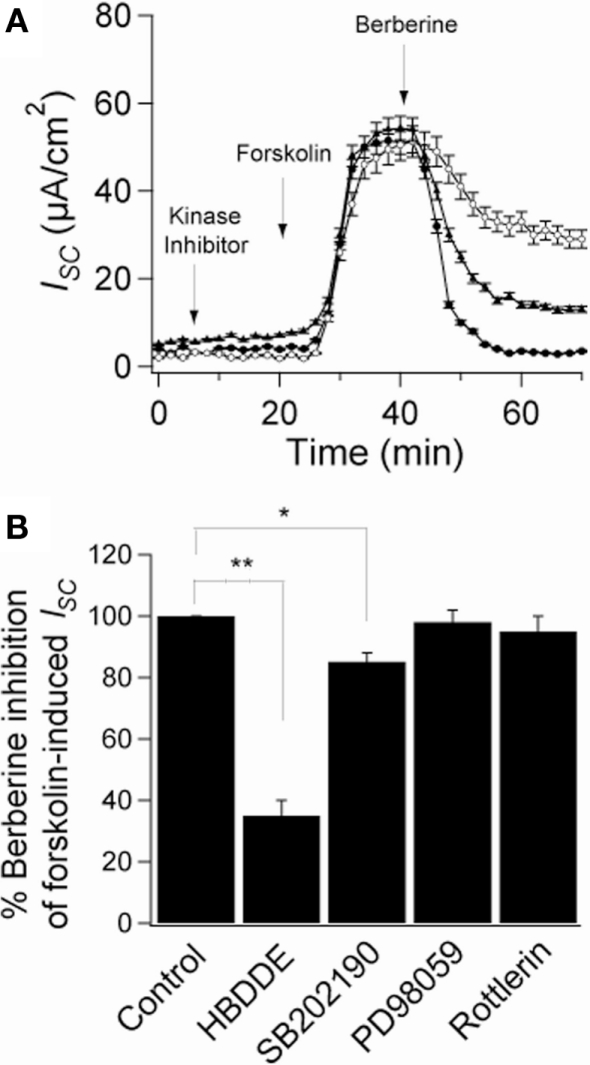
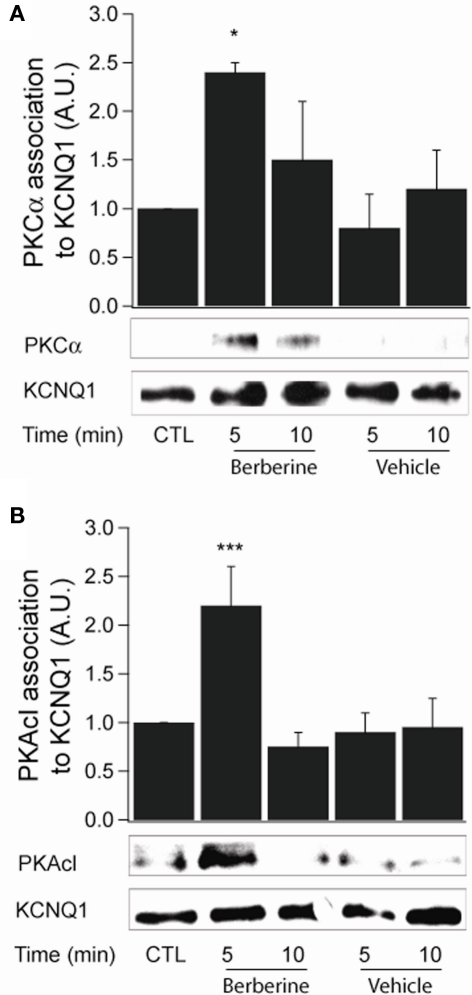
Berberine is a plant alkaloid with multiple pharmacological actions, including antidiarrhoeal activity and has been shown to inhibit Cl(-) secretion in distal colon. The aims of this study were to determine the molecular signaling mechanisms of action of berberine on Cl(-) secretion and the ion transporter targets. Monolayers of T84 human colonic carcinoma cells grown in permeable supports were placed in Ussing chambers and short-circuit current measured in response to secretagogues and berberine. Whole-cell current recordings were performed in T84 cells using the patch-clamp technique. Berberine decreased forskolin-induced short-circuit current in a concentration-dependent manner (IC(50) 80 ± 8 μM). In apically permeabilized monolayers and whole-cell current recordings, berberine inhibited a cAMP-dependent and chromanol 293B-sensitive basolateral membrane K(+) current by 88%, suggesting inhibition of KCNQ1 K(+) channels. Berberine did not affect either apical Cl(-) conductance or basolateral Na(+)-K(+)-ATPase activity. Berberine stimulated p38 MAPK, PKCα and PKA, but had no effect on p42/p44 MAPK and PKCδ. However, berberine pre-treatment prevented stimulation of p42/p44 MAPK by epidermal growth factor. The inhibitory effect of berberine on Cl(-) secretion was partially blocked by HBDDE (∼65%), an inhibitor of PKCα and to a smaller extent by inhibition of p38 MAPK with SB202190 (∼15%). Berberine treatment induced an increase in association between PKCα and PKA with KCNQ1 and produced phosphorylation of the channel. We conclude that berberine exerts its inhibitory effect on colonic Cl(-) secretion through inhibition of basolateral KCNQ1 channels responsible for K(+) recycling via a PKCα-dependent pathway.
小檗碱是一种具有多种药理作用的植物生物碱,包括抗腹泻活性,并且已被证明可抑制远端结肠中的Cl(-)分泌。本研究的目的是确定小檗碱对Cl(-)分泌的分子信号传导作用机制以及离子转运体靶点。将生长在可渗透支持物上的T84人结肠癌细胞单层置于尤斯灌流小室中,并测量对促分泌剂和小檗碱反应的短路电流。使用膜片钳技术在T84细胞中进行全细胞电流记录。小檗碱以浓度依赖性方式降低福斯高林诱导的短路电流(IC(50) 80±8μM)。在顶端通透的单层和全细胞电流记录中,小檗碱抑制了cAMP依赖性且对色满醇293B敏感的基底外侧膜K(+)电流88%,提示抑制了KCNQ1 K(+)通道。小檗碱既不影响顶端Cl(-)电导,也不影响基底外侧Na(+)-K(+)-ATP酶活性。小檗碱刺激p38丝裂原活化蛋白激酶、蛋白激酶Cα和蛋白激酶A,但对p42/p44丝裂原活化蛋白激酶和蛋白激酶Cδ没有影响。然而,小檗碱预处理可防止表皮生长因子对p42/p44丝裂原活化蛋白激酶的刺激。小檗碱对Cl(-)分泌的抑制作用部分被蛋白激酶Cα抑制剂HBDDE(约65%)阻断,而用SB202190抑制p38丝裂原活化蛋白激酶时阻断程度较小(约15%)。小檗碱处理导致蛋白激酶Cα和蛋白激酶A与KCNQ1之间的结合增加,并使该通道发生磷酸化。我们得出结论,小檗碱通过抑制负责K(+)再循环的基底外侧KCNQ通道,经由蛋白激酶Cα依赖性途径对结肠Cl(-)分泌发挥抑制作用。