Department of Physiology and Pharmacology, Federal University of Pernambuco, 50670-901 Recife, PE, Brazil.
Evid Based Complement Alternat Med. 2012;2012:270752. doi: 10.1155/2012/270752. Epub 2011 Jun 14.
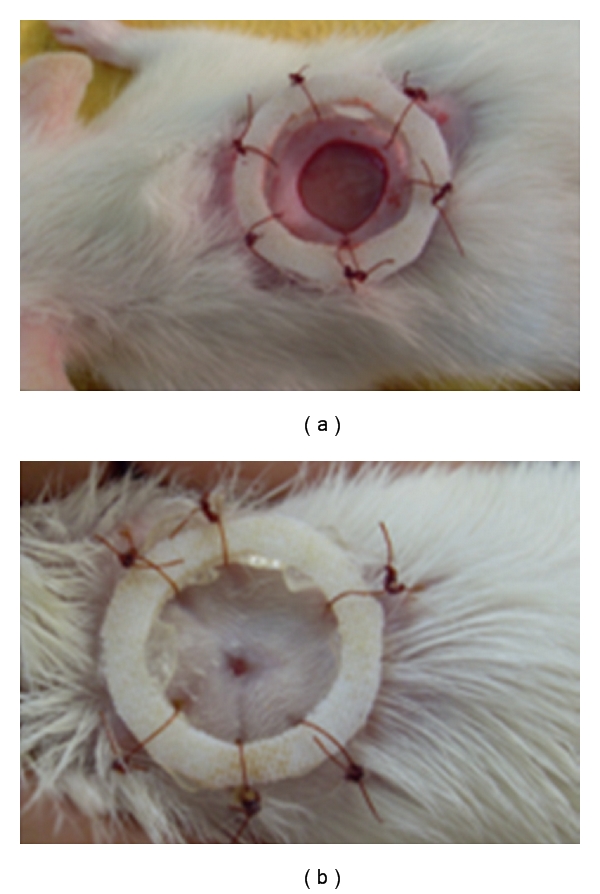
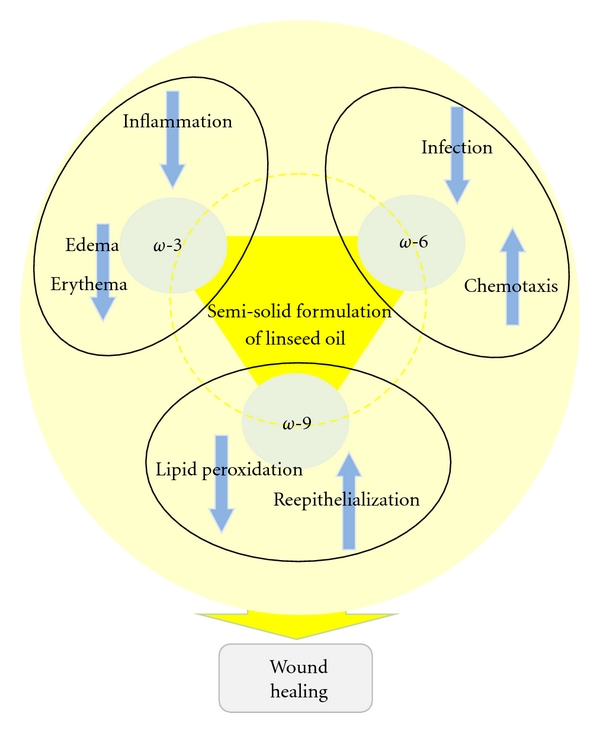
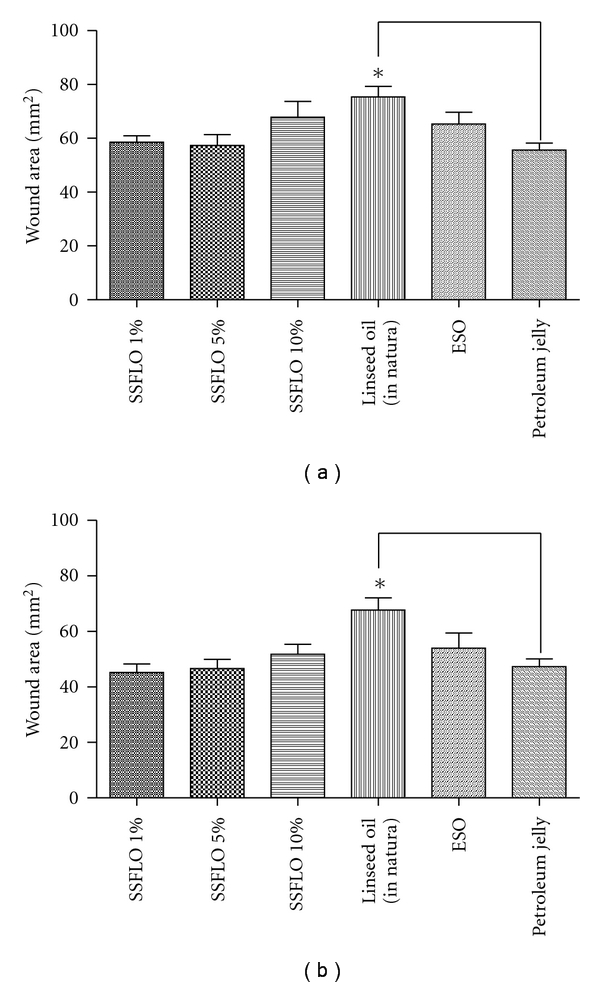
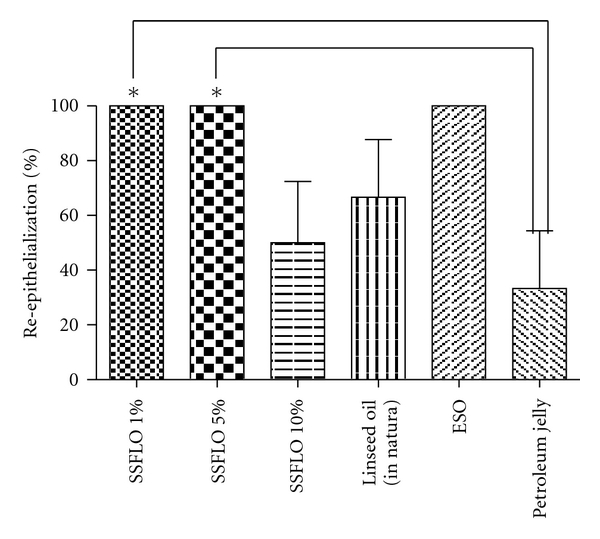
The purpose of this study was to investigate the effects of a semisolid formulation of linseed oil, SSFLO (1%, 5%, or 10%) or in natura linseed oil on skin wounds of rats. We used wound models, incisional and excisional, to evaluate, respectively, the contraction/reepithelialization of the wound and resistance to mechanical traction. The groups (n = 6) treated with SSFLO (1% or 5%) began the process of reepithelialization, to a significant extent (P < .05), on the sixth day, when compared to the petroleum jelly control group. On 14th day for the groups treated with SSFLO (1% or 5%), 100% reepithelialization was found, while in the petroleum jelly control group, this was only 33.33%. Our study showed that topical administration of SSFLO (1% or 5%) in excisional wounds allowed reepithelialization in 100% of treated animals. Therefore, a therapeutic potential of linseed oil, when used at low concentrations in the solid pharmaceutical formulations, is suggested for the process of dermal repair.
本研究旨在探讨亚麻籽油半固体制剂(SSFLO,浓度分别为 1%、5%或 10%)或天然亚麻籽油对大鼠皮肤伤口的影响。我们使用切口和切除两种伤口模型,分别评估伤口收缩/再上皮化和抗机械牵引的能力。与凡士林对照组相比,用 SSFLO(1%或 5%)治疗的组在第六天开始显著地再上皮化(P<.05)。对于用 SSFLO(1%或 5%)治疗的组,在第 14 天,发现 100%的再上皮化,而在凡士林对照组中,只有 33.33%。我们的研究表明,局部应用 SSFLO(1%或 5%)在切除伤口中能使 100%的治疗动物再上皮化。因此,建议在低浓度下将亚麻籽油用于固体制剂的药物疗法具有治疗皮肤修复的潜力。