Entomology and Nematology Department, University of Florida, Gainesville, Florida, United States of America.
PLoS One. 2011;6(7):e21709. doi: 10.1371/journal.pone.0021709. Epub 2011 Jul 1.
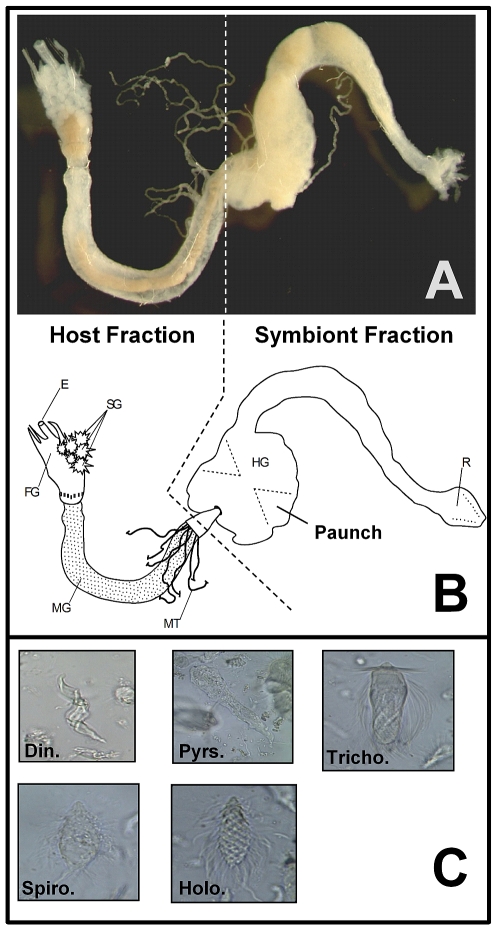
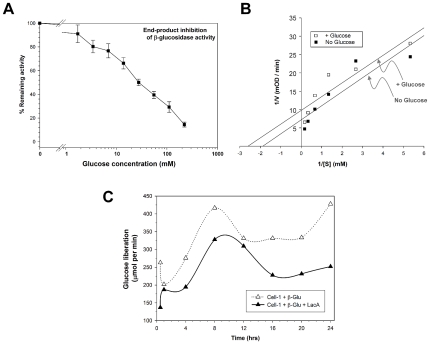
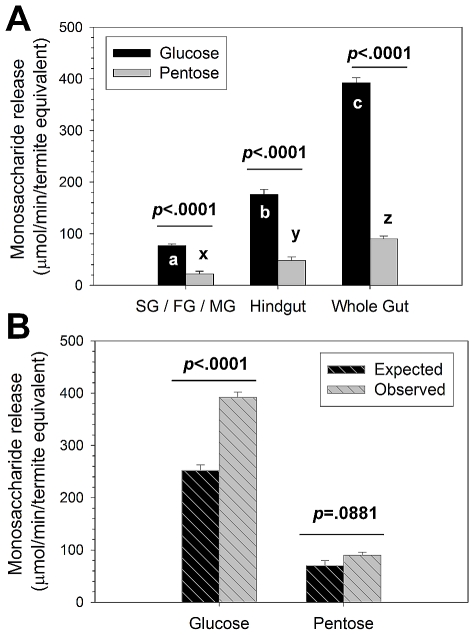
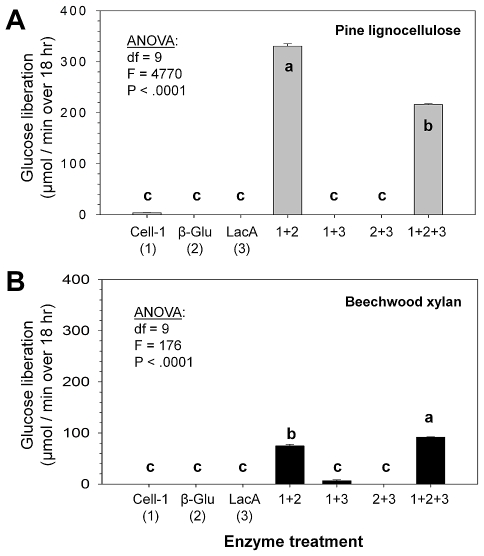
In addition to evolving eusocial lifestyles, two equally fascinating aspects of termite biology are their mutualistic relationships with gut symbionts and their use of lignocellulose as a primary nutrition source. Termites are also considered excellent model systems for studying the production of bioethanol and renewable bioenergy from 2nd generation (non-food) feedstocks. While the idea that gut symbionts are the sole contributors to termite lignocellulose digestion has remained popular and compelling, in recent years host contributions to the digestion process have become increasingly apparent. However, the degree to which host and symbiont, and host enzymes, collaborate in lignocellulose digestion remain poorly understood. Also, how digestive enzymes specifically collaborate (i.e., in additive or synergistic ways) is largely unknown. In the present study we undertook translational-genomic studies to gain unprecedented insights into digestion by the lower termite Reticulitermes flavipes and its symbiotic gut flora. We used a combination of native gut tissue preparations and recombinant enzymes derived from the host gut transcriptome to identify synergistic collaborations between host and symbiont, and also among enzymes produced exclusively by the host termite. Our findings provide important new evidence of synergistic collaboration among enzymes in the release of fermentable monosaccharides from wood lignocellulose. These monosaccharides (glucose and pentoses) are highly relevant to 2(nd)-generation bioethanol production. We also show that, although significant digestion capabilities occur in host termite tissues, catalytic tradeoffs exist that apparently favor mutualism with symbiotic lignocellulose-digesting microbes. These findings contribute important new insights towards the development of termite-derived biofuel processing biotechnologies and shed new light on selective forces that likely favored symbiosis and, subsequently, group living in primitive termites and their cockroach ancestors.
除了进化出真社会性的生活方式外,白蚁生物学还有两个同样引人入胜的方面,即它们与肠道共生体的互利关系,以及它们将木质纤维素作为主要营养源的利用。白蚁也被认为是研究从第二代(非食品)饲料生产生物乙醇和可再生生物能源的极好的模式系统。虽然肠道共生体是白蚁木质纤维素消化的唯一贡献者的观点仍然很流行和有说服力,但近年来,宿主对消化过程的贡献变得越来越明显。然而,宿主和共生体以及宿主酶在木质纤维素消化中的合作程度仍知之甚少。此外,消化酶如何具体地协同作用(即,以相加或协同的方式)在很大程度上尚不清楚。在本研究中,我们进行了转化基因组学研究,以获得对低级白蚁 R.flavipes 及其共生肠道菌群消化的前所未有的深入了解。我们使用了组合的天然肠道组织制剂和来自宿主肠道转录组的重组酶,以鉴定宿主和共生体之间以及仅由宿主白蚁产生的酶之间的协同合作。我们的研究结果为从木质纤维素中释放可发酵单糖的酶之间的协同合作提供了重要的新证据。这些单糖(葡萄糖和戊糖)与第二代生物乙醇生产高度相关。我们还表明,尽管在宿主白蚁组织中存在显著的消化能力,但存在催化权衡,显然有利于与共生的木质纤维素消化微生物的互利共生。这些发现为开发基于白蚁的生物燃料加工生物技术提供了重要的新见解,并揭示了可能有利于共生关系以及随后原始白蚁及其蟑螂祖先群体生活的选择压力。