Department of Psychology, Università Degli Studi di Firenze, Florence, Italy.
PLoS One. 2011;6(7):e21661. doi: 10.1371/journal.pone.0021661. Epub 2011 Jul 7.
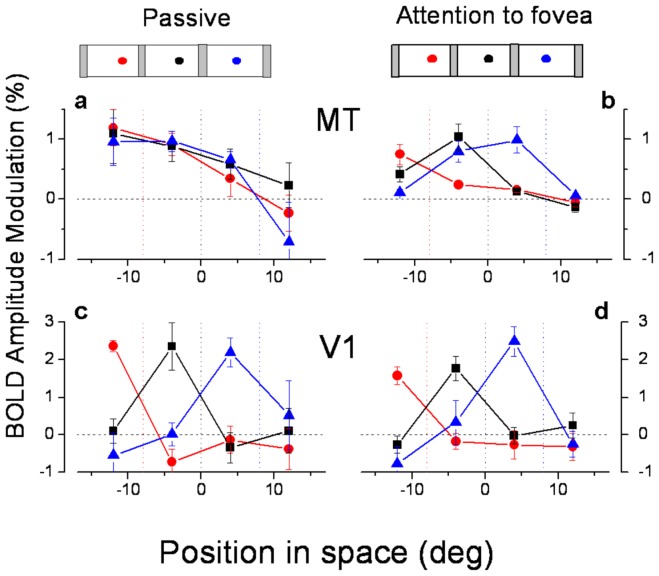
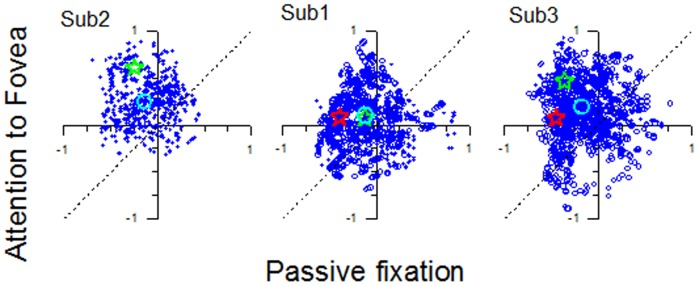
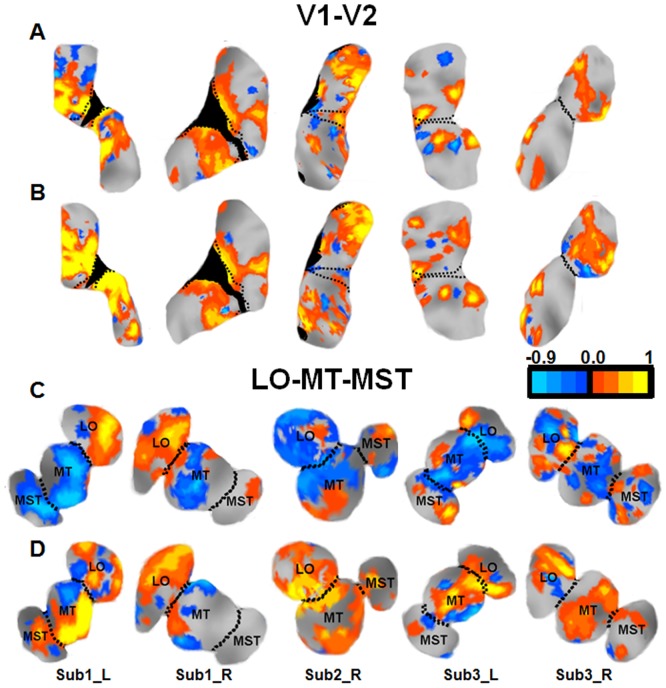
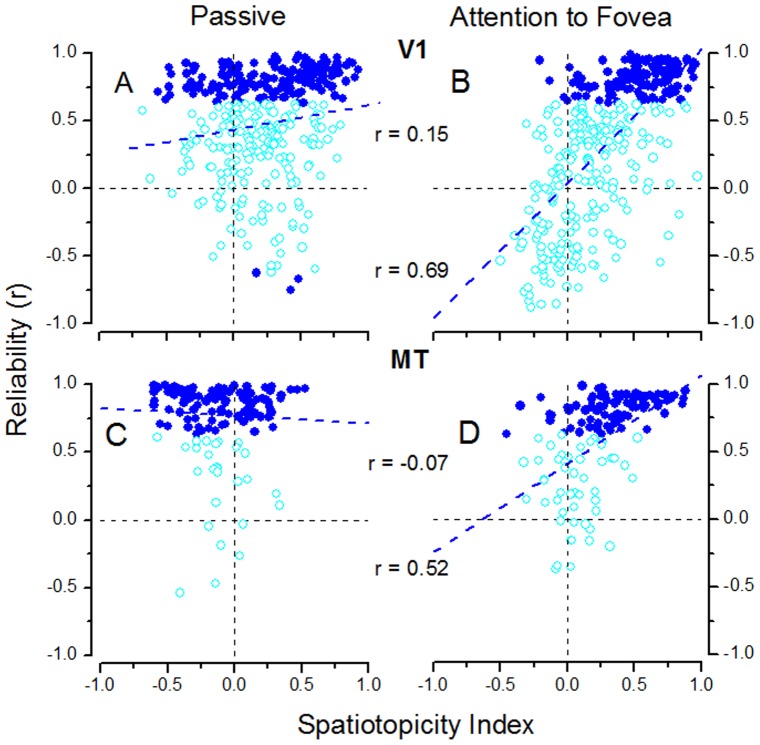
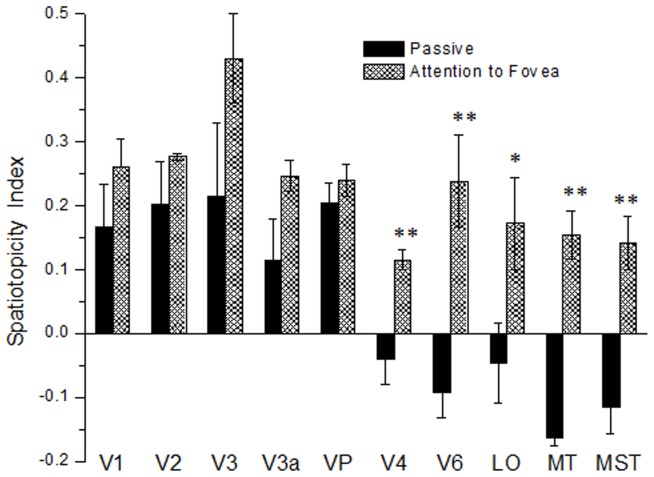
The neural substrate of the phenomenological experience of a stable visual world remains obscure. One possible mechanism would be to construct spatiotopic neural maps where the response is selective to the position of the stimulus in external space, rather than to retinal eccentricities, but evidence for these maps has been inconsistent. Here we show, with fMRI, that when human subjects perform concomitantly a demanding attentive task on stimuli displayed at the fovea, BOLD responses evoked by moving stimuli irrelevant to the task were mostly tuned in retinotopic coordinates. However, under more unconstrained conditions, where subjects could attend easily to the motion stimuli, BOLD responses were tuned not in retinal but in external coordinates (spatiotopic selectivity) in many visual areas, including MT, MST, LO and V6, agreeing with our previous fMRI study. These results indicate that spatial attention may play an important role in mediating spatiotopic selectivity.
稳定的视觉世界的现象经验的神经基础仍然不清楚。一种可能的机制是构建空间神经图谱,其中反应对刺激在外部空间中的位置而不是视网膜偏心度具有选择性,但这些图谱的证据一直不一致。在这里,我们通过 fMRI 显示,当人类受试者同时在注视点上显示的刺激上执行一项要求很高的注意任务时,与任务无关的移动刺激引起的 BOLD 反应主要在视网膜坐标中被调谐。然而,在更不受限制的条件下,当受试者可以轻松地注意到运动刺激时,BOLD 反应不是在视网膜坐标中而是在外部坐标(空间选择性)中被调谐,这在许多视觉区域中都是如此,包括 MT、MST、LO 和 V6,与我们之前的 fMRI 研究一致。这些结果表明,空间注意可能在介导空间选择性中发挥重要作用。