Chen Weizao, Zhu Zhongyu, Liao Huaxin, Quinnan Gerald V, Broder Christopher C, Haynes Barton F, Dimitrov Dimiter S
Protein Interactions Group, Center for Cancer Research Nanobiology Program, National Cancer Institute (NCI)-Frederick, National Institutes of Health (NIH), Frederick, MD 21702, USA.
Viruses. 2010 Feb;2(2):547-565. doi: 10.3390/v2020547.
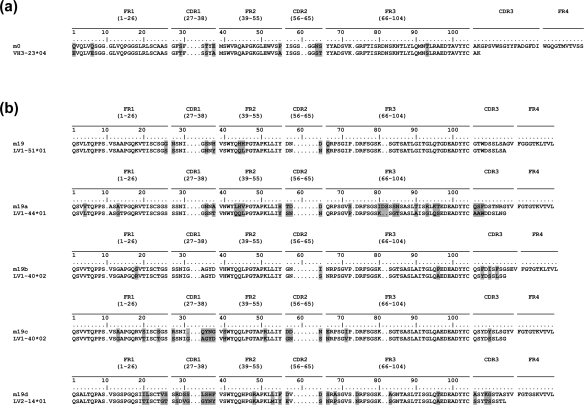
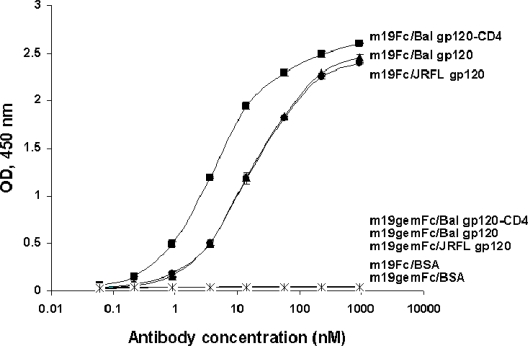
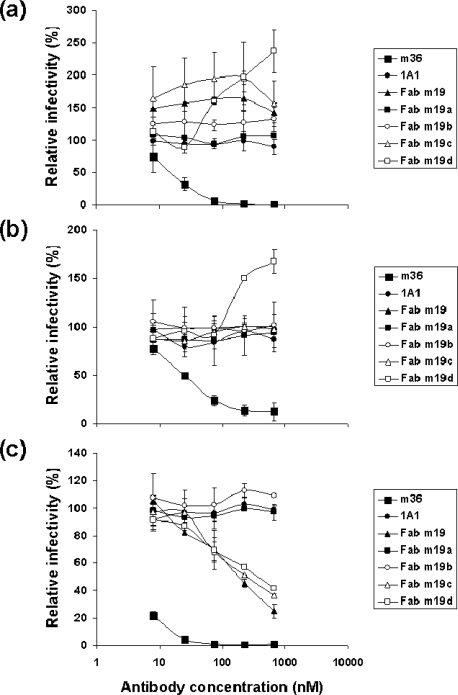
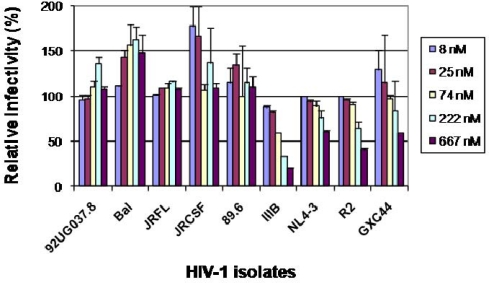
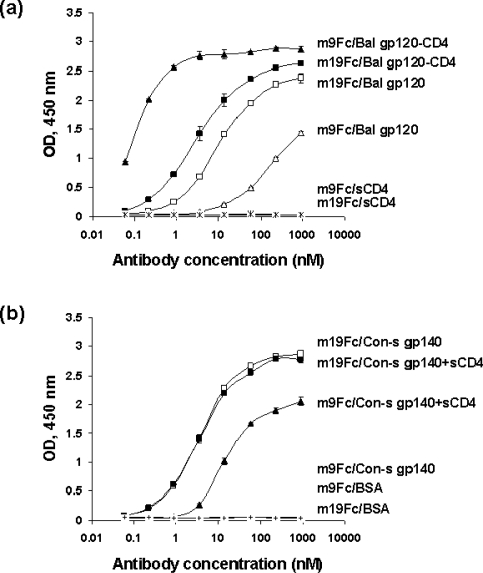
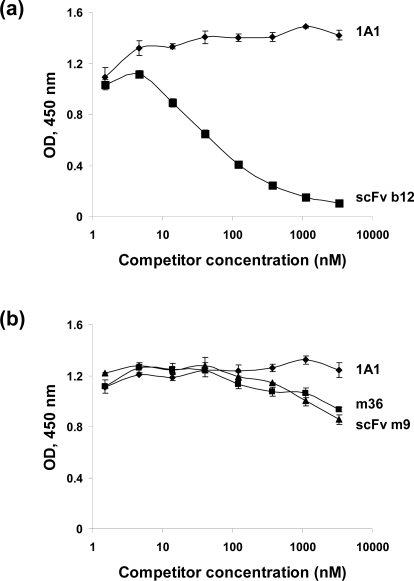
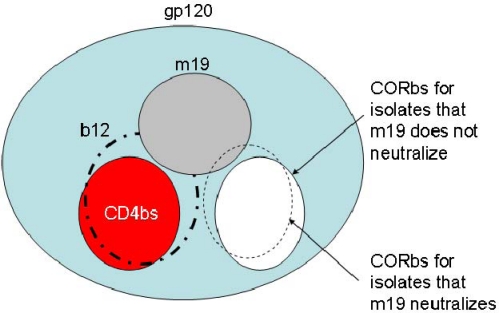
Elicitation of antibodies with potent and broad neutralizing activity against HIV by immunization remains a challenge. Several monoclonal antibodies (mAbs) isolated from humans with HIV-1 infection exhibit such activity but vaccine immunogens based on structures containing their epitopes have not been successful for their elicitation. All known broadly neutralizing mAbs (bnmAbs) are immunoglobulin (Ig) Gs (IgGs) and highly somatically hypermutated which could impede their elicitation. Ig Ms (IgMs) are on average significantly less divergent from germline antibodies and are relevant for the development of vaccine immunogens but are underexplored compared to IgGs. Here we describe the identification and characterization of several human IgM-derived mAbs against HIV-1 which were selected from a large phage-displayed naive human antibody library constructed from blood, lymph nodes and spleens of 59 healthy donors. These antibodies bound with high affinity to recombinant envelope glycoproteins (gp140s, Envs) of HIV-1 isolates from different clades. They enhanced or did not neutralize infection by some of the HIV-1 primary isolates using CCR5 as a coreceptor but neutralized all CXCR4 isolates tested although weakly. One of these antibodies with relatively low degree of somatic hypermutation was more extensively characterized. It bound to a highly conserved region partially overlapping with the coreceptor binding site and close to but not overlapping with the CD4 binding site. These results suggest the existence of conserved structures that could direct the immune response to non-neutralizing or even enhancing antibodies which may represent a strategy used by the virus to escape neutralizing immune responses. Further studies will show whether such a strategy plays a role in HIV infection of humans, how important that role could be, and what the mechanisms of infection enhancement are. The newly identified mAbs could be used as reagents to further characterize conserved non-neutralizing, weakly neutralizing or enhancing epitopes and modify or remove them from candidate vaccine immunogens.
通过免疫诱导出对HIV具有强效和广泛中和活性的抗体仍然是一项挑战。从感染HIV-1的人类中分离出的几种单克隆抗体(mAb)具有这种活性,但基于包含其表位结构的疫苗免疫原在诱导产生此类抗体方面尚未成功。所有已知的广泛中和性单克隆抗体(bnmAb)均为免疫球蛋白(Ig)G(IgG),且体细胞高度超突变,这可能会阻碍其诱导产生。IgM平均与种系抗体的差异明显较小,与疫苗免疫原的开发相关,但与IgG相比研究较少。在此,我们描述了从由59名健康供体的血液、淋巴结和脾脏构建的大型噬菌体展示天然人抗体库中筛选出的几种针对HIV-1的人源IgM衍生mAb的鉴定和表征。这些抗体与来自不同分支的HIV-1分离株的重组包膜糖蛋白(gp140,Env)具有高亲和力结合。它们增强了或未中和某些以CCR5作为共受体的HIV-1原代分离株的感染,但中和了所有测试的CXCR4分离株,尽管中和作用较弱。对其中一种体细胞超突变程度相对较低的抗体进行了更深入的表征。它结合到一个高度保守的区域,该区域部分与共受体结合位点重叠,且靠近但不与CD4结合位点重叠。这些结果表明存在保守结构,其可能引导免疫反应产生非中和甚至增强性抗体,这可能是病毒逃避中和免疫反应所采用的一种策略。进一步的研究将表明这种策略在人类HIV感染中是否起作用、该作用有多重要以及感染增强的机制是什么。新鉴定的mAb可作为试剂,进一步表征保守的非中和、弱中和或增强性表位,并从候选疫苗免疫原中修饰或去除它们。