Profumo Elisabetta, Buttari Brigitta, Riganò Rachele
Dipartimento di Malattie Infettive, Parassitarie ed Immunomediate, Istituto Superiore di Sanità, Viale Regina Elena 299, 00161 Roma, Italy.
Int J Inflam. 2011;2011:295705. doi: 10.4061/2011/295705. Epub 2011 Jun 28.
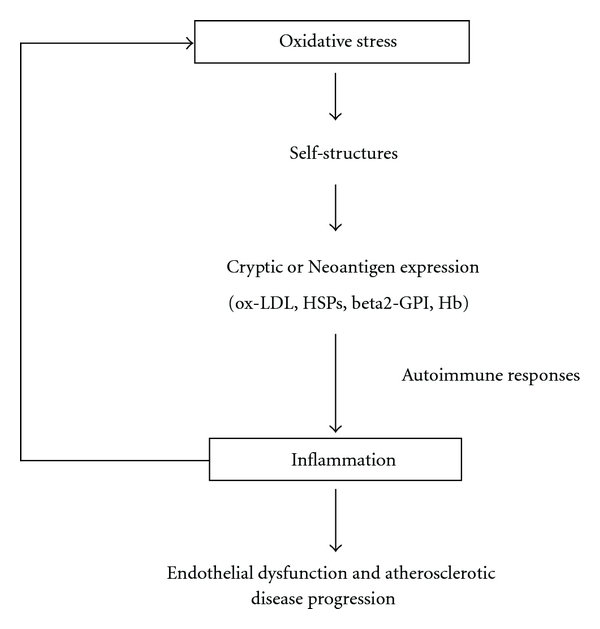
Recently, it has become clear that atherosclerosis is a chronic inflammatory disease in which inflammation and immune responses play a key role. Accelerated atherosclerosis has been reported in patients with autoimmune diseases, suggesting an involvement of autoimmune mechanisms in atherogenesis. Different self-antigens or modified self-molecules have been identified as target of humoral and cellular immune responses in patients with atherosclerotic disease. Oxidative stress, increasingly reported in these patients, is the major event causing structural modification of proteins with consequent appearance of neoepitopes. Self-molecules modified by oxidative events can become targets of autoimmune reactions, thus sustaining the inflammatory mechanisms involved in endothelial dysfunction and plaque development. In this paper, we will summarize the best characterized autoantigens in atherosclerosis and their possible role in cardiovascular inflammation.
最近,越来越清楚的是,动脉粥样硬化是一种慢性炎症性疾病,其中炎症和免疫反应起着关键作用。自身免疫性疾病患者中已报道有动脉粥样硬化加速的情况,这表明自身免疫机制参与了动脉粥样硬化的发生。在动脉粥样硬化疾病患者中,不同的自身抗原或修饰的自身分子已被确定为体液免疫和细胞免疫反应的靶点。这些患者中越来越多地报道了氧化应激,它是导致蛋白质结构修饰并随之出现新表位的主要事件。经氧化事件修饰的自身分子可成为自身免疫反应的靶点,从而维持参与内皮功能障碍和斑块形成的炎症机制。在本文中,我们将总结动脉粥样硬化中特征最明显的自身抗原及其在心血管炎症中的可能作用。