Rosen Meghan D, Privalsky Martin L
Department of Microbiology, University of California-Davis, Davis, CA 95616, USA.
J Thyroid Res. 2011;2011:361304. doi: 10.4061/2011/361304. Epub 2011 Jun 8.
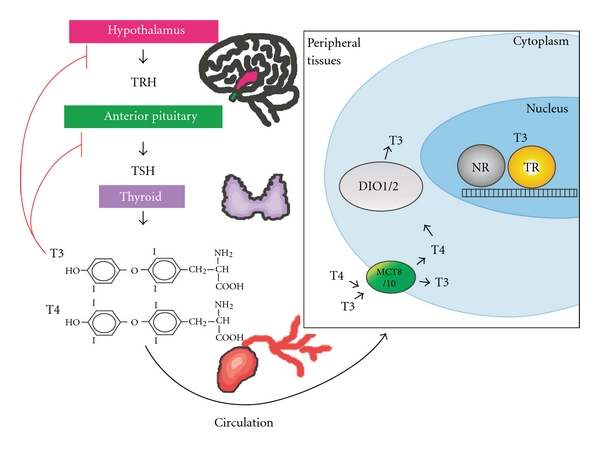
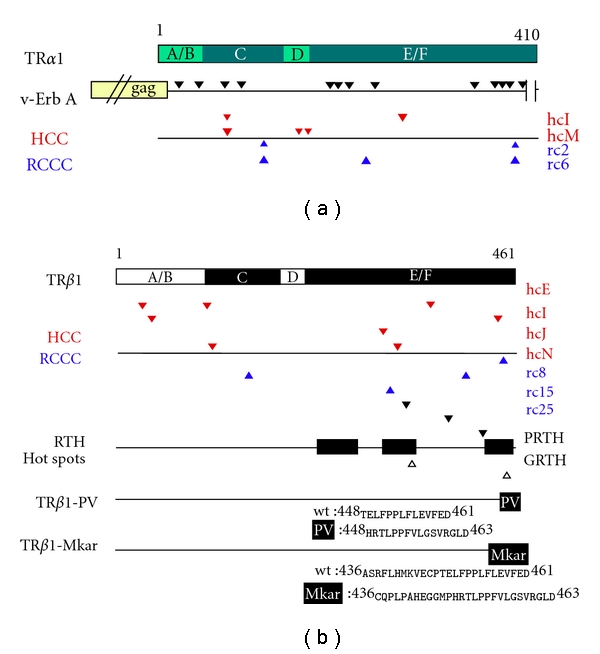
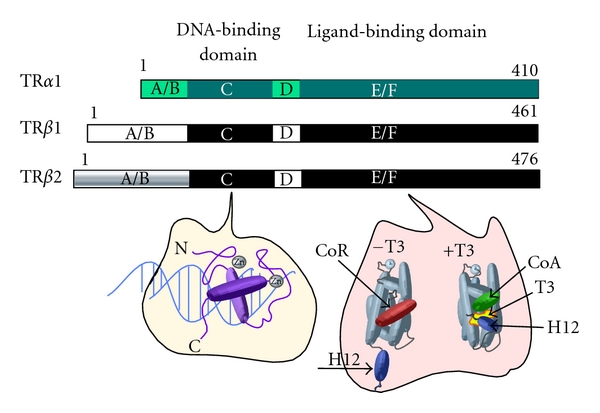
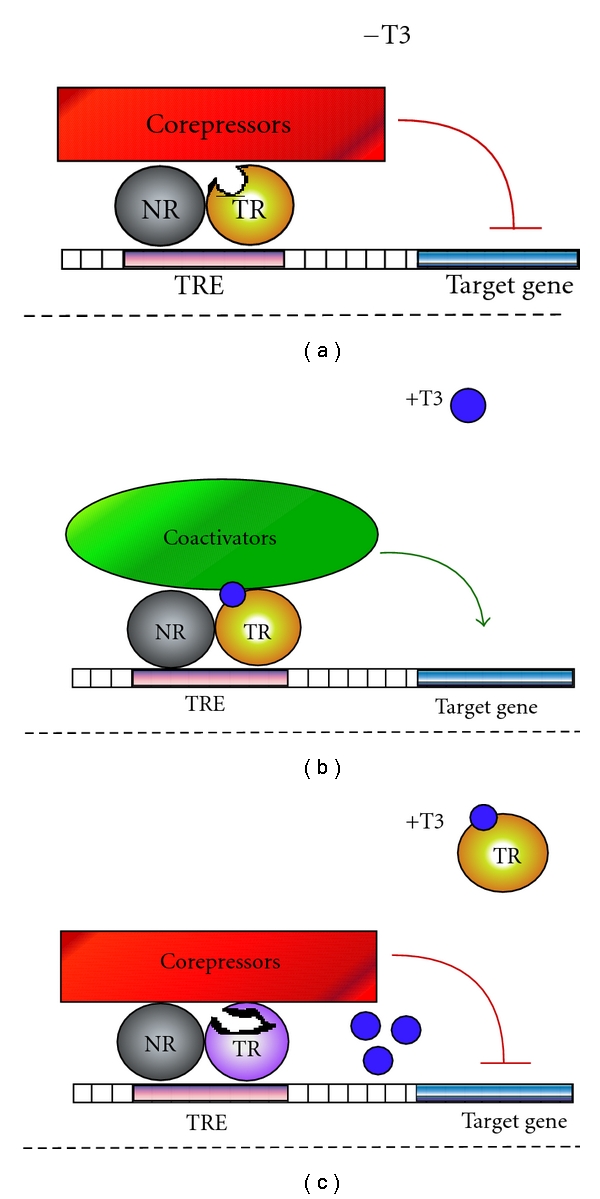
Thyroid hormone, operating through its receptors, plays crucial roles in the control of normal human physiology and development; deviations from the norm can give rise to disease. Clinical endocrinologists often must confront and correct the consequences of inappropriately high or low thyroid hormone synthesis. Although more rare, disruptions in thyroid hormone endocrinology due to aberrations in the receptor also have severe medical consequences. This review will focus on the afflictions that are caused by, or are closely associated with, mutated thyroid hormone receptors. These include Resistance to Thyroid Hormone Syndrome, erythroleukemia, hepatocellular carcinoma, renal clear cell carcinoma, and thyroid cancer. We will describe current views on the molecular bases of these diseases, and what distinguishes the neoplastic from the non-neoplastic. We will also touch on studies that implicate alterations in receptor expression, and thyroid hormone levels, in certain oncogenic processes.
甲状腺激素通过其受体发挥作用,在调控正常人体生理和发育过程中起着关键作用;偏离正常水平会引发疾病。临床内分泌学家常常必须应对并纠正甲状腺激素合成过高或过低所带来的后果。虽然较为罕见,但由于受体异常导致的甲状腺激素内分泌紊乱也会产生严重的医学后果。本综述将聚焦于由突变的甲状腺激素受体引起的或与之密切相关的疾病。这些疾病包括甲状腺激素抵抗综合征、红白血病、肝细胞癌、肾透明细胞癌和甲状腺癌。我们将阐述目前对这些疾病分子基础的看法,以及肿瘤性疾病与非肿瘤性疾病的区别。我们还将提及一些研究,这些研究表明受体表达和甲状腺激素水平的改变在某些致癌过程中发挥作用。