Department of Surgery, University of Virginia, Charlottesville, VA 22908-0679, USA.
Oncogene. 2012 Mar 1;31(9):1143-54. doi: 10.1038/onc.2011.308. Epub 2011 Jul 18.
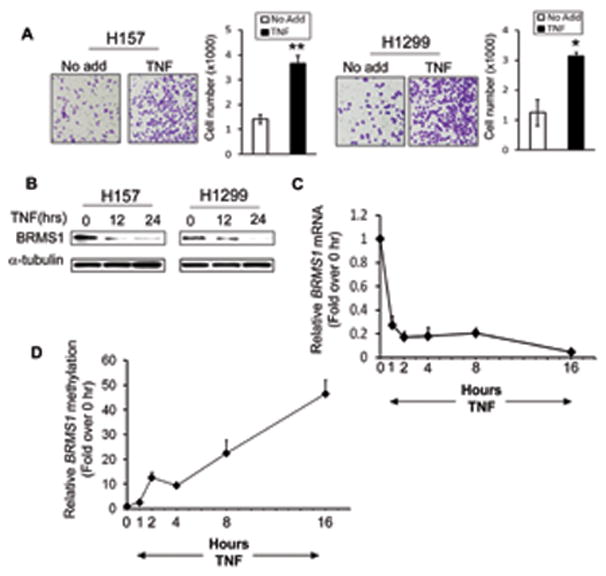
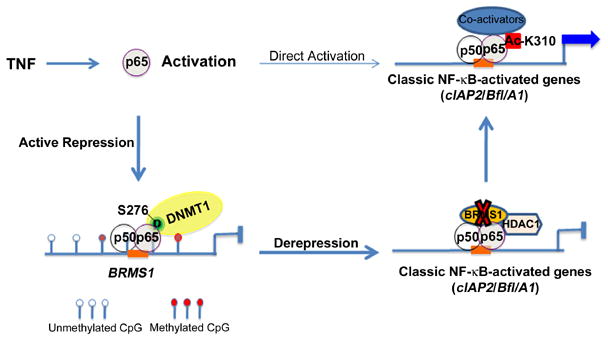
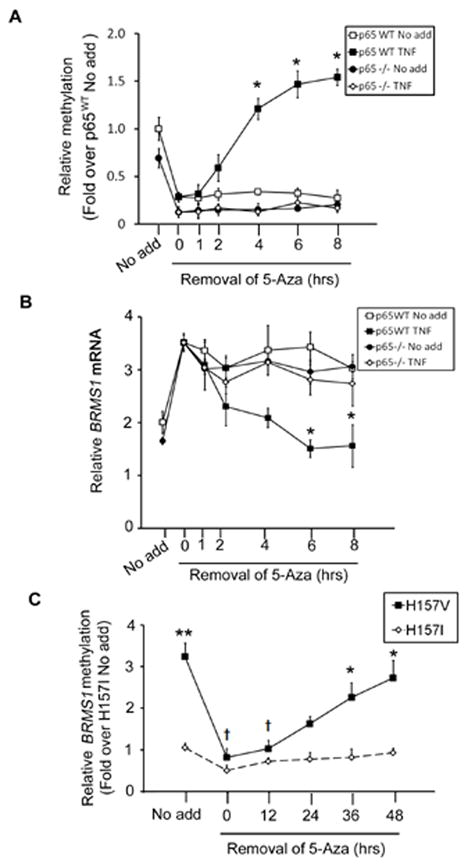
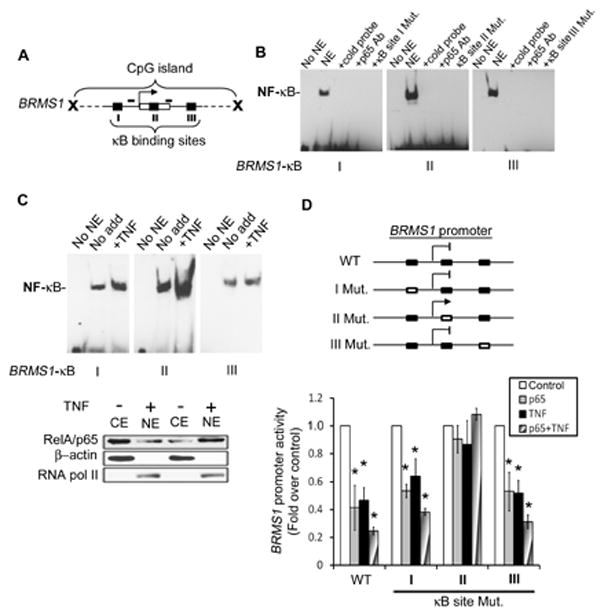
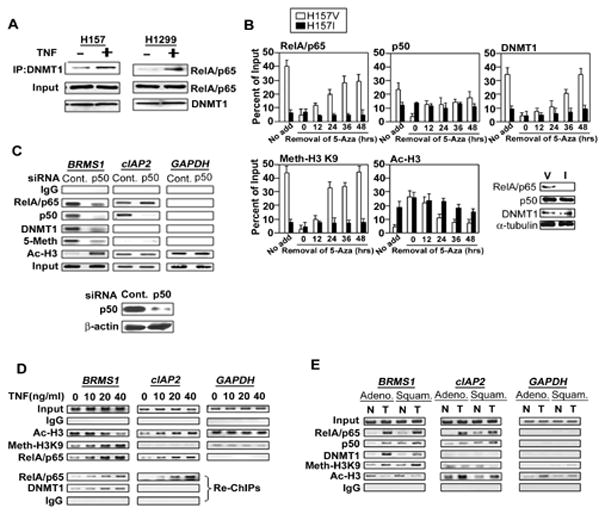
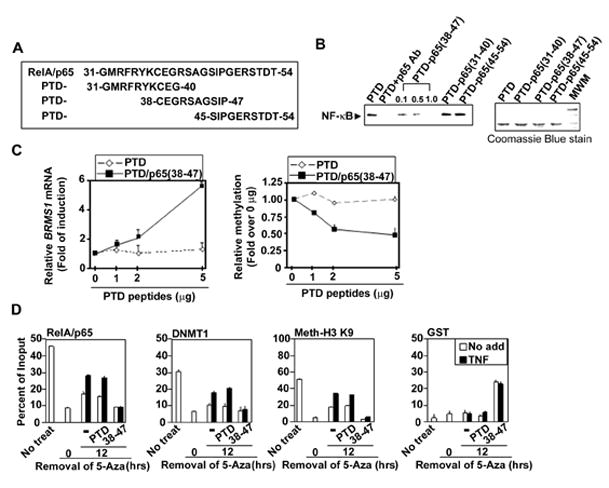
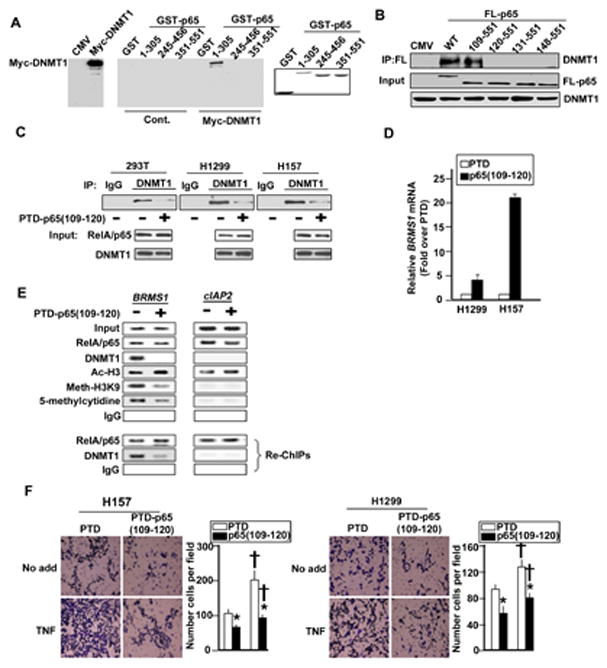
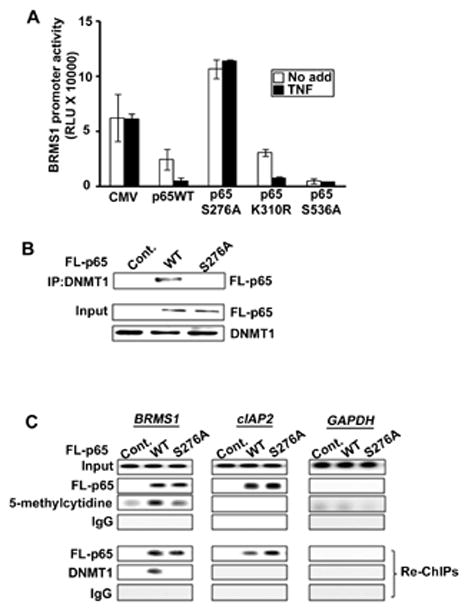
The majority of patients with lung cancer present with metastatic disease. Chronic inflammation and subsequent activation of nuclear factor-κB (NF-κB) have been associated with the development of cancers. The RelA/p65 subunit of NF-κB is typically associated with transcriptional activation. In this report we show that RelA/p65 can function as an active transcriptional repressor through enhanced methylation of the BRMS1 (breast cancer metastasis suppressor 1) metastasis suppressor gene promoter via direct recruitment of DNMT-1 (DNA (cytosine-5)-methyltransferase 1) to chromatin in response to tumor necrosis factor (TNF). TNF-mediated phosphorylation of S276 on RelA/p65 is required for RelA/p65-DNMT-1 interactions, chromatin loading of DNMT-1 and subsequent BRMS1 promoter methylation and transcriptional repression. The ability of RelA/p65 to function as an active transcriptional repressor is promoter specific, as the NF-κB-regulated gene cIAP2 (cellular inhibitor of apoptosis 2) is transcriptionally activated whereas BRMS1 is repressed under identical conditions. Small-molecule inhibition of either of the minimal interacting domains between RelA/p65-DNMT-1 and RelA/p65-BRMS1 promoter abrogates BRMS1 methylation and its transcriptional repression. The ability of RelA/p65 to directly recruit DNMT-1 to chromatin, resulting in promoter-specific methylation and transcriptional repression of tumor metastasis suppressor gene BRMS1, highlights a new mechanism through which NF-κB can regulate metastatic disease, and offers a potential target for newer-generation epigenetic oncopharmaceuticals.
大多数肺癌患者都存在转移性疾病。慢性炎症和随后的核因子-κB(NF-κB)激活与癌症的发生有关。NF-κB 的 RelA/p65 亚基通常与转录激活有关。在本报告中,我们表明 RelA/p65 可以通过 TNF 响应下直接募集 DNMT-1(DNA(胞嘧啶-5)-甲基转移酶 1)到染色质,从而增强 BRMS1(乳腺癌转移抑制因子 1)转移抑制基因启动子的甲基化,从而作为活性转录抑制剂发挥作用。RelA/p65 上 S276 的 TNF 介导的磷酸化对于 RelA/p65-DNMT-1 相互作用、DNMT-1 的染色质加载以及随后的 BRMS1 启动子甲基化和转录抑制是必需的。RelA/p65 作为活性转录抑制剂的能力是启动子特异性的,因为 NF-κB 调节的基因 cIAP2(细胞凋亡抑制剂 2)在转录上被激活,而 BRMS1 在相同条件下被抑制。RelA/p65-DNMT-1 和 RelA/p65-BRMS1 启动子之间最小相互作用域的小分子抑制均可消除 BRMS1 的甲基化及其转录抑制。RelA/p65 直接募集 DNMT-1 到染色质,导致肿瘤转移抑制基因 BRMS1 的启动子特异性甲基化和转录抑制,突出了 NF-κB 可以调节转移性疾病的新机制,并为新一代表观遗传肿瘤药物提供了潜在的靶标。