Ruf François Olivier
UMR Innovation, CIRAD, 34398 Montpellier, France.
Hum Ecol Interdiscip J. 2011 Jun;39(3):373-388. doi: 10.1007/s10745-011-9392-0. Epub 2011 Apr 7.
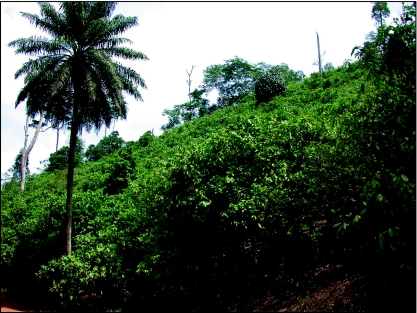
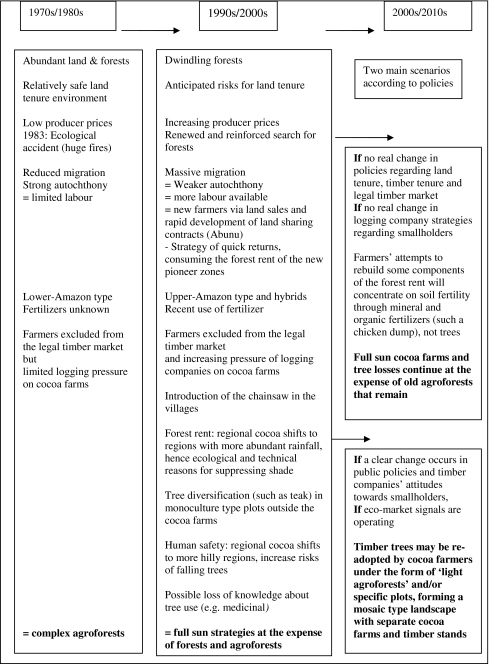
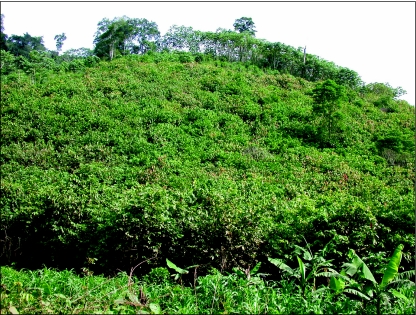
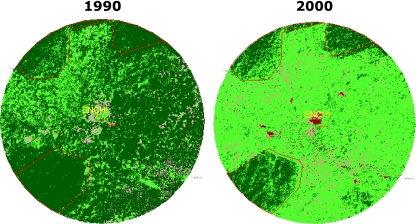
Most researchers defend cocoa agroforests as a model, which guarantees sustainable cocoa production while protecting biodiversity. However, in most countries, farmers' strategies favour "full sun" cocoa farms, close to the concept of monoculture. Why this apparent paradox? Field surveys were conducted in 2005 and 2008 with 180 migrant and autochthon farmers in four districts of Ghana, including some measurements at the farm plot level and satellite images in a fifth district. An analytical grid shows how factors interact. Adoption of sun-loving hybrids; farmers' negative perception of ecological services in relation to hybrids; legislation excluding smallholders from the legal timber market; recent expansion of the timber industry; and the migratory phenomenon. Most smallholders consider complex cocoa agroforests as a thing of the past. They were designed at a time when land and forests were abundant. The future of cocoa and timber may lie in 'light commercial-oriented agroforests' or a kind of mosaic landscape.
大多数研究人员将可可农林复合经营视为一种典范,它能在保护生物多样性的同时确保可可的可持续生产。然而,在大多数国家,农民的策略倾向于“全日照”可可农场,这接近于单一栽培的概念。为何会出现这种明显的矛盾呢?2005年和2008年,在加纳的四个地区对180名移民农民和本地农民进行了实地调查,包括在农场地块层面的一些测量以及在第五个地区的卫星图像。一个分析网格展示了各种因素是如何相互作用的。喜爱阳光的杂交品种的采用;农民对与杂交品种相关的生态服务的负面认知;将小农户排除在合法木材市场之外的立法;木材行业最近的扩张;以及移民现象。大多数小农户认为复杂的可可农林复合经营已成为过去式。它们是在土地和森林资源丰富的时期设计的。可可和木材的未来可能在于“轻度商业导向的农林复合经营”或一种镶嵌式景观。