Galindo Layla T, Filippo Thais R M, Semedo Patricia, Ariza Carolina B, Moreira Caroline M, Camara Niels O S, Porcionatto Marimelia A
Departamento de Bioquímica, Universidade Federal de São Paulo, Rua Três de Maio 100, 04044-020 São Paulo, SP, Brazil.
Neurol Res Int. 2011;2011:564089. doi: 10.1155/2011/564089. Epub 2011 Jun 9.
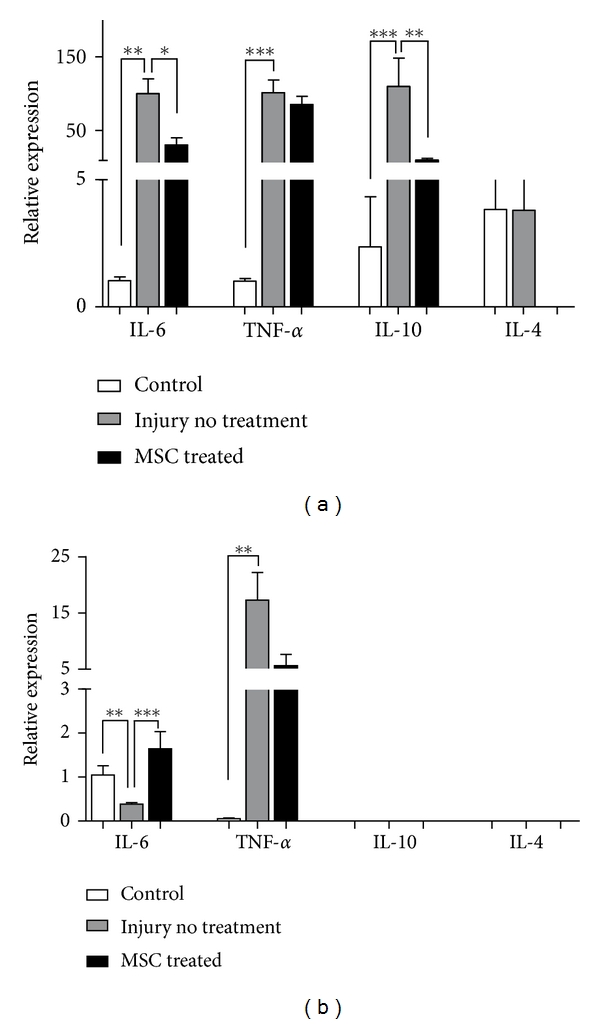
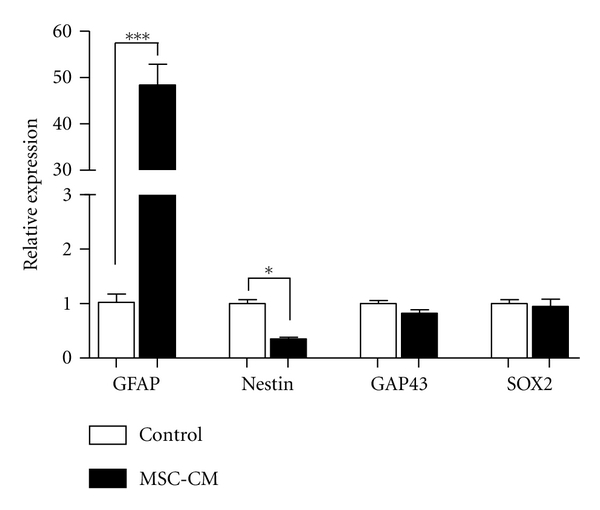
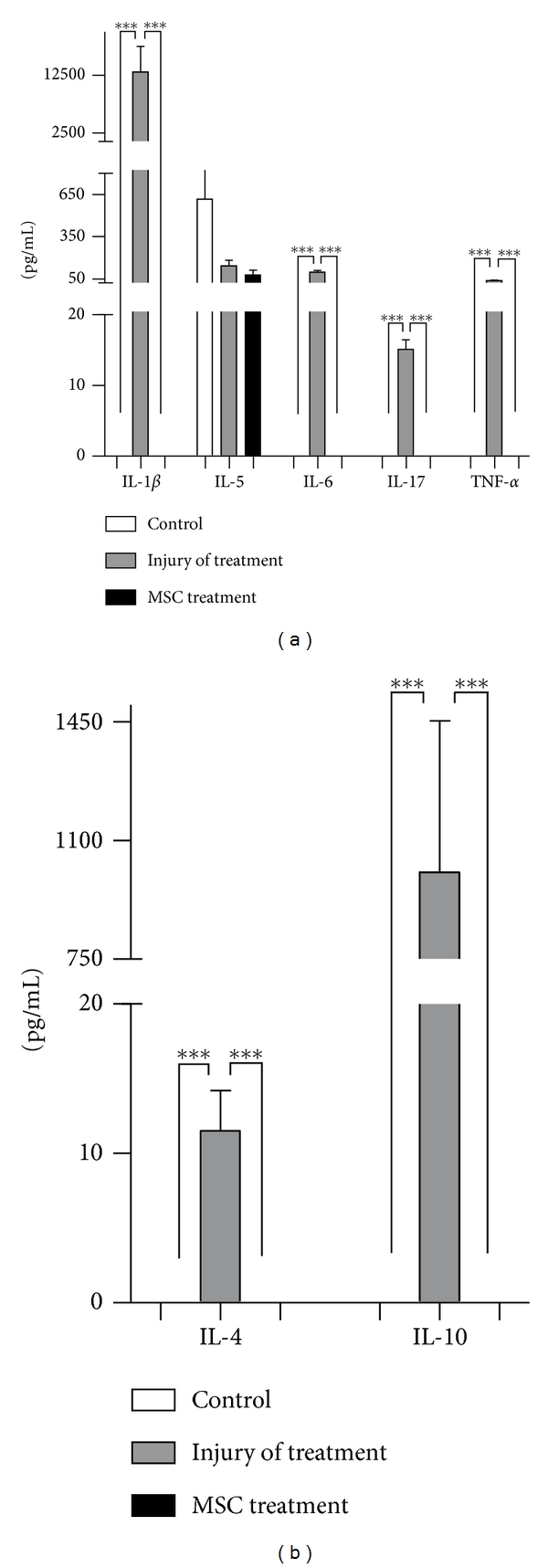
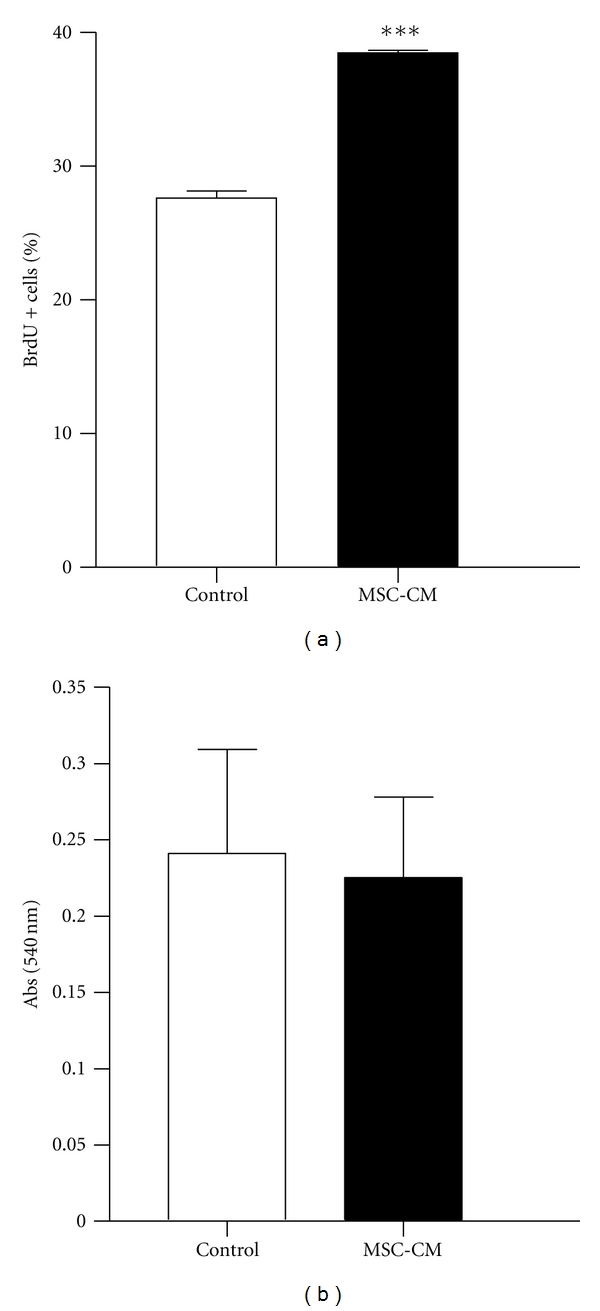
Therapy with mesenchymal stem cells (MSCs) has showed to be promising due to its immunomodulatory function. Traumatic brain injury (TBI) triggers immune response and release of inflammatory mediators, mainly cytokines, by glial cells creating a hostile microenvironment for endogenous neural stem cells (NSCs). We investigated the effects of factors secreted by MSCs on NSC in vitro and analyzed cytokines expression in vitro in a TBI model. Our in vitro results show that MSC-secreted factors increase NSC proliferation and induce higher expression of GFAP, indicating a tendency toward differentiation into astrocytes. In vivo experiments showed that MSC injection at an acute model of brain injury diminishes a broad profile of cytokines in the tissue, suggesting that MSC-secreted factors may modulate the inflammation at the injury site, which may be of interest to the development of a favorable microenvironment for endogenous NSC and consequently to repair the injured tissue.
间充质干细胞(MSC)疗法因其免疫调节功能而显示出前景。创伤性脑损伤(TBI)会引发免疫反应,并通过胶质细胞释放炎症介质,主要是细胞因子,从而为内源性神经干细胞(NSC)创造一个不利的微环境。我们研究了MSC分泌的因子在体外对NSC的影响,并在TBI模型中分析了体外细胞因子的表达。我们的体外研究结果表明,MSC分泌的因子可增加NSC增殖,并诱导GFAP表达升高,表明有分化为星形胶质细胞的趋势。体内实验表明,在脑损伤急性模型中注射MSC可减少组织中多种细胞因子,这表明MSC分泌的因子可能调节损伤部位的炎症,这可能有利于为内源性NSC创造良好的微环境,从而修复受损组织。