Department of Integrative Biology, University of Guelph, Guelph, Ontario N1G 2W1, Canada.
BMC Evol Biol. 2011 Jul 18;11:212. doi: 10.1186/1471-2148-11-212.
Evidence for historical, demographic and selective factors affecting enzyme evolution can be obtained by examining nucleotide sequence variation in candidate genes such as Lactate dehydrogenase (Ldh). Two closely related Daphnia species can be distinguished by their electrophoretic Ldh genotype and habitat. Daphnia pulex populations are fixed for the S allele and inhabit temporary ponds, while D. pulicaria populations are fixed for the F allele and inhabit large stratified lakes. One locus is detected in most allozyme surveys, but genome sequencing has revealed two genes, LdhA and LdhB.
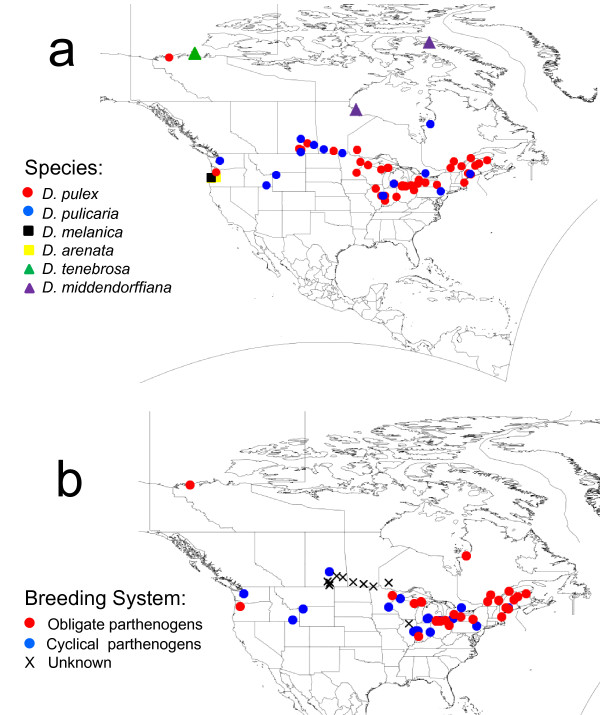
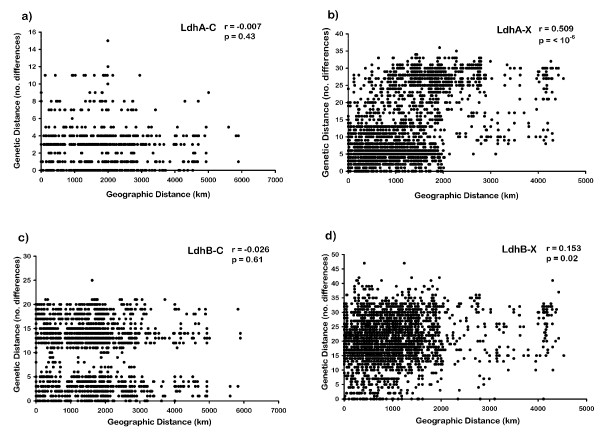
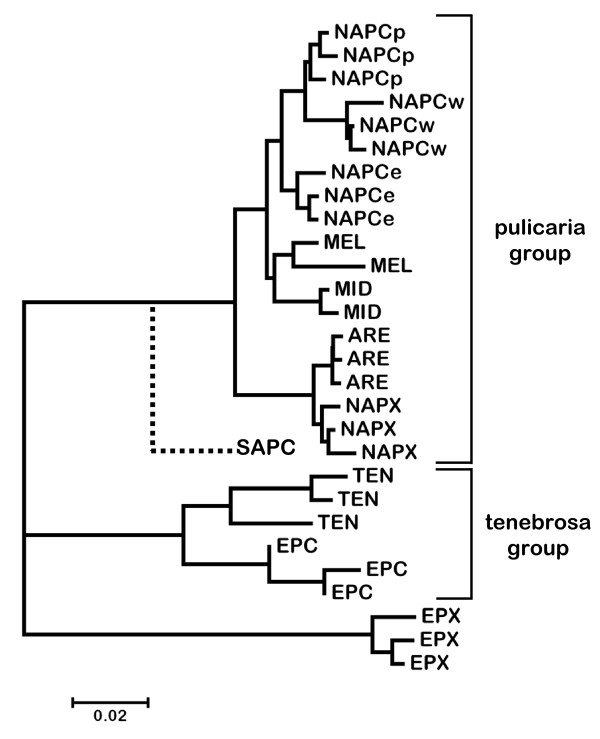
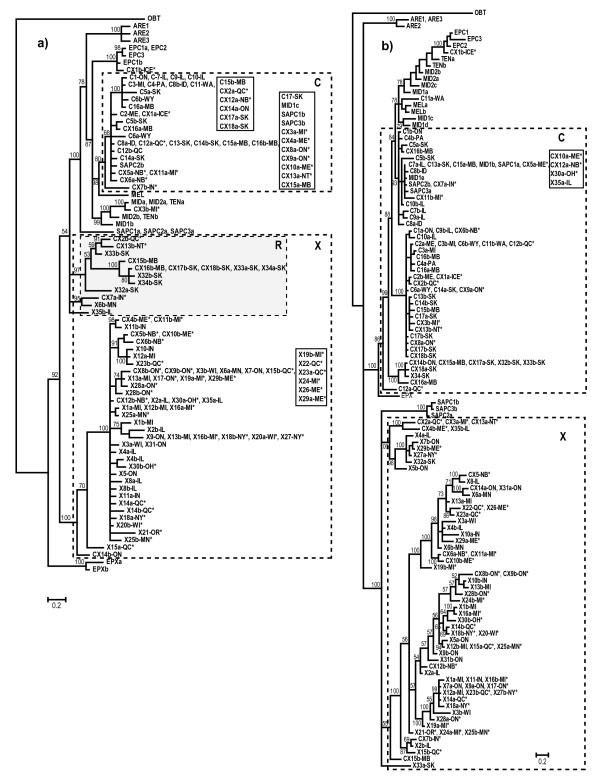
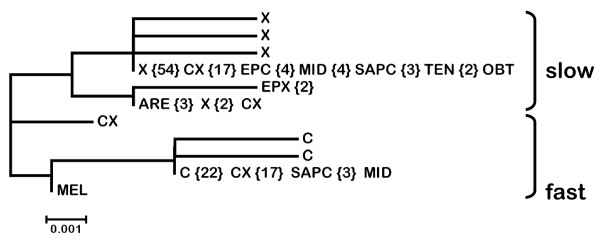
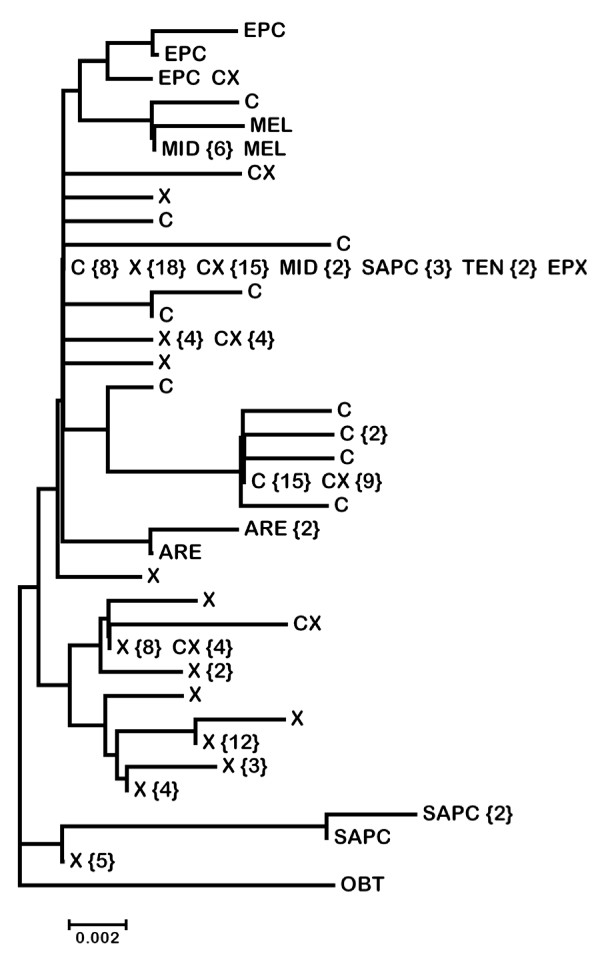
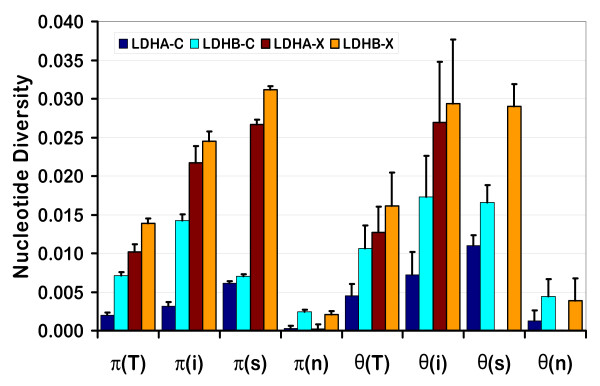
We sequenced both Ldh genes from 70 isolates of these two species from North America to determine if the association between Ldh genotype and habitat shows evidence for selection, and to elucidate the evolutionary history of the two genes. We found that alleles in the pond-dwelling D. pulex and in the lake-dwelling D. pulicaria form distinct groups at both loci, and the substitution of Glutamine (S) for Glutamic acid (F) at amino acid 229 likely causes the electrophoretic mobility shift in the LDHA protein. Nucleotide diversity in both Ldh genes is much lower in D. pulicaria than in D. pulex. Moreover, the lack of spatial structuring of the variation in both genes over a wide geographic area is consistent with a recent demographic expansion of lake populations. Neutrality tests indicate that both genes are under purifying selection, but the intensity is much stronger on LdhA.
Although lake-dwelling D. pulicaria hybridizes with the other lineages in the pulex species complex, it remains distinct ecologically and genetically. This ecological divergence, coupled with the intensity of purifying selection on LdhA and the strong association between its genotype and habitat, suggests that experimental studies would be useful to determine if variation in molecular function provides evidence that LDHA variants are adaptive.
通过研究候选基因(如乳酸脱氢酶(Ldh))的核苷酸序列变异,可以获得影响酶进化的历史、人口和选择性因素的证据。两种密切相关的溞属物种可以通过其电泳 Ldh 基因型和栖息地来区分。多刺裸腹溞种群固定 S 等位基因,栖息于临时池塘,而大型真枝溞种群固定 F 等位基因,栖息于大型分层湖泊。在大多数同工酶调查中检测到一个基因座,但基因组测序揭示了两个基因,LdhA 和 LdhB。
我们从北美这两个物种的 70 个分离株中测序了这两个 Ldh 基因,以确定 Ldh 基因型与栖息地的关联是否显示出选择的证据,并阐明这两个基因的进化历史。我们发现,池塘栖息的多刺裸腹溞和湖泊栖息的大型真枝溞的等位基因在两个基因座上都形成了明显的群体,并且在 229 位氨基酸处谷氨酸(F)替换为谷氨酰胺(S)可能导致 LDHA 蛋白的电泳迁移率发生变化。在大型真枝溞中,两个 Ldh 基因的核苷酸多样性都远低于多刺裸腹溞。此外,在广泛的地理区域内,两个基因的变异缺乏空间结构,这与湖泊种群的近期人口扩张一致。中性检验表明,两个基因都受到纯化选择的影响,但在 LdhA 上的强度更强。
尽管湖泊栖息的大型真枝溞与多刺裸腹溞种复合体中的其他谱系杂交,但它在生态和遗传上仍然是独特的。这种生态分化,加上 LdhA 上纯化选择的强度以及其基因型与栖息地之间的强烈关联,表明实验研究将有助于确定分子功能的变化是否提供了 LDHA 变体具有适应性的证据。