Ye Zhiqiang, Williams Emily, Zhao Chaoxian, Burns Carolyn W, Lynch Michael
Biodesign Center for Mechanisms of Evolution, Arizona State University, Tempe, Arizona.
Department of Zoology, University of Otago, Dunedin, New Zealand.
Limnol Oceanogr. 2021 Jul;66(7):2672-2683. doi: 10.1002/lno.11780. Epub 2021 Apr 26.
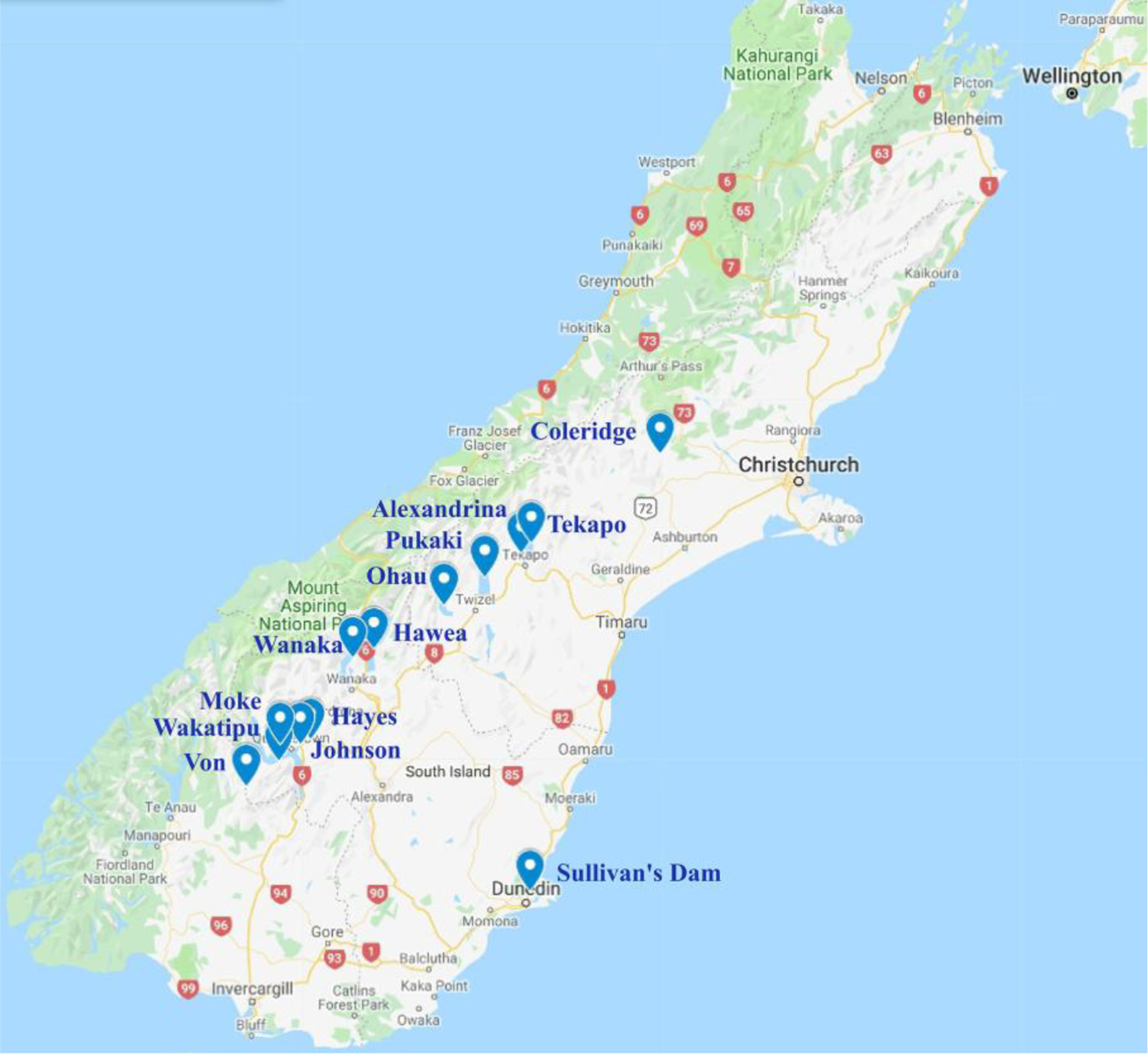
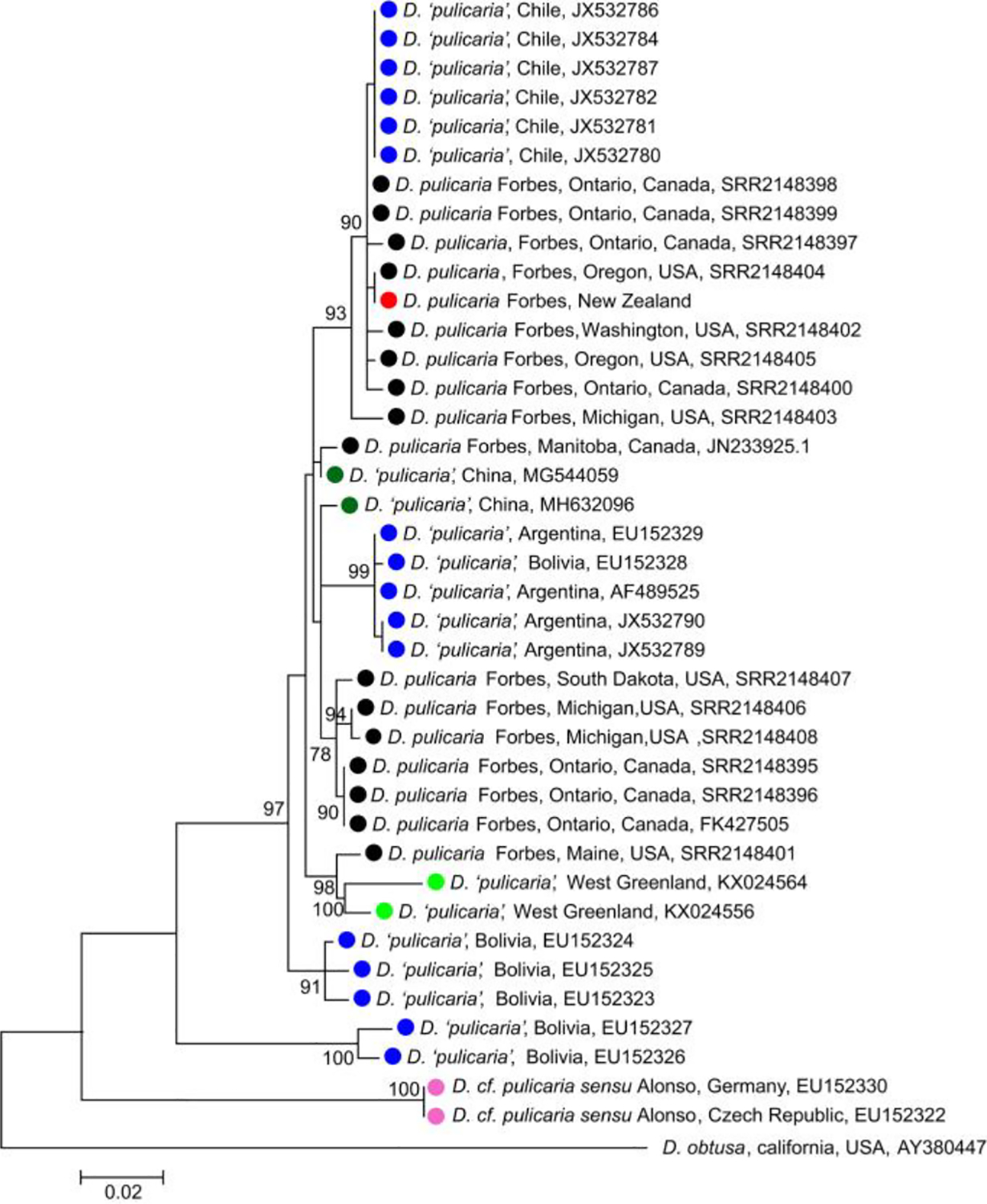
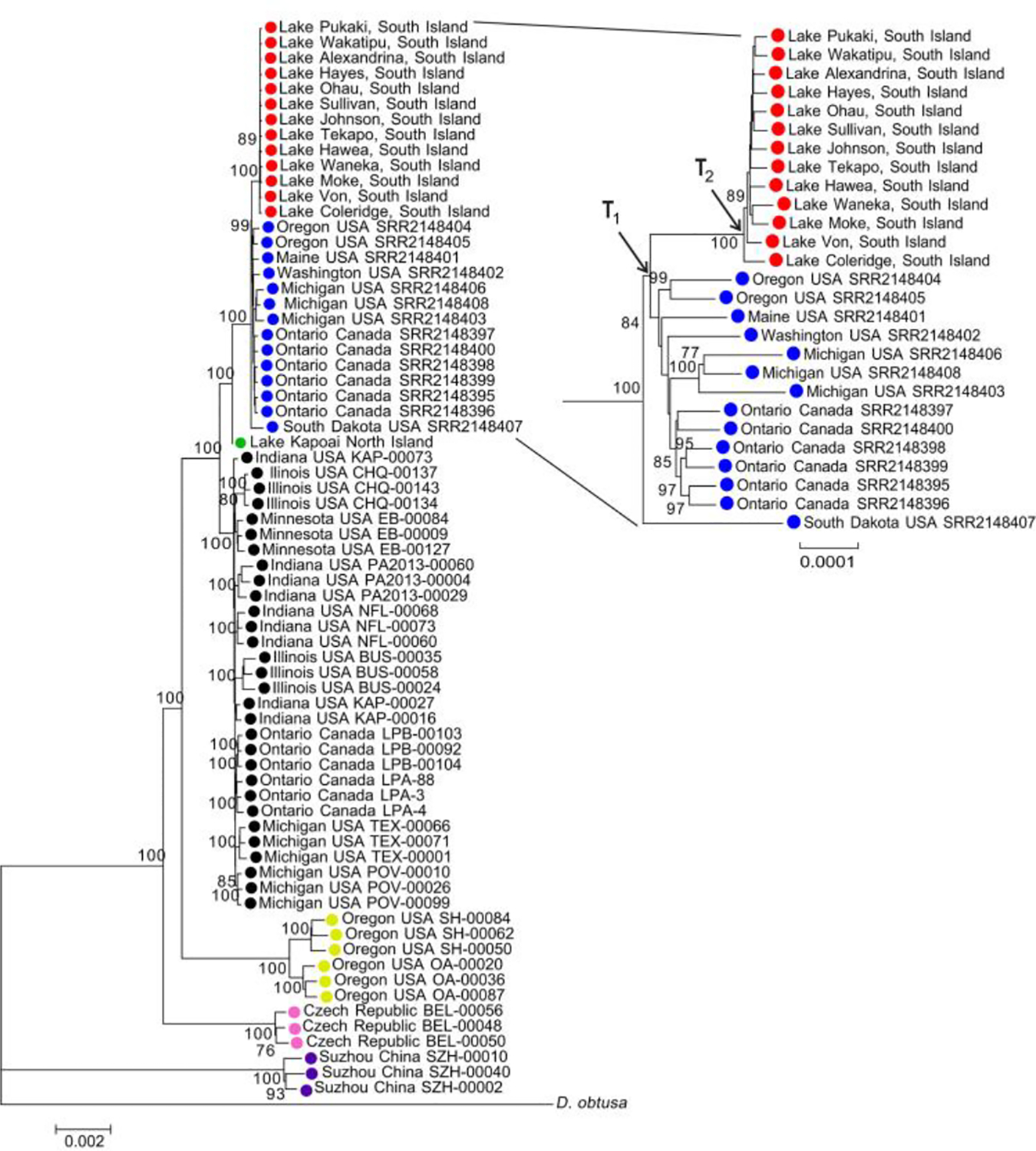
Nonindigenous members of the complex have been found in many lakes in New Zealand (NZ) in the past 20 years, suggesting a recent invasion. However, very little is known about the precise phylogenetic origin of invasive , whether each lake is invaded by a single clone or multiple clones, the lineage of the invasive clones, and whether they are obligately asexual clones. Furthermore, the source and time of arrival of the invasive genotype(s) are unclear. We address these questions by genomic sequencing of populations from 13 lakes in the South Island and 1 lake in the North Island, NZ. All biallelic sites in these NZ populations have similar numbers of reads for the two parental alleles, suggesting each NZ population originates from a single asexual clone. Based on 25,643 monomorphic lineage-specific markers, the invasive in the South Island were found to be Forbes, while those in the North Island are hybrids of Forbes and . cf. sensu Hebert. Both the South and North Island are phylogenetically clustered with North American , thereby suggesting their North American origins. We found also that all South Island clones contain identical mitochondrial genomes, suggesting the origin and proliferation from a single founder clone, which we experimentally verified to be an obligate asexual. Estimates from molecular data imply a colonization time for the South Island clones of ~60 years ago, with a likely invasion route associated with the introduction of salmonids from North America.
在过去20年里,新西兰(NZ)的许多湖泊中都发现了该复合体的非本土成员,这表明最近发生了入侵。然而,对于入侵种的确切系统发育起源、每个湖泊是否被单个克隆或多个克隆入侵、入侵克隆的谱系,以及它们是否为专性无性克隆,我们知之甚少。此外,入侵基因型的来源和到达时间也不清楚。我们通过对来自新西兰南岛13个湖泊和北岛1个湖泊的种群进行基因组测序来解决这些问题。这些新西兰种群中所有双等位基因位点的两个亲本等位基因的读数数量相似,这表明每个新西兰种群都起源于单个无性克隆。基于25,643个单态谱系特异性标记,发现南岛的入侵种为福布斯种,而北岛的则是福布斯种和另一种的杂交种。参照赫伯特的狭义定义。南岛和北岛的物种在系统发育上都与北美物种聚类,因此表明它们起源于北美。我们还发现,所有南岛克隆都含有相同的线粒体基因组,这表明它们起源于单个奠基克隆并由此增殖,我们通过实验验证其为专性无性克隆。分子数据估计,南岛克隆的定殖时间约为60年前,其入侵途径可能与从北美引入鲑科鱼类有关。