Laboratory of Neuroscience, Department and Institute of Psychiatry, Faculty of Medicine, University of São Paulo, Brazil.
Clinics (Sao Paulo). 2011;66 Suppl 1(Suppl 1):45-54. doi: 10.1590/s1807-59322011001300006.
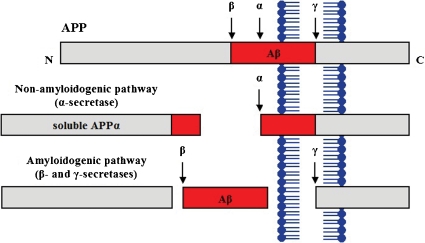
Alzheimer disease is the most common cause of dementia among the elderly, accounting for ~60-70% of all cases of dementia. The neuropathological hallmarks of Alzheimer disease are senile plaques (mainly containing p-amyloid peptide derived from amyloid precursor protein) and neurofibrillary tangles (containing hyperphosphorylated Tau protein), along with neuronal loss. At present there is no effective treatment for Alzheimer disease. Given the prevalence and poor prognosis of the disease, the development of animal models has been a research priority to understand pathogenic mechanisms and to test therapeutic strategies. Most cases of Alzheimer disease occur sporadically in people over 65 years old, and are not genetically inherited. Roughly 5% of patients with Alzheimer disease have familial Alzheimer disease--that is, related to a genetic predisposition, including mutations in the amyloid precursor protein, presenilin 1, and presenilin 2 genes. The discovery of genes for familial Alzheimer disease has allowed transgenic models to be generated through the overexpression of the amyloid precursor protein and/or presenilins harboring one or several mutations found in familial Alzheimer disease. Although none of these models fully replicates the human disease, they have provided valuable insights into disease mechanisms as well as opportunities to test therapeutic approaches. This review describes the main transgenic mouse models of Alzheimer disease which have been adopted in Alzheimer disease research, and discusses the insights into Alzheimer disease pathogenesis from studies in such models. In summary, the Alzheimer disease mouse models have been the key to understanding the roles of soluble b-amyloid oligomers in disease pathogenesis, as well as of the relationship between p-amyloid and Tau pathologies.
阿尔茨海默病是老年人中最常见的痴呆症病因,约占所有痴呆症病例的 60-70%。阿尔茨海默病的神经病理学特征是老年斑(主要含有淀粉样前体蛋白衍生的 p-淀粉样肽)和神经原纤维缠结(含有过度磷酸化的 Tau 蛋白),以及神经元丧失。目前,尚无有效的阿尔茨海默病治疗方法。鉴于该疾病的流行程度和预后不良,动物模型的开发一直是研究的重点,以了解发病机制并测试治疗策略。大多数阿尔茨海默病患者是 65 岁以上的散发性病例,且不会遗传。约 5%的阿尔茨海默病患者有家族性阿尔茨海默病,即与遗传易感性有关,包括淀粉样前体蛋白、早老素 1 和早老素 2 基因的突变。家族性阿尔茨海默病基因的发现使得可以通过过度表达在家族性阿尔茨海默病中发现的淀粉样前体蛋白和/或早老素基因来生成转基因模型。尽管这些模型都不能完全复制人类疾病,但它们为研究疾病机制以及测试治疗方法提供了有价值的见解。本综述描述了在阿尔茨海默病研究中采用的主要阿尔茨海默病转基因小鼠模型,并讨论了这些模型研究对阿尔茨海默病发病机制的深入了解。总之,阿尔茨海默病小鼠模型是理解可溶性 b-淀粉样寡聚体在疾病发病机制中的作用以及 p-淀粉样蛋白和 Tau 病理学之间关系的关键。