Leem Jaechan, Koh Eun Hee
Department of Internal Medicine, University of Ulsan College of Medicine, 388-1 Poongnap-Dong, Songpa-Gu, Seoul 138-736, Republic of Korea.
Exp Diabetes Res. 2012;2012:242984. doi: 10.1155/2012/242984. Epub 2011 Jul 19.
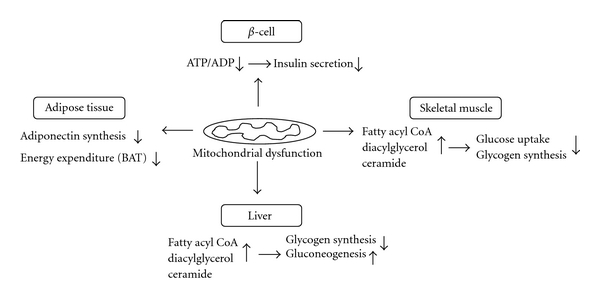
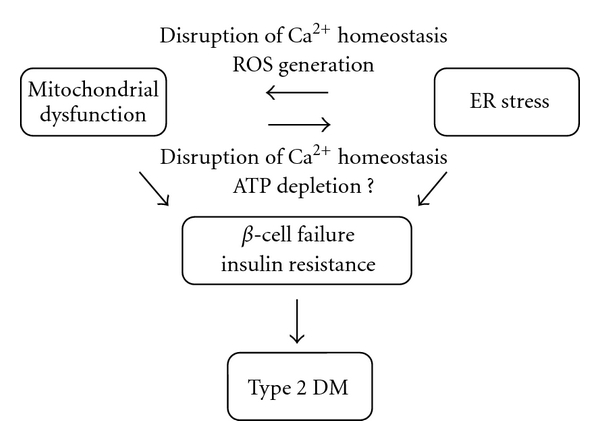
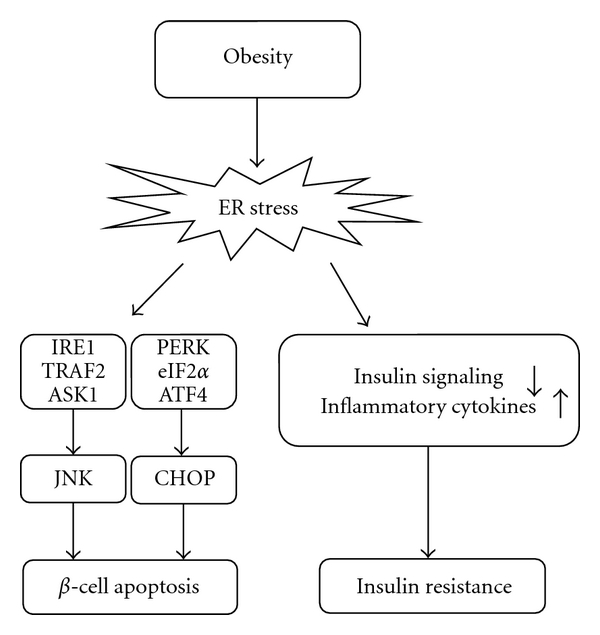
Mitochondrial dysfunction and endoplasmic reticulum (ER) stress are closely associated with β-cell dysfunction and peripheral insulin resistance. Thus, each of these factors contributes to the development of type 2 diabetes mellitus (DM). The accumulated evidence reveals structural and functional communications between mitochondria and the ER. It is now well established that ER stress causes apoptotic cell death by disturbing mitochondrial Ca(2+) homeostasis. In addition, recent studies have shown that mitochondrial dysfunction causes ER stress. In this paper, we summarize the roles that mitochondrial dysfunction and ER stress play in the pathogenesis of type 2 DM. Structural and functional communications between mitochondria and the ER are also discussed. Finally, we focus on recent findings supporting the hypothesis that mitochondrial dysfunction and the subsequent induction of ER stress play important roles in the pathogenesis of type 2 DM.
线粒体功能障碍和内质网(ER)应激与β细胞功能障碍及外周胰岛素抵抗密切相关。因此,这些因素中的每一个都促成了2型糖尿病(DM)的发展。越来越多的证据揭示了线粒体与内质网之间的结构和功能联系。现已明确,内质网应激通过扰乱线粒体Ca(2+)稳态导致细胞凋亡性死亡。此外,最近的研究表明,线粒体功能障碍会引发内质网应激。在本文中,我们总结了线粒体功能障碍和内质网应激在2型糖尿病发病机制中所起的作用。还讨论了线粒体与内质网之间的结构和功能联系。最后,我们重点关注支持线粒体功能障碍及随后内质网应激的诱导在2型糖尿病发病机制中起重要作用这一假说的最新研究发现。