Department and Faculty of Nursing, Neurosciences and Primates Behavior Center, Federal University of Goiás, Catalão, Brazil.
PLoS One. 2011;6(7):e22165. doi: 10.1371/journal.pone.0022165. Epub 2011 Jul 15.
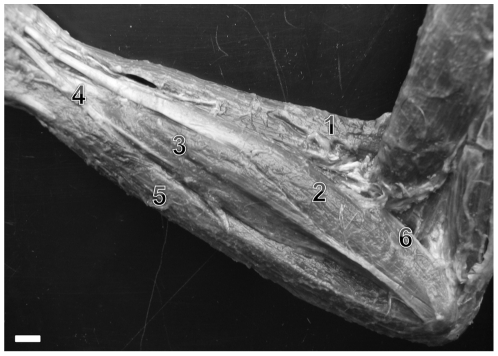
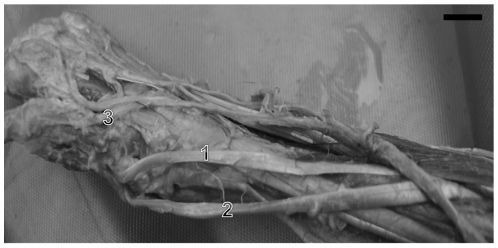
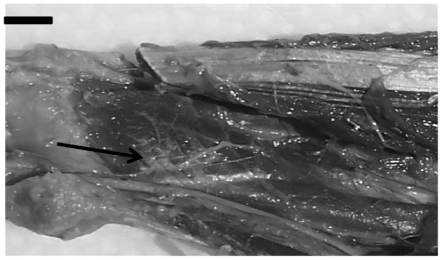
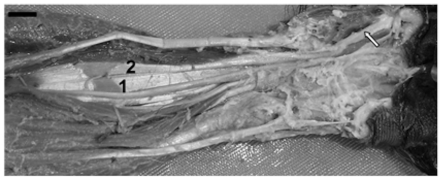
The present study describes the flexor and extensor muscles in Cebus libidinosus' forearm and compares them with those from humans, chimpanzees and baboons. The data is presented in quantitative anatomical indices for similarity. The capuchin forearm muscles showed important similarities with chimpanzees and humans, particularly those that act on thumb motion and allow certain degree of independence from other hand structures, even though their configuration does not enable a true opposable thumb. The characteristics of Cebus' forearm muscles corroborate the evolutionary convergence towards an adaptive behavior (tool use) between Cebus genus and apes.
本研究描述了卷尾猴前臂的屈肌和伸肌,并将其与人类、黑猩猩和狒狒的进行了比较。数据以定量解剖学指标的相似性呈现。卷尾猴前臂的肌肉与黑猩猩和人类有很大的相似之处,特别是那些作用于拇指运动的肌肉,它们允许拇指在一定程度上独立于其他手部结构运动,即使它们的结构不能形成真正的对生拇指。卷尾猴前臂肌肉的特征证实了卷尾猴属和猿类之间在适应行为(使用工具)方面的进化趋同。