Hematology and Hemotherapy Center, National Institute of Blood, University of Campinas, São Paulo, Brazil.
Clinics (Sao Paulo). 2011;66(5):793-9. doi: 10.1590/s1807-59322011000500014.
Myelodysplastic syndromes encompass a heterogeneous group of clonal hematopoietic stem cell disorders characterized by ineffective hematopoiesis, refractory cytopenia and a tendency to progress toward acute myeloid leukemia. The accumulation of genetic alterations is closely associated with the progression of myelodysplastic syndromes toward acute myeloid leukemia.
To investigate the presence of mutations in the points most frequent for mutations (hotspot mutations) in phosphatidylinositol-3-kinase (PI3K), Janus kinase 2 (JAK2), FMS-like tyrosine kinase 3 (FLT3) and nucleophosmin (NPM1), which are involved in leukemia and other cancers, in a population of Brazilian MDS patients.
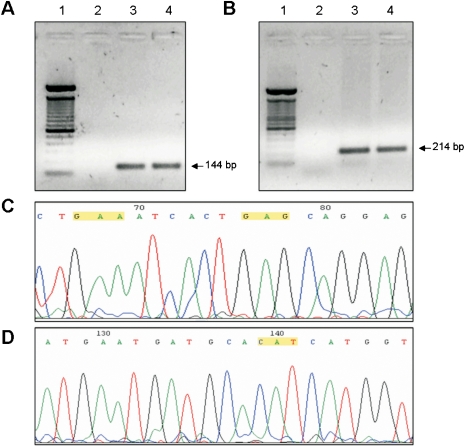
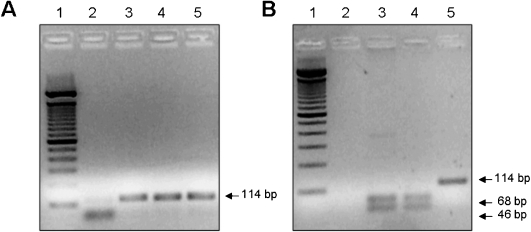
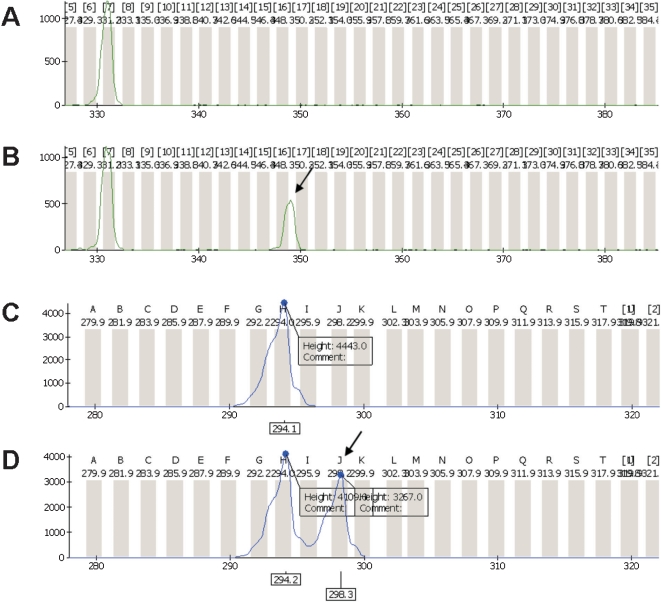
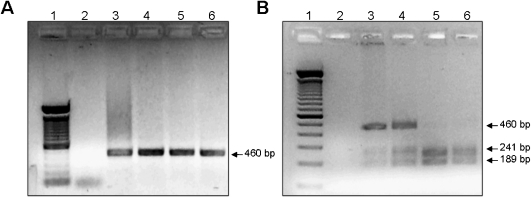
Fifty-one myelodysplastic syndromes patients were included in the study. According to French-American-British classification, the patients were distributed as follows: 31 with refractory anemia, 8 with refractory anemia with ringed sideroblasts, 7 with refractory anemia with excess blasts, 3 with refractory anemia with excess blasts in transformation and 2 with chronic myelomonocytic leukemia. Bone marrow samples were obtained and screened for the presence of hotspot mutations using analysis based on amplification with the polymerase chain reaction, sequencing, fragment size polymorphisms or restriction enzyme digestion. All patients were screened for mutations at the time of diagnosis, and 5 patients were also screened at the time of disease progression.
These results show that hotspot mutations in the PI3K, JAK2, FLT3 and NPM1 genes are not common in MDS patients; nevertheless, JAK2 mutations may be present in myelodysplasia during disease progression.
These results show that hotspot mutations in the PI3K, JAK2, FLT3 and NPM1 genes are not common in MDS patients; nevertheless, JAK2 mutations may be present in myelodysplasia during disease progression.
骨髓增生异常综合征是一组异质性克隆性造血干细胞疾病,其特征为无效造血、难治性血细胞减少症和向急性髓系白血病进展的趋势。遗传改变的积累与骨髓增生异常综合征向急性髓系白血病的进展密切相关。
研究在磷脂酰肌醇-3-激酶(PI3K)、Janus 激酶 2(JAK2)、FMS 样酪氨酸激酶 3(FLT3)和核仁磷酸蛋白(NPM1)的热点突变中是否存在突变,这些突变与白血病和其他癌症有关,在巴西 MDS 患者群体中。
共纳入 51 例骨髓增生异常综合征患者。根据法国-美国-英国分类,患者分布如下:31 例难治性贫血,8 例难治性贫血伴环形铁幼粒细胞,7 例难治性贫血伴原始细胞过多,3 例难治性贫血伴原始细胞过多转化,2 例慢性粒单核细胞白血病。采集骨髓样本,采用聚合酶链反应扩增分析、测序、片段大小多态性或限制性内切酶消化法,对热点突变进行检测。所有患者均在诊断时进行突变筛查,5 例患者在疾病进展时也进行了筛查。
这些结果表明,PI3K、JAK2、FLT3 和 NPM1 基因中的热点突变在 MDS 患者中并不常见;然而,JAK2 突变可能存在于疾病进展过程中的骨髓增生异常。
这些结果表明,PI3K、JAK2、FLT3 和 NPM1 基因中的热点突变在 MDS 患者中并不常见;然而,JAK2 突变可能存在于疾病进展过程中的骨髓增生异常。