Department of Biology, University of Pennsylvania, Philadelphia, PA 19104, USA.
BMC Ecol. 2011 Jul 27;11:17. doi: 10.1186/1472-6785-11-17.
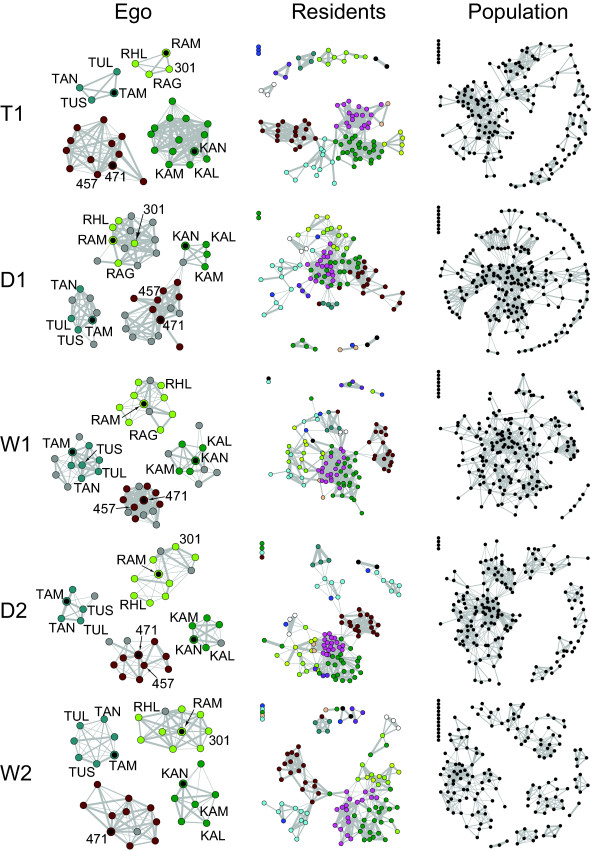
Patterns in the association of individuals can shed light on the underlying conditions and processes that shape societies. Here we characterize patterns of association in a population of wild Asian Elephants at Uda Walawe National Park in Sri Lanka. We observed 286 individually-identified adult female elephants over 20 months and examined their social dynamics at three levels of organization: pairs of individuals (dyads), small sets of direct companions (ego-networks), and the population level (complete networks).
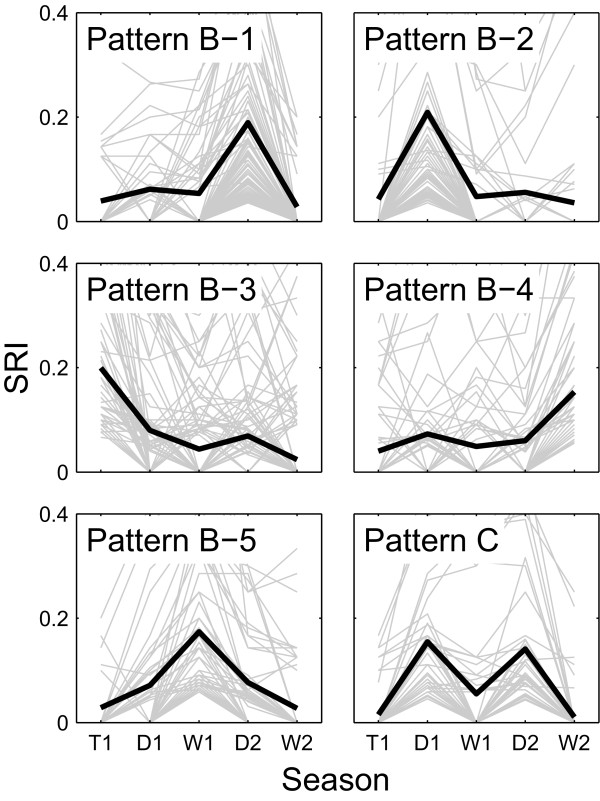
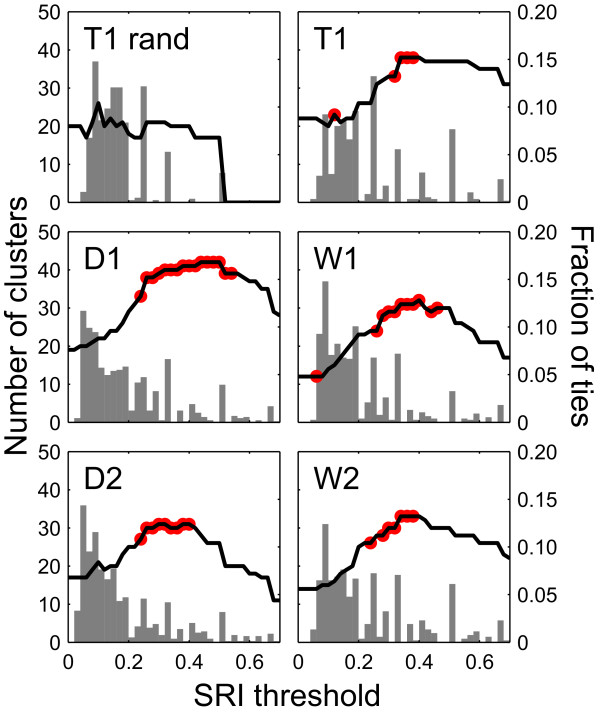
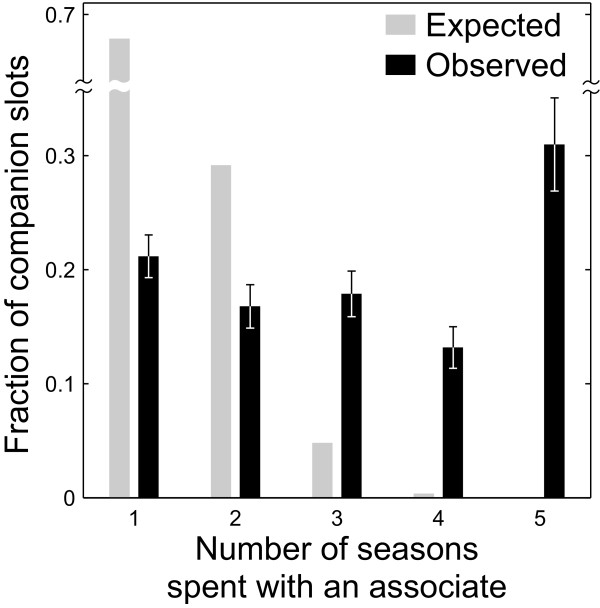
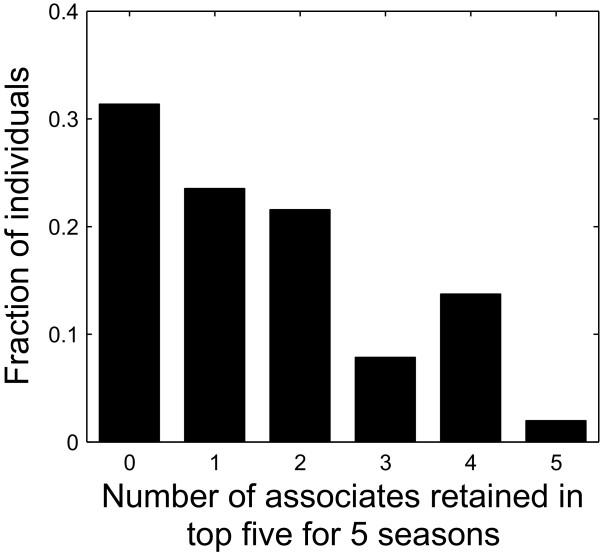
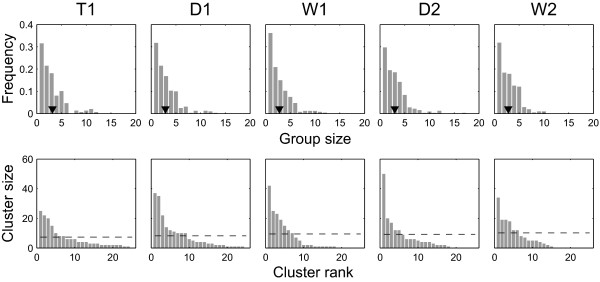
Corroborating previous studies of this and other Asian elephant populations, we find that the sizes of elephant groups observed in the field on any particular day are typically small and that rates of association are low. In contrast to earlier studies, our longitudinal observations reveal that individuals form larger social units that can be remarkably stable across years while associations among such units change across seasons. Association rates tend to peak in dry seasons as opposed to wet seasons, with some cyclicity at the level of dyads. In addition, we find that individuals vary substantially in their fidelity to companions. At the ego-network level, we find that despite these fluctuations, individuals associate with a pool of long-term companions. At the population level, social networks do not exhibit any clear seasonal structure or hierarchical stratification.
This detailed longitudinal study reveals different social dynamics at different levels of organization. Taken together, these results demonstrate that low association rates, seemingly small group sizes, and fission-fusion grouping behavior mask hidden stability in the extensive and fluid social affiliations in this population of Asian elephants.
个体之间的关联模式可以揭示塑造社会的潜在条件和过程。在这里,我们描述了斯里兰卡乌达瓦拉维国家公园野生亚洲象种群中的关联模式。我们在 20 个月的时间里观察了 286 头个体识别的成年母象,并在三个组织层次上研究了它们的社会动态:个体对(对偶)、直接同伴的小集合(自我网络)和群体水平(完整网络)。
与之前对该种群和其他亚洲象种群的研究相吻合,我们发现,在任何特定日子在野外观察到的象群大小通常较小,关联率较低。与早期研究不同,我们的纵向观察表明,个体形成了更大的社会单位,这些单位在多年间可以非常稳定,而这些单位之间的关联在季节间发生变化。关联率在旱季达到峰值,而不是雨季,对偶水平存在一些周期性。此外,我们发现个体在对同伴的忠诚度上有很大差异。在自我网络层次上,尽管存在这些波动,个体仍然与长期伴侣群体保持关联。在群体水平上,社会网络没有表现出任何明显的季节性结构或分层结构。
这项详细的纵向研究揭示了不同组织层次上的不同社会动态。总的来说,这些结果表明,低关联率、看似小的群体大小和裂变融合分组行为掩盖了该亚洲象种群广泛而灵活的社会联系中的隐藏稳定性。