Division of Pediatric Allergy and Immunology, Mount Sinai School of Medicine, New York, NY 10029-6574, USA.
J Allergy Clin Immunol. 2011 Dec;128(6):1259-1265.e2. doi: 10.1016/j.jaci.2011.06.015. Epub 2011 Jul 26.
Food allergy is a common and increasing health concern in westernized countries. No effective treatment is available, and accidental ingestion can be life-threatening. Food Allergy Herbal Formula-2 (FAHF-2) blocks peanut-induced anaphylaxis in a murine model of peanut-induced anaphylaxis. It was found to be safe and well tolerated in an acute phase I study of patients with food allergy.
We sought to assess the safety of FAHF-2 in an extended phase I clinical trial and determine the potential effects on peripheral blood basophils from patients with food allergy.
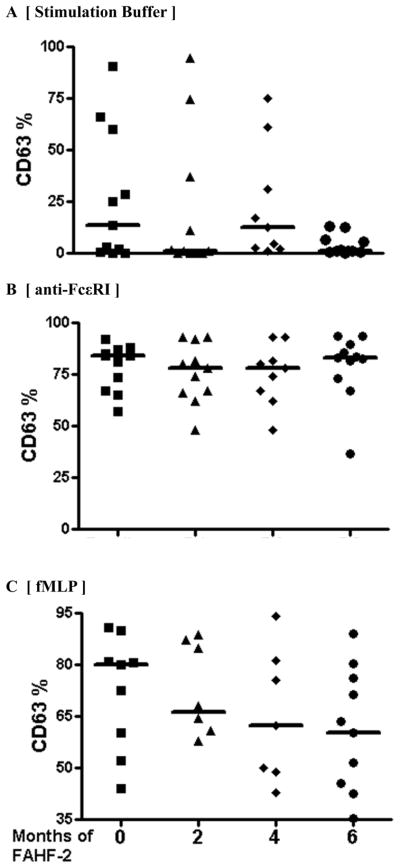
Patients in an open-label study received 3.3 g (6 tablets) of FAHF-2 three times a day for 6 months. Vital signs, physical examination results, laboratory data, pulmonary function test results, and electrocardiographic data were acquired at baseline and at 2-month intervals. During the course of the study, basophil activation and basophil and eosinophil numbers were evaluated by using CCR3/CD63 staining and flow cytometry.
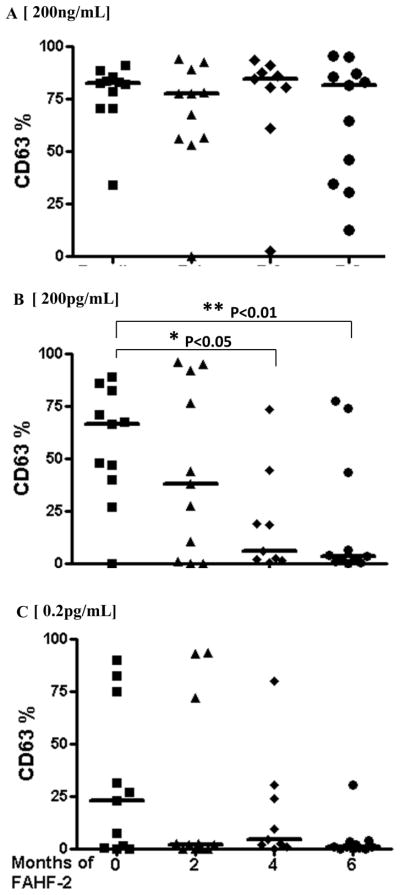
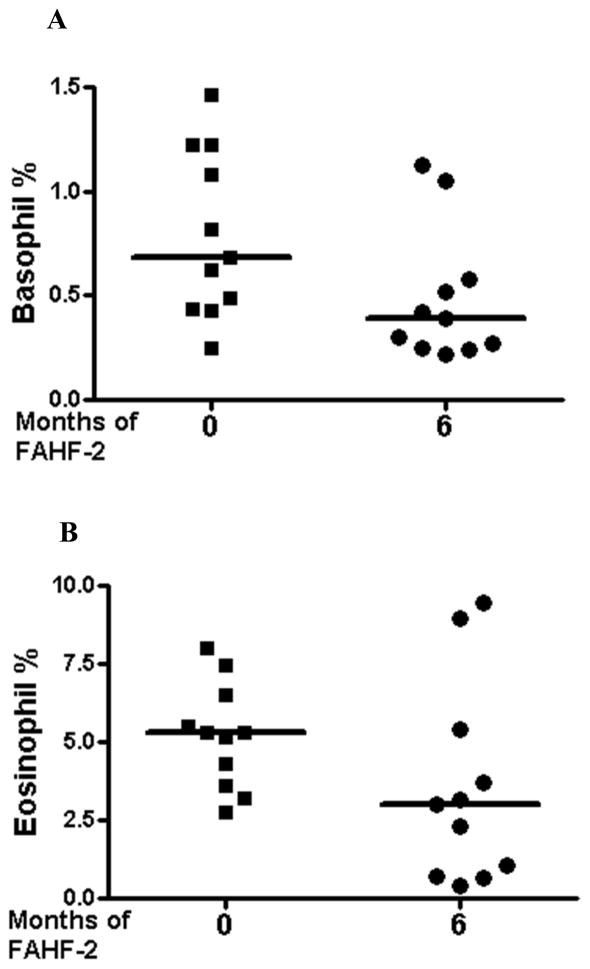
Of 18 patients enrolled, 14 completed the study. No significant drug-associated differences in laboratory parameters, pulmonary function study results, or electrocardiographic findings before and after treatment were found. There was a significant reduction (P < .010) in basophil CD63 expression in response to ex vivo stimulation at month 6. There was also a trend toward a reduction in eosinophil and basophil numbers after treatment.
FAHF-2 was safe and well tolerated and had an inhibitory effects on basophil numbers in an extended phase I clinical study. A controlled phase II study is warranted.
食物过敏是西方国家日益普遍的健康问题。目前尚无有效的治疗方法,误食可能危及生命。食物过敏草药配方-2(FAHF-2)可阻断花生诱导的过敏反应小鼠模型中的过敏反应。在一项针对食物过敏患者的急性 I 期研究中,发现其安全且耐受性良好。
我们旨在评估 FAHF-2 在扩展的 I 期临床试验中的安全性,并确定其对食物过敏患者外周血嗜碱性粒细胞的潜在影响。
开放性研究中,患者每天接受 3.3 克(6 片)FAHF-2 三次,持续 6 个月。在基线和每 2 个月间隔时获取生命体征、体格检查结果、实验室数据、肺功能测试结果和心电图数据。在研究过程中,通过 CCR3/CD63 染色和流式细胞术评估嗜碱性粒细胞激活和嗜碱性粒细胞和嗜酸性粒细胞数量。
18 名入组患者中,14 名完成了研究。治疗前后实验室参数、肺功能研究结果和心电图检查均未见与药物相关的显著差异。第 6 个月时,体外刺激后嗜碱性粒细胞 CD63 表达显著降低(P <.010)。治疗后,嗜酸性粒细胞和嗜碱性粒细胞数量也呈下降趋势。
FAHF-2 在扩展的 I 期临床试验中安全且耐受性良好,对嗜碱性粒细胞数量具有抑制作用。需要进行对照的 II 期研究。