MRC Functional Genomics Unit, Department of Physiology, Anatomy & Genetics, University of Oxford, Oxford, UK.
Skelet Muscle. 2011 Feb 9;1(1):8. doi: 10.1186/2044-5040-1-8.
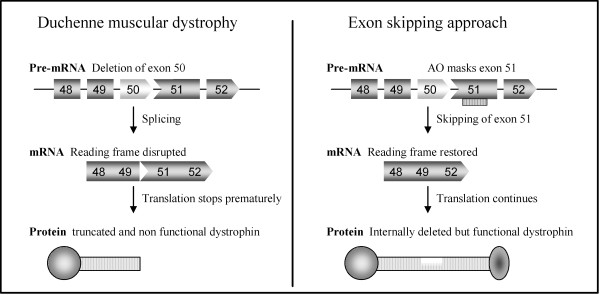
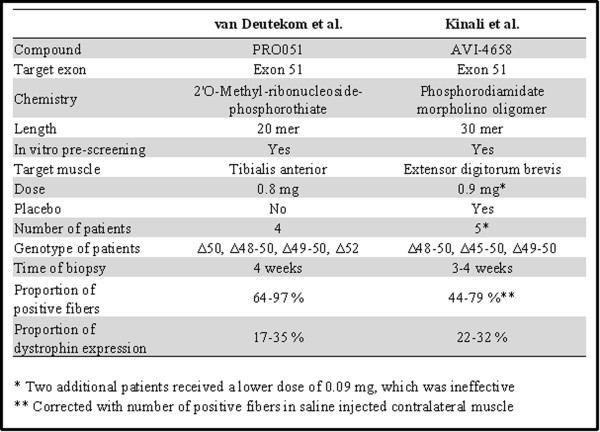
Antisense oligonucleotides are short nucleic acids designed to bind to specific messenger RNAs in order to modulate splicing patterns or inhibit protein translation. As such, they represent promising therapeutic tools for many disorders and have been actively developed for more than 20 years as a form of molecular medicine. Although significant progress has been made in developing these agents as drugs, they are yet not recognized as effective therapeutics and several hurdles remain to be overcome. Within the last few years, however, the prospect of successful oligonucleotides-based therapies has moved a step closer, in particular for Duchenne muscular dystrophy. Clinical trials have recently been conducted for this myopathy, where exon skipping is being used to achieve therapeutic outcomes. In this review, the recent developments and clinical trials using antisense oligonucleotides for Duchenne muscular dystrophy are discussed, with emphasis on the challenges ahead for this type of therapy, especially with regards to delivery and regulatory issues.
反义寡核苷酸是经过设计的短链核酸,旨在与特定的信使 RNA 结合,以调节剪接模式或抑制蛋白质翻译。因此,它们是许多疾病的有前途的治疗工具,并且作为一种分子医学已经得到了 20 多年的积极开发。尽管在开发这些药物方面已经取得了重大进展,但它们尚未被认为是有效的治疗方法,还有几个障碍需要克服。然而,在过去几年中,成功的基于寡核苷酸的治疗的前景又向前迈进了一步,特别是对于杜氏肌营养不良症。最近已经对这种肌病进行了临床试验,其中外显子跳跃正在被用于实现治疗效果。在这篇综述中,讨论了用于杜氏肌营养不良症的反义寡核苷酸的最新进展和临床试验,重点介绍了这种治疗类型的未来挑战,特别是在传递和监管问题方面。