Department of Developmental and Regenerative Biology and the Immunology Institute, 1425 Madison Avenue, Mount Sinai School of Medicine, New York 10029, USA.
Immunobiology. 2012 May;217(5):548-57. doi: 10.1016/j.imbio.2011.05.014. Epub 2011 May 30.
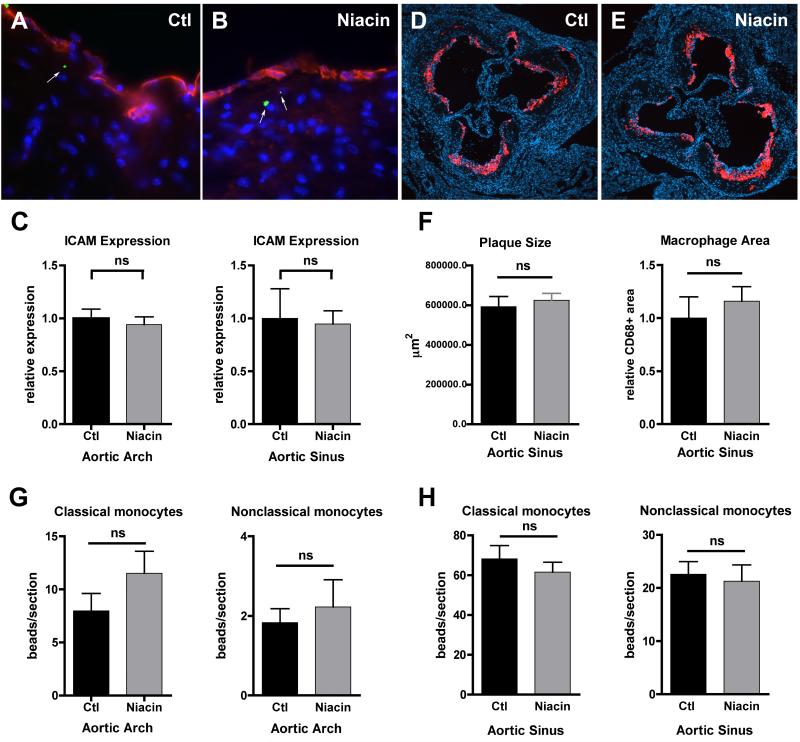
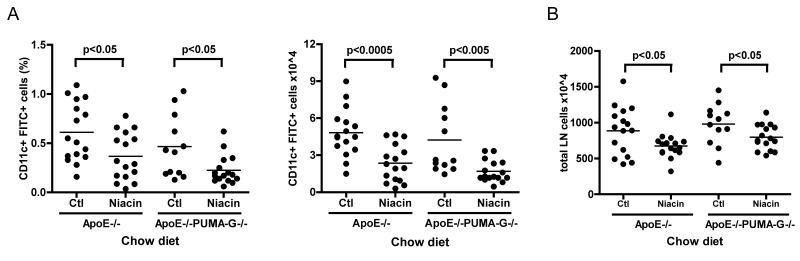
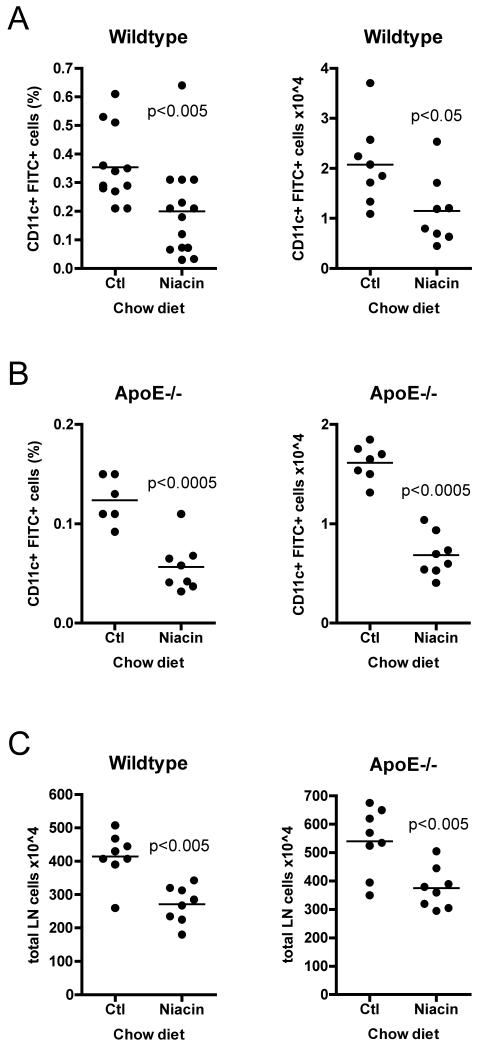
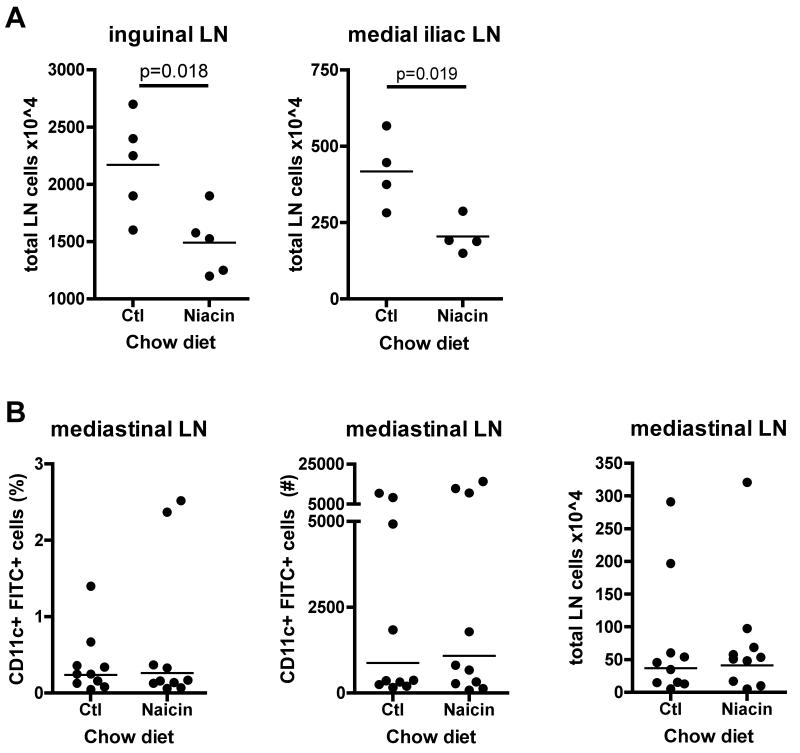
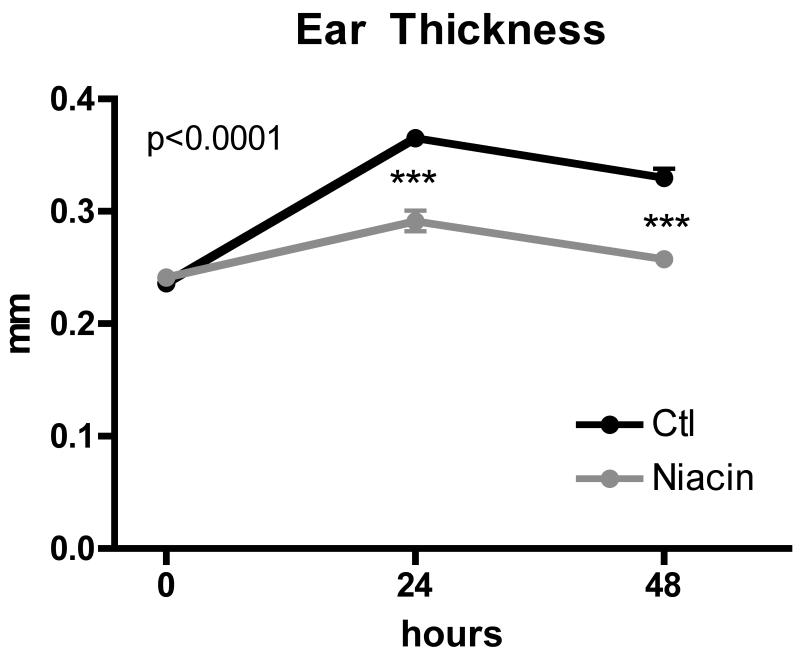
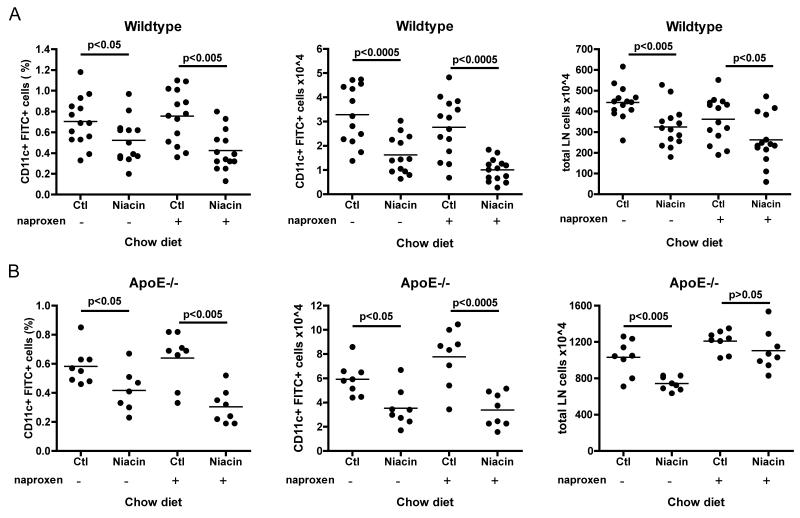
High-dose niacin therapy in humans reduces mortality from cardiovascular disease and may also protect against death from other causes, with benefits apparent more than a decade beyond the therapeutic period. Niacin therapy modulates circulating lipids, raising HDL and lowering LDL, but has the unwanted side effect of inducing skin flushing in response to treatment. Skin flushing results from niacin-induced activation of GPR109A and subsequent release of prostaglandins that promote vasodilation. GPR109A may also mediate HDL elevation. Recent data suggest that high-dose niacin may have benefits beyond improved lipid profiles, such as quelling inflammation, suggesting a potential role in immune cell trafficking. To explore effects of niacin on immune cell trafficking independently of its effects on lipid profiles, we took advantage of the fact that niacin therapy does not raise HDL in wild-type or apoE⁻/⁻ mouse strains. Wild-type and apoE⁻/⁻ C57BL/6 mice were fed standard chow or high-fat diets supplemented or not with 1% niacin. Against our predictions, this treatment did not modulate monocyte recruitment to or retention within atherosclerotic plaques. By contrast, stimulating the skin of niacin-treated mice with a contact sensitizer revealed impaired dendritic cell accumulation in draining lymph nodes and associated impaired adaptive immunity. Surprisingly, niacin-mediated impaired dendritic cell mobilization could not be reversed by cyclooxygenase inhibitor treatment nor deletion of the niacin receptor GPR109A, suggesting that the effects of niacin on modulating the migration of dendritic cells are not directly linked to skin flushing. Overall, these data suggest the existence of novel pathways triggered by niacin that, through suppression of dendritic cell migration, might impact adaptive immune responses that participate in sustained therapeutic benefits independent of niacin's cardioprotective capabilities.
高剂量烟酸治疗可降低心血管疾病死亡率,还可能预防其他原因导致的死亡,且疗效在治疗结束 10 多年后仍明显。烟酸治疗可调节循环脂质,升高高密度脂蛋白胆固醇(HDL)并降低低密度脂蛋白胆固醇(LDL),但会引起皮肤潮红等不良反应。皮肤潮红是由烟酸诱导 G 蛋白偶联受体 109A(GPR109A)激活,进而释放促进血管舒张的前列腺素引起的。GPR109A 可能也介导了 HDL 升高。最近的数据表明,高剂量烟酸可能具有改善血脂谱以外的益处,如抑制炎症,提示其在免疫细胞迁移中可能具有潜在作用。为了在不考虑其对脂质谱影响的情况下,研究烟酸对免疫细胞迁移的影响,我们利用了烟酸治疗不会升高野生型或载脂蛋白 E 基因敲除(apoE⁻/⁻)小鼠模型中 HDL 的事实。我们用标准饲料或高脂肪饲料喂养野生型和 apoE⁻/⁻ C57BL/6 小鼠,后两种饲料可额外补充或不补充 1%的烟酸。出乎我们意料的是,这种治疗并没有调节单核细胞向动脉粥样硬化斑块的募集或保留。相比之下,用接触致敏剂刺激接受烟酸治疗的小鼠皮肤,会导致引流淋巴结中树突状细胞(DC)聚集减少和适应性免疫受损。令人惊讶的是,环氧化酶抑制剂治疗或 GPR109A 缺失均不能逆转烟酸介导的 DC 动员受损,表明烟酸对调节 DC 迁移的作用与皮肤潮红没有直接关系。总的来说,这些数据表明烟酸可能触发了新的通路,通过抑制 DC 迁移,可能会影响参与持续治疗获益的适应性免疫反应,而这种获益与烟酸的心脏保护能力无关。