Laboratory of Immunology and Hematopoiesis, Department of Comparative Pathobiology, Purdue Veterinary Medicine; Weldon School of Biomedical Engineering; Center for Cancer Research, Purdue University, West Lafayette, IN 47907, USA.
Immune Netw. 2014 Dec;14(6):277-88. doi: 10.4110/in.2014.14.6.277. Epub 2014 Dec 22.
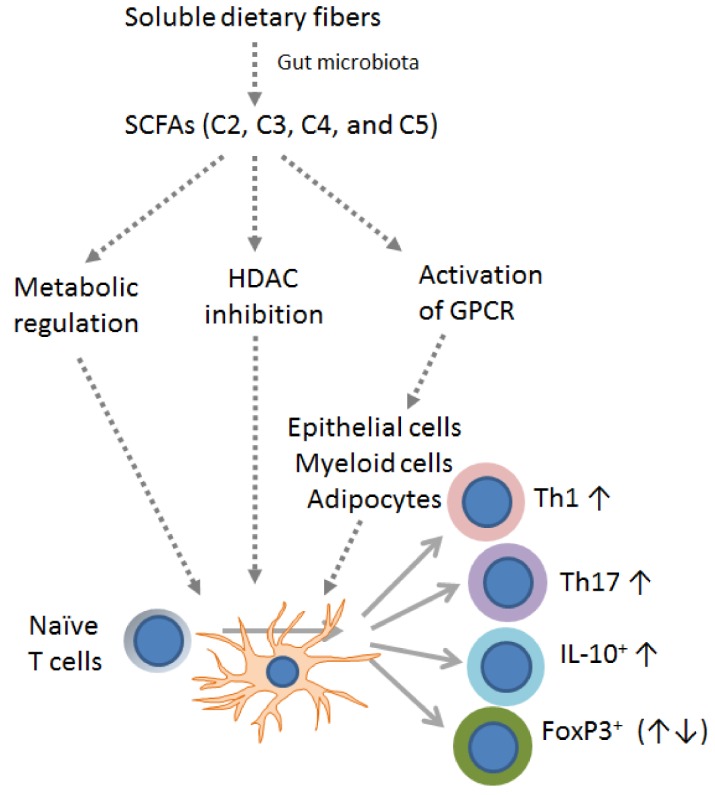
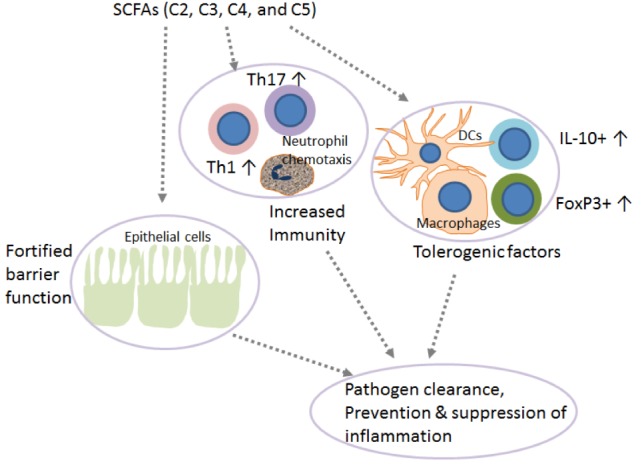
T cells are central players in the regulation of adaptive immunity and immune tolerance. In the periphery, T cell differentiation for maturation and effector function is regulated by a number of factors. Various factors such as antigens, co-stimulation signals, and cytokines regulate T cell differentiation into functionally specialized effector and regulatory T cells. Other factors such as nutrients, micronutrients, nuclear hormones and microbial products provide important environmental cues for T cell differentiation. A mounting body of evidence indicates that the microbial metabolites short-chain fatty acids (SCFAs) have profound effects on T cells and directly and indirectly regulate their differentiation. We review the current status of our understanding of SCFA functions in regulation of peripheral T cell activity and discuss their impact on tissue inflammation.
T 细胞是调节适应性免疫和免疫耐受的核心参与者。在外周,T 细胞的分化成熟和效应功能受到多种因素的调节。各种因素,如抗原、共刺激信号和细胞因子,调节 T 细胞分化为功能特化的效应和调节 T 细胞。其他因素,如营养物质、微量营养素、核激素和微生物产物,为 T 细胞分化提供了重要的环境线索。越来越多的证据表明,微生物代谢产物短链脂肪酸(SCFAs)对 T 细胞有深远的影响,并直接和间接调节它们的分化。我们综述了目前对 SCFA 调节外周 T 细胞活性的功能的理解,并讨论了它们对组织炎症的影响。