Department of Chemistry, Purdue University, West Lafayette, Indiana 47907, United States.
J Proteome Res. 2011 Sep 2;10(9):3959-72. doi: 10.1021/pr200140x. Epub 2011 Jul 29.
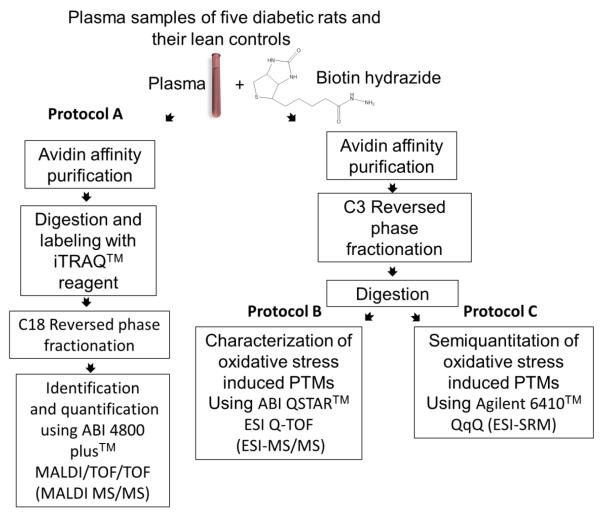
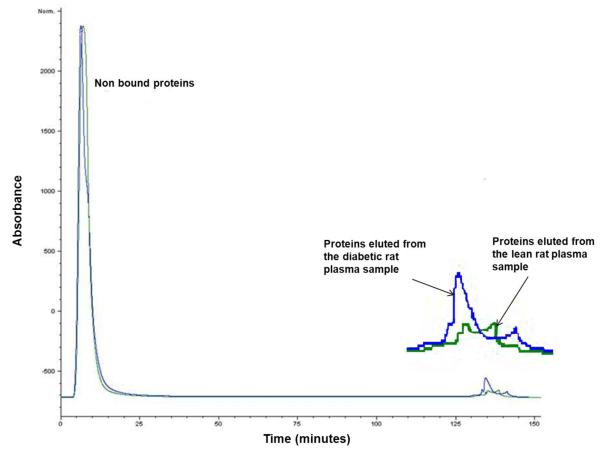
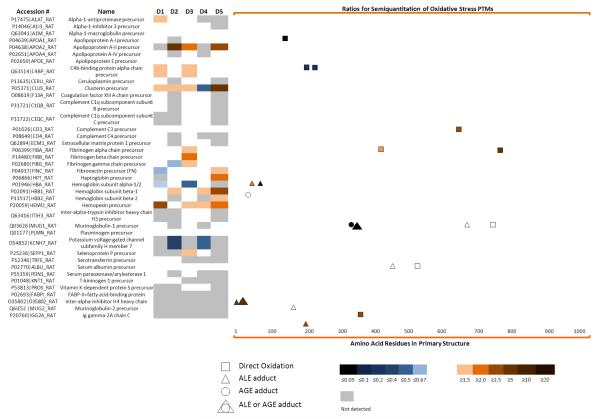
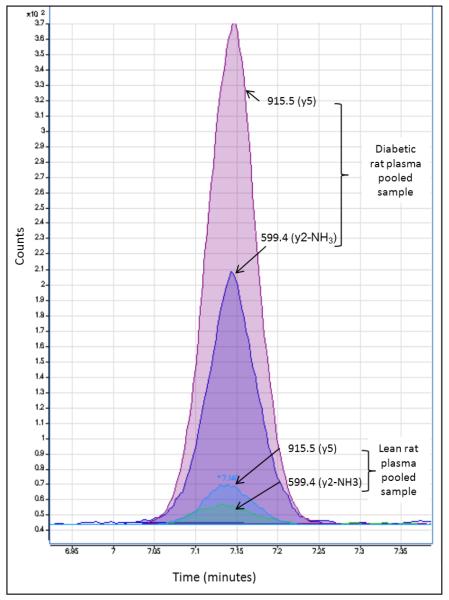
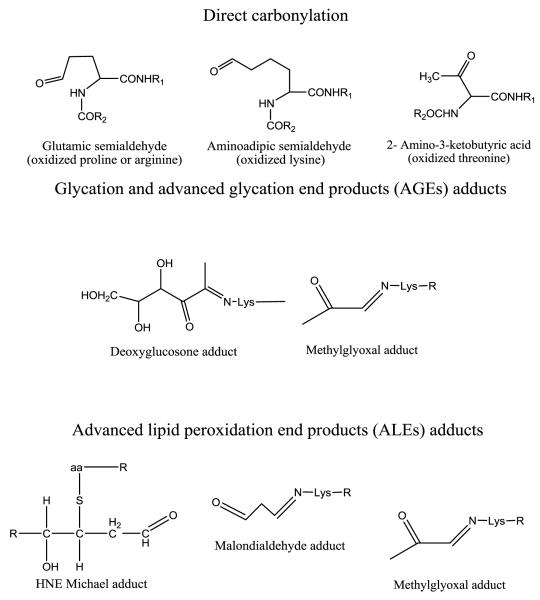
This study reports for the first time qualitative and quantitative differences in carbonylated proteins shed into blood as a function of increasing levels of OS. Carbonylated proteins in freshly drawn blood from pairs of diabetic and lean rats were derivatized with biotin hydrazide, dialyzed, and enriched with avidin affinity chromatography. Proteins thus selected were used in several ways. Differences between control and diabetic subjects in relative concentration of proteins was achieved by differential labeling of tryptic digests with iTRAQ reagents followed by reversed phase chromatography (RPC) and tandem mass spectrometry (MS/MS). Identification and characterization of OS induced post-translational modification sites in contrast was achieved by fractionation of affinity selected proteins before proteolysis and RPC-MS/MS. Relative quantification of peptides bearing oxidative modifications was achieved for the first time by selective reaction monitoring (SRM). Approximately 1.7% of the proteins in Zucker diabetic rat plasma were selected by the avidin affinity column as compared to 0.98% in lean animal plasma. Among the 35 proteins identified and quantified, Apo AII, clusterin, hemopexin precursor, and potassium voltage-gated channel subfamily H member 7 showed the most dramatic changes in concentration. Seventeen carbonylation sites were identified and quantified, 11 of which changed more than 2-fold in oxidation state. Three types of carbonylation were identified at these sites: direct oxidative cleavage from reactive oxygen species, glycation and addition of advanced glycation end products, and addition of lipid peroxidation products. Direct oxidation was the dominant form of carbonylation observed while hemoglobin and murinoglobulin 1 homologue were the most heavily oxidized proteins.
本研究首次报道了随着氧化应激(OS)水平的升高,血液中释放的羰基化蛋白的定性和定量差异。将来自 pairs of diabetic 和 lean rats 的新鲜抽取的血液中的羰基化蛋白用生物素酰肼衍生化,透析,并通过亲和层析法用亲和素进行富集。然后以几种方式使用如此选择的蛋白质。通过用 iTRAQ 试剂对胰蛋白酶消化物进行差异标记,然后进行反相色谱(RPC)和串联质谱(MS/MS),实现了对照和糖尿病患者之间蛋白质相对浓度的差异。相反,通过在蛋白水解之前对亲和选择的蛋白质进行分级分离并进行 RPC-MS/MS,实现了氧化应激诱导的翻译后修饰位点的鉴定和表征。通过选择性反应监测(SRM),首次实现了对具有氧化修饰的肽的相对定量。与 lean 动物血浆中的 0.98%相比,Zucker 糖尿病大鼠血浆中的 1.7%的蛋白质被亲和柱选择。在所鉴定和定量的 35 种蛋白质中,Apo AII、clusterin、hemopexin 前体和钾电压门控通道亚家族 H 成员 7 的浓度变化最为显著。鉴定和定量了 17 个羰基化位点,其中 11 个氧化状态变化超过 2 倍。在这些位点鉴定和定量了三种类型的羰基化:来自活性氧的直接氧化裂解、糖基化和晚期糖基化终产物的添加以及脂质过氧化产物的添加。直接氧化是观察到的主要羰基化形式,而血红蛋白和 murinoglobulin 1 同源物是氧化程度最高的蛋白质。