Pacheco-Pantoja Elda L, Ranganath Lakshminarayan R, Gallagher James A, Wilson Peter J M, Fraser William D
Escuela de Medicina, Universidad Anáhuac Mayab, Km 15,5 Carr Merida-Progreso, 97310, Mérida, Yucatán, México.
BMC Physiol. 2011 Jul 29;11:12. doi: 10.1186/1472-6793-11-12.
In recent years the interest on the relationship of gut hormones to bone processes has increased and represents one of the most interesting aspects in skeletal research. The proportion of bone mass to soft tissue is a relationship that seems to be controlled by delicate and subtle regulations that imply "cross-talks" between the nutrient intake and tissues like fat. Thus, recognition of the mechanisms that integrate a gastrointestinal-fat-bone axis and its application to several aspects of human health is vital for improving treatments related to bone diseases. This work analysed the effects of gut hormones in cell cultures of three osteoblastic cell lines which represent different stages in osteoblastic development. Also, this is the first time that there is a report on the direct effects of glucagon-like peptide 2, and obestatin on osteoblast-like cells.
mRNA expression levels of five gut hormone receptors (glucose-dependent insulinotropic peptide [GIP], glucagon-like peptide 1 [GLP-1], glucagon-like peptide 2 [GLP-2], ghrelin [GHR] and obestatin [OB]) were analysed in three osteoblastic cell lines (Saos-2, TE-85 and MG-63) showing different stages of osteoblast development using reverse transcription and real time polymerase chain reaction. The responses to the gut peptides were studied using assays for cell viability, and biochemical bone markers: alkaline phosphatase (ALP), procollagen type 1 amino-terminal propeptides (P1NP), and osteocalcin production.
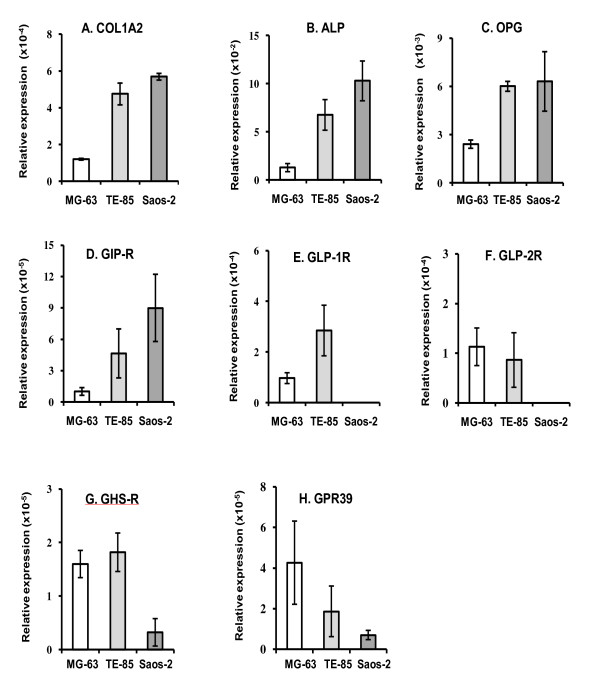
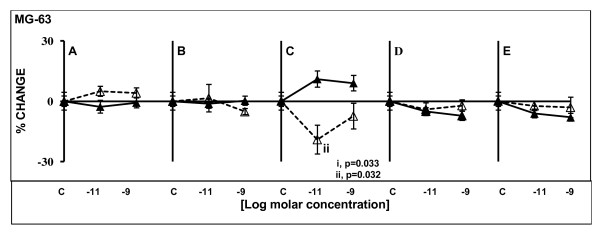
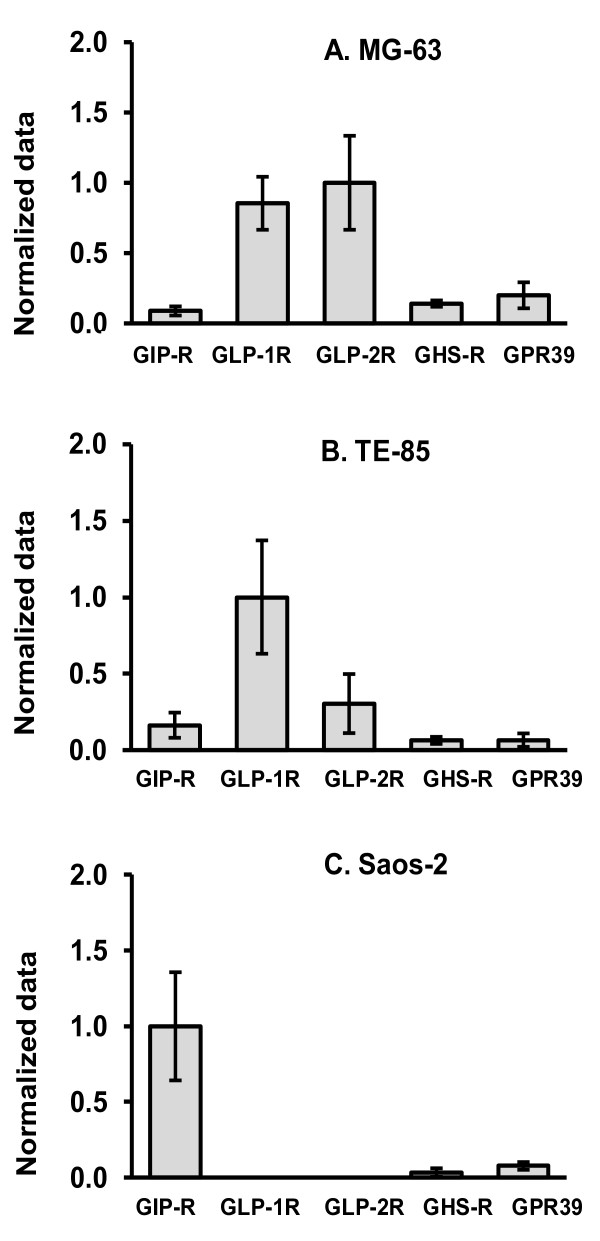
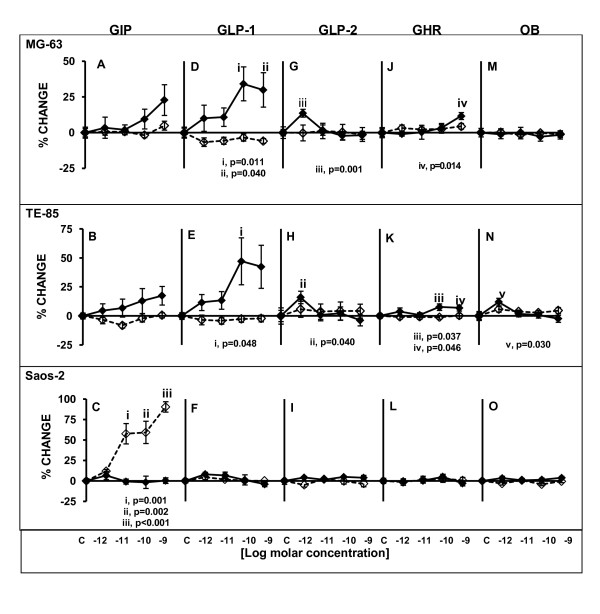
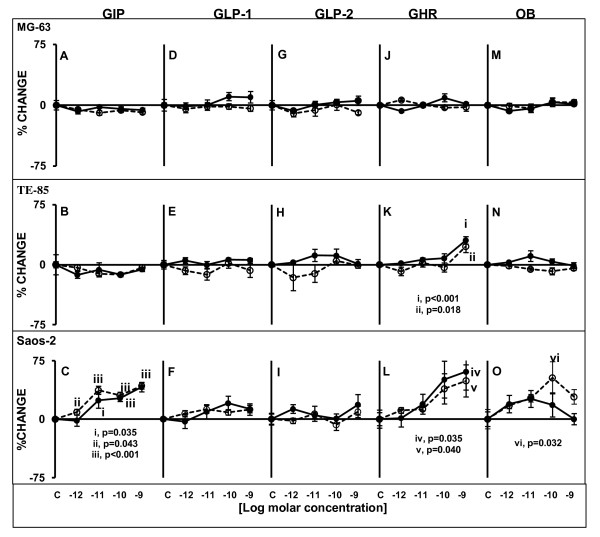
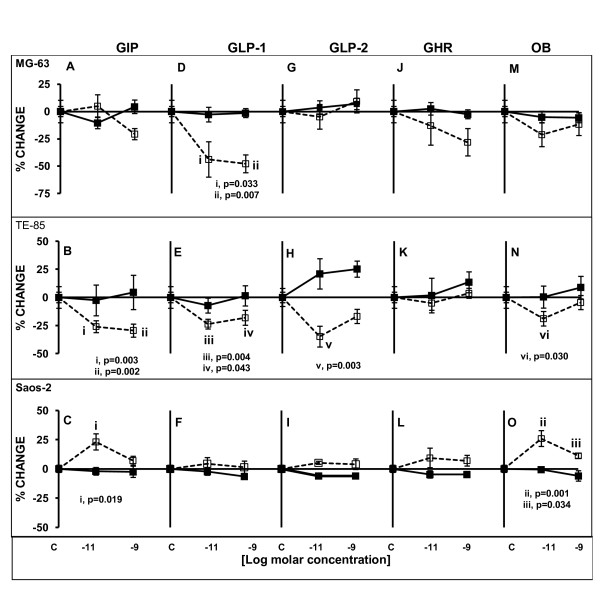
The gut hormone receptor mRNA displayed the highest levels for GIP in Saos-2 and the lowest levels in MG-63, whereas GHR and GPR39 (the putative obestatin receptor) expression was higher in TE-85 and MG-63 and lower in Saos-2. GLP-1 and GLP-2 were expressed only in MG-63 and TE-85. Treatment of gut hormones to cell lines showed differential responses: higher levels in cell viability in Saos-2 after GIP, in TE-85 and MG-63 after GLP-1, GLP-2, ghrelin and obestatin. ALP showed higher levels in Saos-2 after GIP, GHR and OB and in TE-85 after GHR. P1NP showed higher levels after GIP and OB in Saos-2. Decreased levels of P1NP were observed in TE-85 and MG-63 after GLP-1, GLP-2 and OB. MG-63 showed opposite responses in osteocalcin levels after GLP-2.
These results suggest that osteoblast activity modulation varies according to different development stage under different nutrition related-peptides.
近年来,人们对肠道激素与骨代谢过程之间关系的关注度不断提高,这是骨骼研究中最有趣的方面之一。骨量与软组织的比例关系似乎受精细而微妙的调节控制,这意味着营养摄入与脂肪等组织之间存在“相互作用”。因此,认识整合胃肠 - 脂肪 - 骨轴的机制及其在人类健康多个方面的应用对于改善与骨疾病相关的治疗至关重要。本研究分析了肠道激素对三种代表成骨细胞发育不同阶段的成骨细胞系细胞培养物的影响。此外,这也是首次报道胰高血糖素样肽2和肥胖抑制素对成骨样细胞的直接作用。
使用逆转录和实时聚合酶链反应分析三种显示成骨细胞发育不同阶段的成骨细胞系(Saos - 2、TE - 85和MG - 63)中五种肠道激素受体(葡萄糖依赖性促胰岛素多肽[GIP]、胰高血糖素样肽1[GLP - 1]、胰高血糖素样肽2[GLP - 2]、胃饥饿素[GHR]和肥胖抑制素[OB])的mRNA表达水平。使用细胞活力测定法以及生化骨标志物:碱性磷酸酶(ALP)、I型前胶原氨基端前肽(P1NP)和骨钙素生成测定法研究对肠道肽的反应。
肠道激素受体mRNA在Saos - 2中GIP水平最高,在MG - 63中最低,而GHR和GPR39(推测的肥胖抑制素受体)在TE - 85和MG - 63中表达较高,在Saos - 2中较低。GLP - 1和GLP - 2仅在MG - 63和TE - 85中表达。对细胞系进行肠道激素处理显示出不同的反应:GIP处理后Saos - 2细胞活力水平较高,GLP - 1、GLP - 2、胃饥饿素和肥胖抑制素处理后TE - 85和MG - 63细胞活力水平较高。GIP、GHR和OB处理后Saos - 2中ALP水平较高,GHR处理后TE - 85中ALP水平较高。GIP和OB处理后Saos - 2中P1NP水平较高。GLP - 1、GLP - 2和OB处理后TE - 85和MG - 63中P1NP水平降低。GLP - 2处理后MG - 63中骨钙素水平呈现相反反应。
这些结果表明,在不同的营养相关肽作用下,成骨细胞活性调节因不同的发育阶段而异。