Henry Wellcome Laboratories for Integrative Neuroscience and Endocrinology, Dorothy Hodgkin Building, School of Clinical Sciences, University of Bristol, Whitson Street, Bristol BS1 3NY, UK.
Front Neuroendocrinol. 2012 Jan;33(1):45-66. doi: 10.1016/j.yfrne.2011.07.002. Epub 2011 Jul 23.
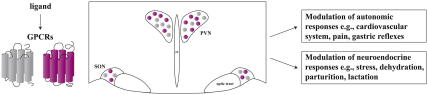
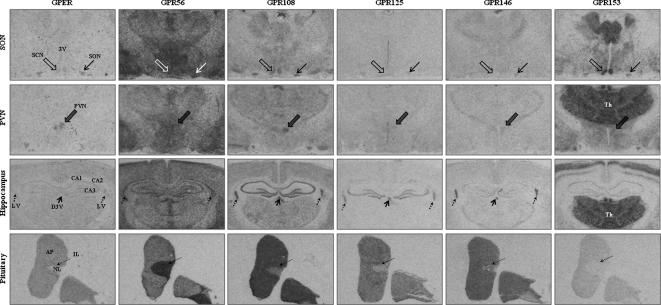
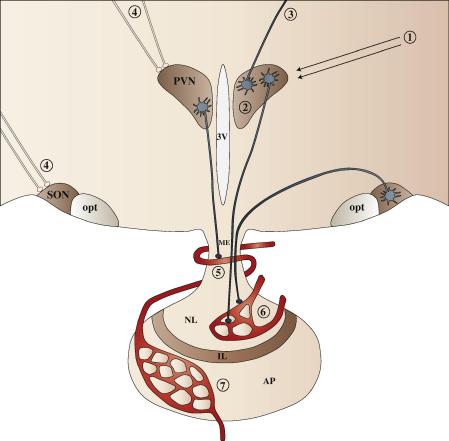
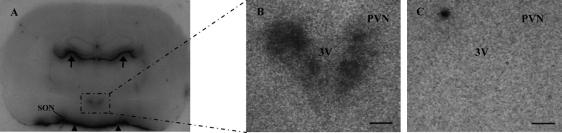
G protein-coupled receptors (GPCRs) are the largest family of transmembrane receptors in the mammalian genome. They are activated by a multitude of different ligands that elicit rapid intracellular responses to regulate cell function. Unsurprisingly, a large proportion of therapeutic agents target these receptors. The paraventricular nucleus (PVN) and supraoptic nucleus (SON) of the hypothalamus are important mediators in homeostatic control. Many modulators of PVN/SON activity, including neurotransmitters and hormones act via GPCRs--in fact over 100 non-chemosensory GPCRs have been detected in either the PVN or SON. This review provides a comprehensive summary of the expression of GPCRs within the PVN/SON, including data from recent transcriptomic studies that potentially expand the repertoire of GPCRs that may have functional roles in these hypothalamic nuclei. We also present some aspects of the regulation and known roles of GPCRs in PVN/SON, which are likely complemented by the activity of 'orphan' GPCRs.
G 蛋白偶联受体 (GPCRs) 是哺乳动物基因组中最大的跨膜受体家族。它们被多种不同的配体激活,这些配体引发快速的细胞内反应,以调节细胞功能。毫不奇怪,大量治疗药物的靶点是这些受体。下丘脑的室旁核 (PVN) 和视上核 (SON) 是体内平衡控制的重要介质。许多调节 PVN/SON 活性的调节剂,包括神经递质和激素,都是通过 GPCR 发挥作用的--事实上,在 PVN 或 SON 中已经检测到超过 100 种非化学感觉 GPCR。这篇综述全面总结了 GPCR 在 PVN/SON 中的表达,包括来自最近转录组研究的数据,这些数据可能扩展了在这些下丘脑核中可能具有功能作用的 GPCR 谱。我们还介绍了 GPCR 在 PVN/SON 中的调节和已知作用的某些方面,这些方面可能由“孤儿”GPCR 的活性来补充。